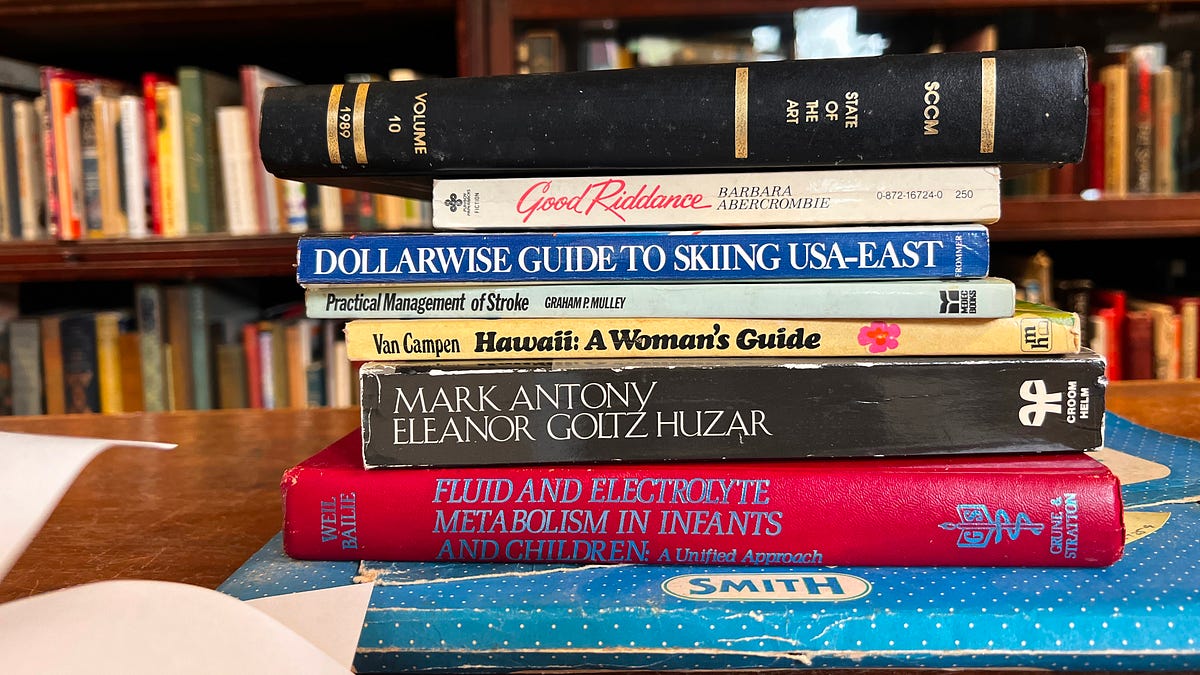
A mysterious bulk buyer has been purchasing large quantities of obscure used books from multiple online marketplaces and reselling them through Amazon's fulfillment system. While social media speculates the buyer is an AI company harvesting training data, a second-generation Houston bookseller argues the pattern more likely reflects financial arbitrage—exploiting price gaps between smaller platforms and Amazon. The episode has surfaced a deeper concern: obscure books, possibly unique copies, are flowing into opaque fulfillment channels where metadata and long-term availability may be lost permanently.
Summaries like this, in your inbox every morning.
Sign up free →What happened
A used bookstore owner in Houston and other sellers across online platforms noticed a single buyer purchasing books in unprecedented bulk quantities—sometimes 70 books at once—mostly obscure titles like 1995 guidebooks and 1991 software manuals, shipped to a location different from the buyer's base. On one slower marketplace platform, one buyer accounted for roughly 95% of sales, which were running 20 times normal volume.
Why it matters
While social media speculation pins this to an AI company harvesting books for training data, the owner believes it is more likely simple financial arbitrage—a buyer using an algorithm to spot price gaps (books underpriced on smaller platforms but listed 5–20× higher on Amazon) and reselling them through Amazon's fulfillment system. Either way, it raises questions about whether obscure books—potentially the last copies in circulation—are being funneled into opaque distribution channels where metadata and availability may be permanently lost.
What to watch
The owner is building an AI tool to catalog metadata for used books before they disappear into what he calls "a black hole," driven by concern that obscure titles liquidated unsold after time on Amazon's fulfillment platform may vanish entirely. He frames the broader issue as a preservation crisis: the internet feels stable, but the digital infrastructure supporting metadata for rare and mid-list books is fragile, and many older ebook platforms have already shut down, erasing their catalogs.
Charlie Becker is a second-generation bookseller running his family's used bookstore in Houston while also building an AI tool for used bookstores. Last week, his store paused sales after receiving a single order for 70 books—so unusual that the staff had to call the marketplace platform to ask how to handle it, since the platform's system provides space for only one tracking number per order.
About two weeks earlier, Becker's family had noticed something unprecedented: on their slowest online platform, sales jumped to 20 times the normal weekly rate. Roughly 95% of those orders came from a single buyer, who was having books shipped to a different location than where they were based. For a bookstore accustomed to selling one book per order—occasionally two or three—the shift was jarring. Within days of pausing, Becker discovered the same pattern being reported by other sellers across bookseller subreddits, Amazon seller forums, Twitter, and other platforms. He could not identify the buyer (or chose not to, citing terms-of-service concerns), but the experience was consistent across reports.
The books being bought were unusual: obscure inventory like "The Insider's Guide to Metro Denver" from 1995 or "How to Use Corel WordPerfect" from 1991—titles people are never normally buying, what sellers call "dead inventory." All were being bought by a single company and sent to a location other than the company's registered base. On social media, the prevailing theory took hold quickly: an AI company was buying up these books to scan them for training data to improve algorithms.
Becker offers a different theory: financial arbitrage. When he combed through the books bought from his store, he discovered a pattern. All the books had been listed on Amazon but not by his store. And on Amazon, each book either showed as currently unavailable or carried a price 5, 10, or 20 times higher than what his platform was listing it for. From Becker's perspective, the buyer is running an algorithm that spots these price discrepancies and inventory gaps across platforms, buys the books at the lower price, and resells them. "For them, it's just a number," he says. The evidence points to the buyer sending the books to FBA prep companies—businesses that handle the logistics of getting books labeled, boxed, and shipped to Amazon's warehouses, where they are stored and fulfilled by Amazon when ordered.
While potentially profitable, this model troubles Becker. His deeper concern is what happens to the books themselves. If a book is one of the last copies in existence—as the comparison between his platform and Amazon listings suggested—and it gets funneled into Amazon's fulfillment system, sent to a third-party seller, and then sits unsold for a time before being liquidated, it may disappear entirely. The metadata—bibliographic details, availability records—gets lost not because it is deleted but because no one is paying to preserve it. Becker contrasts this with his goal as a bookseller: when his store sells a book, it reaches a reader. But when books vanish into a fulfillment black hole, they are lost in a different way.
This experience crystallized Becker's motivation for the AI project he is building: a tool to catalog and preserve metadata for obscure used books before they disappear. He frames the issue as a second preservation crisis. Everyone assumes the internet preserves everything, but the reality is more fragile. Ebook platforms from 10 or 20 years ago have shuttered, erasing their exclusive catalogs. Obscure books that do not sell via FBA after a certain time are liquidated and often vanish. The digital infrastructure supporting bibliographic metadata—publication details, author information—is not as robust as people assume, and somebody has to keep paying to host and maintain that data. His tool will not scan full texts, but it will create a map of what books exist and what risks being lost.
The buying spree began about two weeks before publication, when Charlie Becker's family bookstore in Houston suddenly saw sales on one small marketplace platform jump to 20 times the normal rate. The pattern was unmistakable: bulk orders of unusual books, most going to a single buyer, shipped to a location other than the buyer's registered base. Within days, the phenomenon was being discussed across bookseller forums, Reddit communities, and social media—and the immediate narrative, amplified on Twitter, was that an AI company was vacuum-cleaning the internet's obscure books to feed training algorithms.
Becker's counterargument, grounded in data from his own orders, is more prosaic but arguably more coherent. When he and his family investigated which books were being bought, they found a consistent pattern: each book was listed on Amazon at a significant premium (5×, 10×, or 20× the price on the smaller platform), or it was marked out of stock. This is classic arbitrage—a buyer with systematic access to price data across platforms, spotting inefficiencies, and exploiting them. The buyer appears to be using the proceeds to send books to FBA (fulfillment by Amazon) prep companies, which would handle inventory logistics and reselling through Amazon's platform.
Becker's deeper concern, however, is not about the buyer's motives but about what the transaction means for book preservation. When obscure books flow into Amazon's FBA system and then either sit unsold or get liquidated after a time, they vanish from the market and from public access. The metadata—publication details, author information, availability records—gets lost not because it is erased from the internet but because no one is paying to host or maintain it. Becker notes this is not new: ebook platforms from 10–20 years ago have shuttered, taking their exclusive catalogs with them. His AI tool project aims to create a map of what books exist and what risks being lost—not a full-text archive, but a preservation of the bibliographic footprint itself.
AI-summarized, only the topics you pick — one digest a day via Email, Slack, or Discord.
Free · takes 30 seconds · unsubscribe anytime
No comments yet. Be the first to share your thoughts!
Log in to join the discussion



Get curated AI news from 200+ sources delivered daily to your inbox. Free to use.
Get Started FreeFree · takes 30 seconds · unsubscribe anytime
