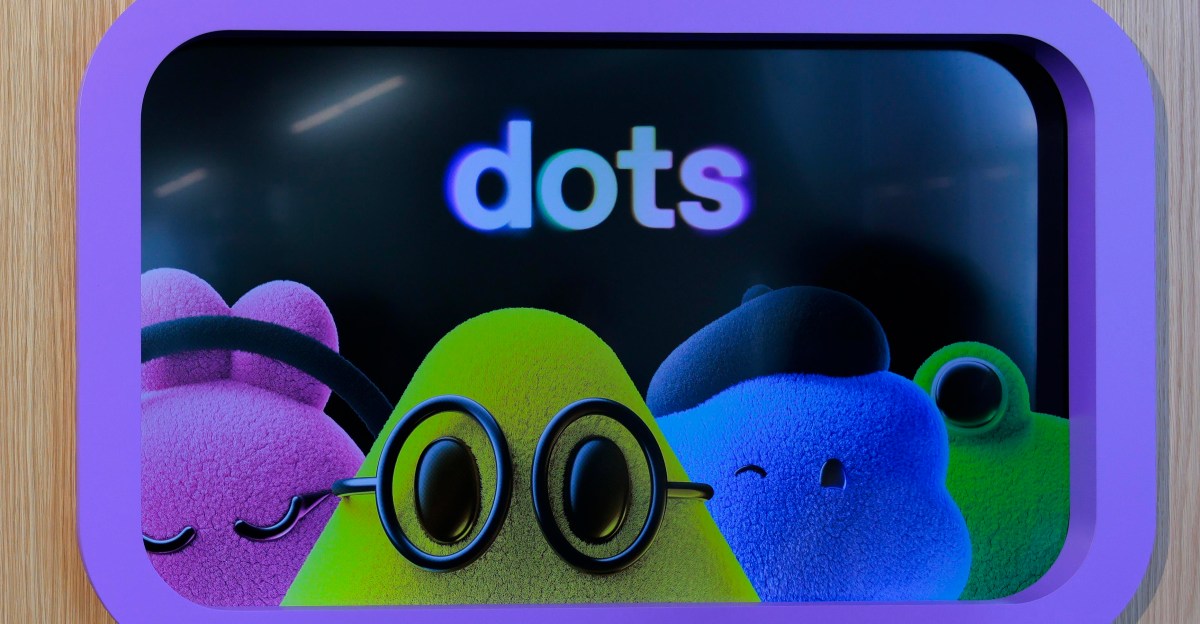
What happened
At DevDay, OpenAI CEO Sam Altman unveiled Dots, a GPT-6 Astra-powered agent restricted to the $20/month Pro plan and up. Meta's Muse is free for anyone with a Meta account.
Why it matters
OpenAI is positioning Dots as a premium, professional tool rather than a mass-market free product. That is a deliberate contrast with free rivals and suggests OpenAI is betting better performance can outweigh price.
What to watch
The test is whether a paid, premium agent can win users against free competitors, and whether OpenAI eventually ships the mass-market version Altman said to expect. Also watch the promised 'specialist' Dots for accounting and legal analysis.
WHO IT HITSOpenAI's paying Pro subscribers and enterprises evaluating AI agents for knowledge work are the immediate audience, while free-tier ChatGPT users are locked out for now. Competitors offering free agent access may gain ground among cost-sensitive users.
Summaries like this, in your inbox every morning.
OpenAI's DevDay announcement of Dots marks a direct challenge to Meta's Muse, which the article describes as having seen early runaway success. The two products share a playful aesthetic — Dots are colorful, personalizable blobs with eyes — but diverge sharply on access. Meta gives Muse away free with a dedicated virtual machine; OpenAI gates Dots behind its $20/month Pro plan and up.
The pricing gap reflects financial reality as much as strategy. OpenAI is reportedly aiming to raise $30 billion at a $1.4 trillion valuation and expects to spend $280 billion by 2030, according to the FT, while facing investor pressure ahead of a potential public listing. Compute for agents is expensive, and Altman acknowledged Dots 'uses a lot of compute.' Meta, as a larger tech giant, can absorb that cost more easily.
OpenAI is countering on capability and trust rather than price. It frames Dots as a 'chief of staff' or experienced engineer for delegating ambitious work, and is working with Microsoft to integrate specialist Dots into Agent 365. It is also promoting a privacy framework called OpenAI Private Intelligence, partly in response to Muse being criticized for sharing a user's address with a stranger. Whether that combination — a better product at a higher price — can overcome free access and Meta's built-in integration with Facebook, Instagram and WhatsApp is the open question. Altman said a mass-market version is expected someday, but for now OpenAI is betting that doing it right matters more than doing it cheap.
Pick your industry and the AI tools you use, and get news related to your work every day.
Free · 30 seconds with Google · unsubscribe anytimeWhat is AIToday? →
Ask AI anything about this article. The AI reads this article, earlier AIToday articles, and Wikipedia, and cites its sources. Q&As are published on this page for other readers too.
Microsoft launched MAI-Transcribe-2-Streaming, its first streaming transcription model, priced at 54 cents per…
Microsoft AI said it released MAI-Transcribe-2-Streaming, which returns provisional results in just over 100 m…
Google announced Gemini 4 Argon on September 30, saying DeepMind's own evaluation beat GPT-6 Astra, Claude Fab…

Nvidia is this analyst's top AI stock pick for October
SoftBank shares posted their first monthly gain in four months in September, rising 24% in four weeks, after O…
Nidec pledged to sell off low-profit units such as household appliances and automotive motors while investing…