
Nvidia has partnered with six major financial institutions to raise over $500 billion in third-party capital for AI infrastructure, with the company holding an option to backstop up to $125 billion.
This reflects how surging demand for AI computing capacity is drawing large institutional investors into the space.
Separately, South Korea is launching a $3.5 billion semiconductor fund as part of a broader effort in which Samsung Electronics, SK Hynix, suppliers, and local governments are expected to invest more than $576 billion in new chip manufacturing projects.
What happened
Nvidia partnered with six major financial institutions to launch compute financing platforms aimed at raising over $500 billion in third-party capital for AI infrastructure. CEO Jensen Huang disclosed that Nvidia has the option to backstop up to $125 billion, representing 25% of the potential deals.
Why it matters
The financing arrangement signals how institutional capital is mobilizing to fund the massive buildout of AI computing capacity. By structuring third-party funding rather than bearing the full cost itself, Nvidia is channeling investor appetite for AI infrastructure into a scalable model.
What to watch
South Korea is separately launching a $3.5 billion semiconductor fund targeting chip materials, parts, equipment, and fabless companies, with Samsung Electronics, SK Hynix, suppliers, and local governments expected to invest more than $576 billion in new chip manufacturing projects as part of broader efforts to accelerate new manufacturing hubs.
Ask the AI about this article →
Nvidia's partnership with six major financial institutions marks a shift in how AI infrastructure investment is being funded. Rather than relying solely on its own capital or direct customer spending, Nvidia is enabling a platform where institutional investors can finance AI computing purchases. This approach addresses the scale challenge: deploying sufficient computing capacity for AI workloads requires capital at a magnitude that no single entity typically funds alone. By offering to backstop 25% of potential deals, Nvidia provides confidence that reduces friction for third-party capital providers, effectively de-risking the financing for institutions entering this market.
In parallel, South Korea's $3.5 billion semiconductor fund reflects a global policy response to ensure domestic chip supply chains are strengthened. The scale of the commitment—with Samsung, SK Hynix, and local partners prepared to invest more than $576 billion in manufacturing—underscores how governments view semiconductor and AI infrastructure as strategic priorities. The body indicates this investment is meant to accelerate new manufacturing hubs across South Korea, suggesting policymakers see geographic diversification of chip production as important amid global AI demand.
For example, today's edition would include:
AI-summarized, only the topics you pick — one digest a day via Email, Slack, or Discord.
Free · takes 30 seconds · unsubscribe anytimeWhat is AIToday? →
Ask AI anything about this article. Q&As are published on this page for other readers too.
Aranya Inc., a startup founded last year, launched today with $11 million in funding

CBTS Technology Solutions LLC launched Forge Agents, a platform that turns a plain-language job description in…

Phonely Ltd. launched Alma, a large language AI model built for voice agents and trained on over 10 million re…

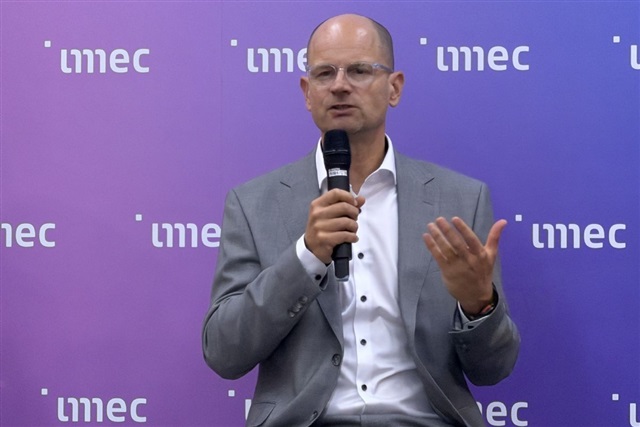
Imec CEO Patrick Vandenameele said at SEMICON Taiwan 2026 that the Belgian research center is broadening its c…
Alphabet's AI Overviews now reach over 2.5 billion monthly users through Google Search, and its ad business ge…
Sarah O’Connor's book 'We Are Not Machines' explores how mechanization and AI have transformed the workforce…