
Taiwan Semiconductor Manufacturing Company reported during its July 16 second-quarter 2026 earnings call that CPU demand in AI data centers is rebounding alongside continued GPU strength, signaling a shift toward more balanced processor demand. This diversification of compute demand across multiple chip architectures positions TSMC to benefit across a broader range of products, rather than relying on GPU demand alone.
Summaries like this, in your inbox every morning.
Sign up free →What happened
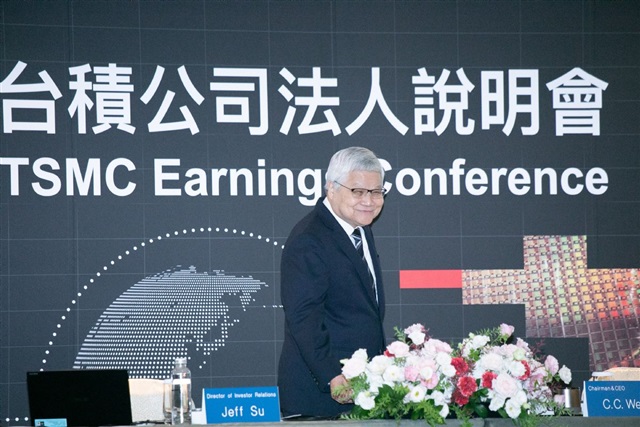
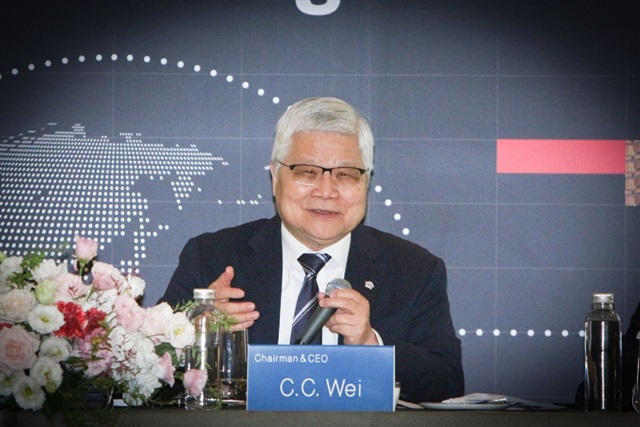
During its July 16 second-quarter 2026 earnings conference, TSMC chairman and CEO C.C. Wei reported that AI demand in data centers continues to evolve, noting a rebound in CPU demand alongside the ongoing strength in GPU markets.
Why it matters
CPU-heavy workloads have historically been less lucrative than GPU demand for chip makers, but a rebound in CPU orders signals that AI data center operators are diversifying their compute mix. TSMC manufactures chips across both CPU and GPU architectures, so a broadening demand profile across processor types could increase the company's revenue opportunities compared to a GPU-only cycle.
What to watch
The earnings conference marked TSMC's disclosure of Q2 2026 results on July 16. Investors should track whether TSMC's guidance and management commentary in coming quarters confirm sustained CPU demand or whether this represents a temporary uptick.
Taiwan Semiconductor Manufacturing Company (TSMC) disclosed a positive signal for its business during its second-quarter 2026 earnings conference held on July 16. Chairman and CEO C.C. Wei highlighted that AI demand in data centers is evolving rapidly, and specifically noted a rebound in CPU demand. This commentary came alongside the company's earnings results, which addressed investor questions about the trajectory of the AI chip cycle. Wei's remarks indicated that while GPU demand has remained robust, CPU demand—which had previously been eclipsed by GPU ordering—is returning to strength. The rebound reflects broader trends in how AI infrastructure is being deployed: whereas early-stage AI data centers prioritized GPU capacity for model training and inference acceleration, mature deployments require balanced compute across both CPUs and GPUs to handle diverse workloads. For TSMC, which serves major AI chip designers across multiple processor architectures, the diversification of demand improves its positioning relative to a scenario where GPU orders alone would drive growth.
TSMC's July 16 earnings call revealed a notable shift in AI data center demand patterns. While GPU demand has dominated the AI boom over the past two years, the rebound in CPU orders suggests that data center operators are now building out more balanced compute infrastructure. This reflects the maturing nature of AI deployment: initial buildouts focused heavily on GPU-accelerated training and inference, but as AI workloads expand into a broader range of applications—from control systems to analytics—CPU capacity becomes increasingly important. For TSMC, which manufactures processors across both GPU and CPU architectures for multiple customers, a diversified demand profile reduces its exposure to any single product category and expands addressable revenue per data center buildout.
AI-summarized, only the topics you pick — one digest a day via Email, Slack, or Discord.
Free · takes 30 seconds · unsubscribe anytime
No comments yet. Be the first to share your thoughts!
Log in to join the discussion



Get curated AI news from 200+ sources delivered daily to your inbox. Free to use.
Get Started FreeFree · takes 30 seconds · unsubscribe anytime
1 minute a day. The AI essentials.
200+ sources · Email / LINE / Slack
