AIToday

LLM-powered auditing tool aims to verify shared data between untrusted parties

LessWrong AI9h agoSend on LINE
LLM-powered auditing tool aims to verify shared data between untrusted parties

Key takeaway

Researchers have designed a system that uses a language model running in a secure hardware environment to audit and verify data shared between parties who don't fully trust each other. The tool executes pre-agreed commands on private information, addressing a gap where traditional legal contracts and existing technologies have struggled to keep pace with the growing complexity and volume of monitoring requirements.

Summaries like this, in your inbox every morning.

Sign up free →

3 Key Points

  • What happened

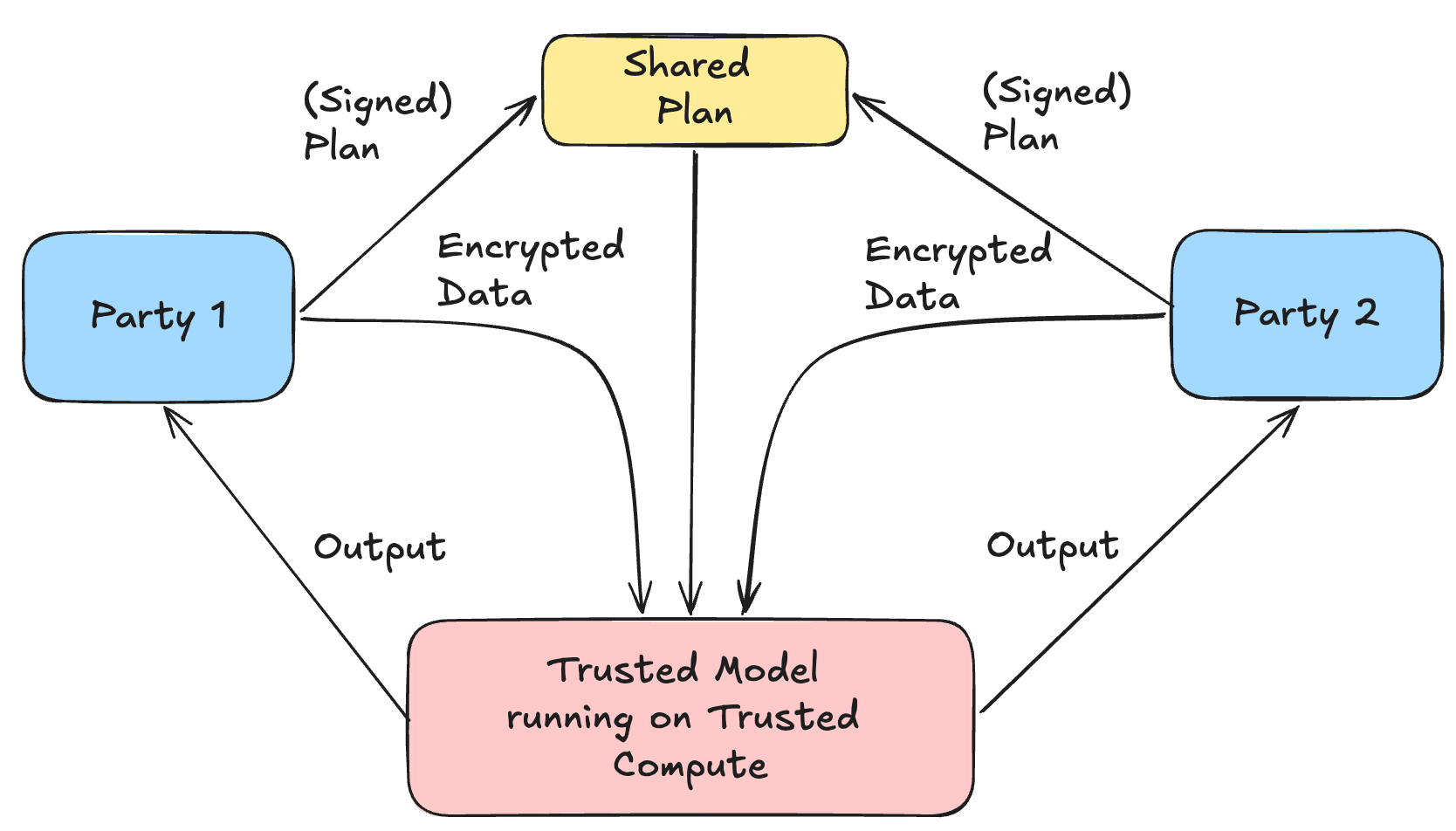
    Researchers have designed an open-source auditing system that runs a language model (AI that understands and generates text) inside a trusted execution environment (TEE)—a secure hardware zone—to execute commands on private data that two parties have agreed to share.

  • Why it matters

    Legal contracts have traditionally governed information sharing between parties that don't trust each other, but the scale and pace of monitoring needs has grown beyond what contracts alone can handle. This tool could enable third-party auditing and governance monitoring without requiring one party to fully expose sensitive information to the other.

  • What to watch

    The scheme is open-source, suggesting the approach is intended for broader adoption; the body indicates applications to governance monitoring, though specific deployment timelines or real-world use cases are not detailed.

In Depth

The article frames a core challenge in modern information sharing: as organizations accumulate more data and monitoring requirements multiply in both scope and frequency, traditional governance mechanisms struggle to keep pace. Legal contracts have long served as the primary mechanism for trust between untrusting parties, sometimes supplemented by cryptographic or blockchain technologies. Yet the sheer volume and speed of transactions and data flows that now require oversight have begun to exceed what these tools can practically manage.

The researchers' proposed solution is architecturally straightforward but novel in its application: an open-source language model (an AI system that understands and generates text) runs inside a trusted execution environment, or TEE. A TEE is a secure zone within a computer's hardware that isolates sensitive computation from the rest of the system, preventing even system administrators from observing what occurs inside. Within this protected zone, the language model executes commands that both parties have pre-agreed upon, operating on private data that neither party wishes to fully expose to the other.

This design allows for third-party auditing without requiring either party to surrender complete visibility into their data. Instead, auditors or the counterparty can verify compliance with agreed-upon rules by observing the output of the pre-approved commands, not the raw data itself. The article notes that this tooling can directly apply to governance monitoring and third-party oversight, expanding its use beyond simple data verification to encompass broader governance concerns. Although the article does not elaborate on specific deployments, pilot results, or timeline for adoption, the open-source framing indicates the researchers intend for the approach to be adopted and built upon by a wider community.

Context & Analysis

The problem the researchers address stems from a fundamental tension in data sharing: organizations often need to verify information held by another party without exposing their own sensitive data. Traditionally, this has been managed through legal contracts and, in some cases, cryptographic or blockchain solutions. However, the article suggests that the modern volume and velocity of data, combined with increasingly complex monitoring requirements, have outpaced the effectiveness of these conventional approaches.

The proposed solution leverages language models (AI systems trained to process and generate text) as auditing instruments. By confining the model's execution to a trusted execution environment—a hardware-enforced secure zone—the researchers create a boundary that prevents either party from accessing the other's underlying data while still allowing verification to occur. The system operates under a rule set both parties have agreed to in advance, combining the clarity of contractual terms with the computational capability of an AI system. The open-source nature of the tool suggests an intent to make this auditing capability widely available, though the article does not specify deployment status, cost, or jurisdictional applicability.

FAQ

How does this auditing system protect sensitive data?
The language model runs inside a trusted execution environment (TEE), which is a secure hardware zone that isolates the processing of private data from external access. Only commands that both parties have agreed on beforehand are executed on the data.
What problem does this solve that legal contracts don't?
Legal contracts have traditionally governed information sharing between untrusting parties, but the scale and pace of things to keep track of and monitor has grown immensely, making contracts insufficient as a standalone tool.

Get the latest AI Safety & Alignment news every morning

AI-summarized, only the topics you pick — one digest a day via Email, Slack, or Discord.

Free · takes 30 seconds · unsubscribe anytime

Discussion

No comments yet. Be the first to share your thoughts!

Log in to join the discussion

Related Articles

Stay ahead with AI news

Get curated AI news from 200+ sources delivered daily to your inbox. Free to use.

Get Started Free

Free · takes 30 seconds · unsubscribe anytime