AIToday

Trump's AI Brain Trust Divided on China Strategy

WIRED AI6h agoSend on LINE
Trump's AI Brain Trust Divided on China Strategy

Key takeaway

The Trump administration is developing AI policy through competing power centers with no unified approach, as Commerce, Treasury, the White House, and the National Cyber Director office push conflicting strategies on regulating Chinese AI models and export controls. The outcome will likely be decided by who has the most direct influence with President Trump, rather than by coordinated interagency consensus, as officials range from hands-off (former AI Czar David Sacks) to aggressive (Treasury Secretary Scott Bessent, who has threatened sanctions on Chinese labs for model distillation).

Summaries like this, in your inbox every morning.

Sign up free →

3 Key Points

  • What happened

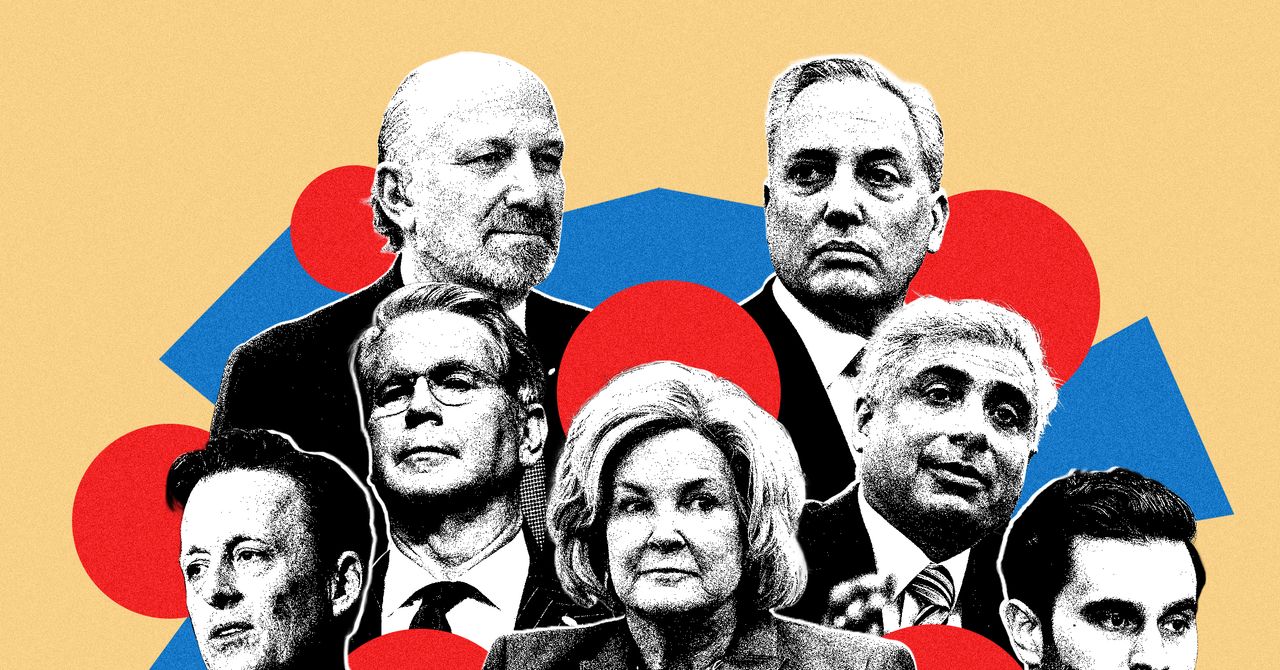
    The Trump administration is developing AI policy through a scattered group of officials across multiple departments with sharply conflicting views. Commerce Secretary Howard Lutnick, National Cyber Director Sean Cairncross, former AI Czar David Sacks, Treasury Secretary Scott Bessent, and White House Chief of Staff Susie Wiles are the key power brokers, each pushing different regulatory approaches—from Lutnick's middle-ground export controls to Bessent's aggressive stance on Chinese AI and Sacks's hands-off philosophy.

  • Why it matters

    As China's open-weight AI models become more powerful, the lack of coordinated interagency policy means the outcome will likely be decided by whoever has the most influence with President Trump rather than by a unified strategy. A senior White House official described the situation as "an argument with ten sides," signaling internal discord that could shape whether and how the US restricts AI development to maintain its lead over China.

  • What to watch

    Treasury Secretary Bessent has adopted the most aggressive stance, threatening Chinese labs with sanctions or inclusion on the Entity List for distillation (copying US models), and has told Wiles that the US, Europe, Japan, and other Western allies need to move faster to develop their own open-weight models. Key pressure points include Xi Jinping's visit to the White House in September and an APEC summit in November.

In Depth

The Trump administration is developing AI policy without a unified interagency framework, instead relying on several officials scattered across Commerce, Treasury, the National Security Council, and the White House, each with distinct views on how to regulate AI and compete with China. One senior administration official described the current situation to WIRED as "an argument with ten sides," underlining the degree of internal disagreement.

Howard Lutnick, Commerce Secretary, has emerged as an influential figure partly because his department oversees export controls through the Bureau of Industry and Security. According to people familiar with his thinking, Lutnick has explored ways to create incentives for top US AI labs to develop their own open-weight models to counterbalance China, and he has spoken with leaders at multiple AI companies. On Thursday, Lutnick played down the capabilities of Moonshot AI's Kimi K3 model, writing on X that his team found it performed worse than leading US frontier models in key benchmark tests. Lutnick appears to occupy a middle position on regulation: he imposed export controls on Anthropic but has been more permissive than other White House officials. His acting deputy at the Center for AI Standards and Innovation (CAISI), Arvind Raman, assumed the role last week after his predecessor Chris Fall abruptly resigned following weeks of negotiations with Anthropic over safeguards for its Fable 5 model.

Sean Cairncross, the National Cyber Director, has taken a harder line on Chinese AI and is empowered at the White House to develop policy countering potential national security risks from AI. He helped assemble President Trump's June 2 executive order outlining a framework to assess the most powerful AI models. Although Cairncross is a former political campaign lawyer without tech or AI background, staff credit him with engaging seriously with AI's hard national security challenges and working without excessive micromanagement. He and his chief of staff, Lara Smith, have focused particularly on preventing Chinese labs from training models through distillation—the practice of copying US innovations.

David Sacks, a tech investor and Trump's former AI czar who departed in March, remains one of the administration's most influential AI advisers and maintains direct access to the president. Sacks has consistently advocated a hands-off approach, successfully intervening to water down some regulatory provisions in the June 2 executive order. Using his X account, which has 1.6 million followers, he has shaped the administration's stance from outside his formal role. On July 23, Sacks wrote: "Secretary Howard Lutnick is right. The Kimi Panic needs to stop. American frontier models are still ahead. When you factor in what's in the lab, the gap is even larger. As long as we keep releasing, we will stay ahead." That post generated nearly 500,000 views.

White House Chief of Staff Susie Wiles serves as Trump's top political aide in the policy process, vetting proposals from all sides before they reach the Oval Office. Treasury Secretary Scott Bessent and other senior officials take their positions directly to her, and her decisions on administration issues are typically final. Bessent has adopted perhaps the most aggressive stance toward Chinese AI. Last week, he posted on X that he repudiated distillation as "IP theft" and threatened Chinese labs with sanctions or inclusion on the Entity List, a US government trade-restriction list. After playing little role in restricting Anthropic last month, Bessent has stepped up his AI policy involvement ahead of Xi Jinping's planned White House visit in September and an APEC summit in November. He has told Wiles and others that the US, Europe, Japan, and other Western allies must accelerate development of their own open-weight models to avoid losing the AI race to China. Luke Pettit, a Treasury deputy who previously served as a senior policy adviser in the US Senate, has become the point person on AI at Treasury under Bessent, working alongside the Treasury's chief information officer and former DOGE member Sam Corcos. The Treasury Department overall has focused on the systemic risk of AI—specifically, the danger that a model inadvertently closing trading positions or accessing sensitive information at banks could crash the economy.

The White House spokesperson Elizabeth Huston, responding to requests for comment, stated that the administration's deliberations on Chinese AI are centered on bolstering US AI: "The United States leads the world in AI innovation, and President Trump will keep it that way. The Trump Administration is doubling down on innovation to widen the gap between America and the rest of the world."

Context & Analysis

The Trump administration's approach to AI regulation is being shaped not by a unified interagency process but by a collection of officials with competing philosophies and access to the president. As one senior White House official told WIRED, the debate is "an argument with ten sides," reflecting the absence of coordinated policy-making. The fracture reveals two broad camps: those favoring a lighter regulatory touch (Sacks, who maintains a direct line to Trump despite leaving his formal AI czar role) and those pushing stricter controls on China and distillation practices (Bessent at Treasury, Cairncross at the National Cyber Directorate). Lutnick occupies the middle, having imposed export controls on Anthropic while exploring incentives for US companies to build competing open-weight models.

The stakes are high because China's open-weight AI models are growing more capable, and US officials see model distillation—the practice of training Chinese models on US innovations—as a core threat to American technological supremacy. Bessent has escalated his involvement ahead of Xi Jinping's planned White House visit in September and the APEC summit in November, suggesting that China policy will be a major diplomatic focus. The absence of a single decision-maker or coordinated process means that policy outcomes may depend less on strategic coherence than on which official has the strongest relationship with the president on any given issue.

FAQ

Who are the main officials shaping Trump's AI policy?
The key power brokers are Commerce Secretary Howard Lutnick (who oversees export controls), National Cyber Director Sean Cairncross, former AI Czar David Sacks, Treasury Secretary Scott Bessent, and White House Chief of Staff Susie Wiles. Lutnick's deputy is Arvind Raman, the acting director of the Center for AI Standards and Innovation at the Commerce Department.
What is the main disagreement among Trump's AI advisers?
Officials differ sharply on how to handle Chinese AI and open-weight models. David Sacks advocates a hands-off approach and has publicly argued that US frontier models are still ahead; Scott Bessent takes the most aggressive stance, calling distillation (copying US models) "IP theft" and threatening sanctions; and Howard Lutnick occupies a middle ground, imposing some export controls while exploring incentives for US labs to build their own open-weight models.
What recent action did Treasury Secretary Bessent take on Chinese AI?
In a post on X last week, Bessent repudiated distillation as "IP theft" and threatened Chinese labs with sanctions or inclusion on the Entity List, a trade-restriction list maintained by the US government. He has also told White House Chief of Staff Susie Wiles and others that the US, Europe, Japan, and other Western allies need to move faster to develop their own open-weight models.

Get the latest AI Regulation & Policy news every morning

AI-summarized, only the topics you pick — one digest a day via Email, Slack, or Discord.

Free · takes 30 seconds · unsubscribe anytime

Discussion

No comments yet. Be the first to share your thoughts!

Log in to join the discussion

Related Articles

Stay ahead with AI news

Get curated AI news from 200+ sources delivered daily to your inbox. Free to use.

Get Started Free

Free · takes 30 seconds · unsubscribe anytime