What happened
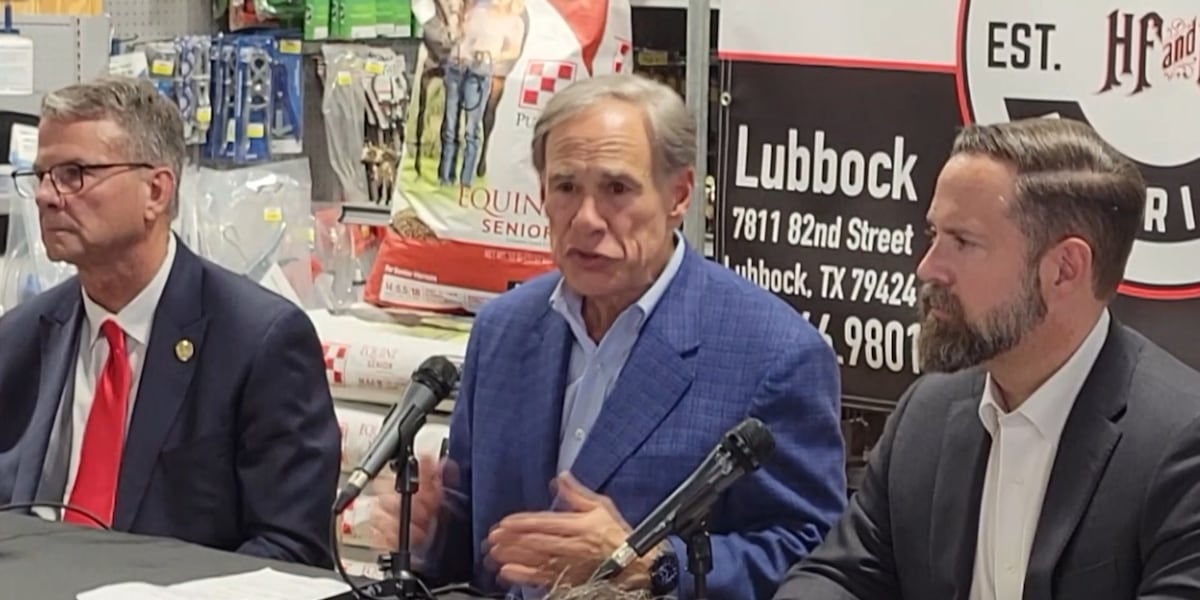
Governor Greg Abbott visited Lubbock on Friday, hosting a roundtable with local business owners, House Speaker Dustin Burrows, and State Senator Charles Perry. He outlined strict guidelines for AI data centers, saying Texas has the most stringent requirements to protect rural communities, barring construction in neighborhoods or rural communities that don't want them.
Why it matters
Abbott linked these rules to affordability, which was the main subject. He proposed capping property tax increases, requiring a two-thirds vote for any rise, lowering the annual cap on property value increases, and reducing appraisals to once every five years. Cities and school districts face budget shortfalls, which they attribute to previous property tax cuts, despite Abbott noting an $8 billion investment in public education last year, which schools say is not enough.
What to watch
The next legislative session, starting in January, will focus on affordability, according to Speaker Burrows. A key concern is whether state decisions can balance growth and affordability, as cities like Wolfforth depend on property and sales tax to fund police, fire, and public works, so the outcome hinges on how new limits affect municipal budgets.
Summaries like this, every morning.
The governor's visit to Lubbock underscores a central tension in Texas policy: how to ease the property tax burden on residents and businesses while maintaining the revenue that local governments rely on for basic services. Abbott's proposals, including a two-thirds vote requirement for tax increases and appraisals every five years, aim to deliver affordability but directly challenge the fiscal models of municipalities, which depend on property and sales taxes to fund police, fire, and public works. The stark contrast is visible between the state's $8 billion education investment and the schools' contention that it is insufficient, highlighting the trade-off between state-led relief and local needs. As the legislative session approaches in January, the decisions made will test the balance between growth and affordability, a concern voiced by city leaders like Danielle Sweat of Wolfforth, who acknowledge that municipalities must adapt to whatever laws are passed. The outcome likely hinges on how these tax and appraisal rules are structured, as overly restrictive caps could exacerbate budget shortfalls for local entities, potentially forcing them to cut services or seek alternative revenue sources.
Pick your industry and the AI tools you use, and get news related to your work every day.
Free · 30 seconds with Google · unsubscribe anytimeWhat is AIToday? →
Ask AI anything about this article. The AI reads this article, earlier AIToday articles, and Wikipedia, and cites its sources. Q&As are published on this page for other readers too.
Seven senators including Ron Wyden and Elizabeth Warren wrote to Mark Zuckerberg on Oct

Google updated its privacy policy on October 16th, adding an exception that lets data from Gmail, Drive, and G…

Meta moved enforcement of its new business terms from October 30th to November 20th, with spokesperson Daniel…

The Council, with Germany's support, approved a text that generally permits AI companies to use any personal d…

In a federal case in the U.S

OpenAI and NASK's AI Safety Research Center, which serves as the Polish Artificial Intelligence Safety Institu…