AIToday

Palantir CEO predicts AI will make him 20x richer while middle-class wages just double

Fortune AI3h ago
Palantir CEO predicts AI will make him 20x richer while middle-class wages just double

Key takeaway

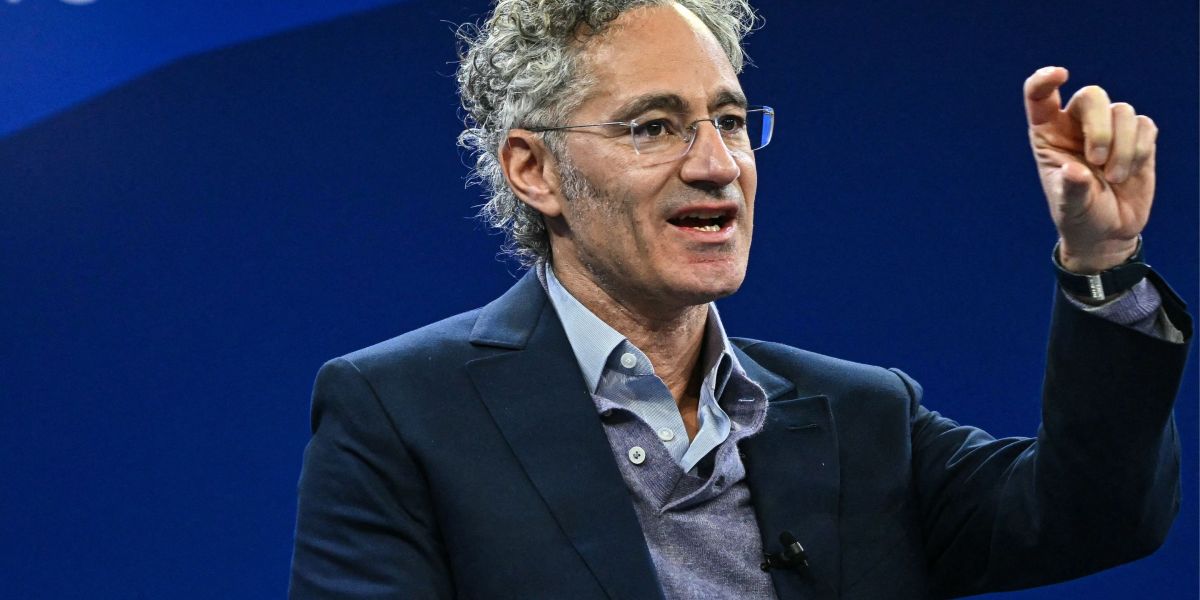
Palantir CEO Alex Karp warned that artificial intelligence will dramatically widen wealth inequality: while he personally could become 20x richer (approaching a $300 billion(約48兆円) fortune), middle-class workers are likely to see only modest salary increases, perhaps doubling over a decade. Karp framed this as a structural problem requiring attention, echoing concerns from other business leaders including BlackRock's Larry Fink, who noted that AI gains are concentrating among the owners of models, data, and infrastructure. Global billionaire wealth hit a record $18.3 trillion(約2900兆円) in 2025, growing over 16% that year—three times faster than the previous five-year average.

Summaries like this, in your inbox every morning.

Sign up free →

3 Key Points

  • What happened

    Palantir CEO Alex Karp, whose net worth stands at about $15 billion(約2.4兆円) as Palantir's market value has reached roughly $322 billion(約52兆円), told a podcast that AI could make him "20x wealthier"—implying a fortune approaching $300 billion(約48兆円)—while middle-class workers might see salaries merely double over the next decade.

  • Why it matters

    Karp framed this as a "complete decoupling of unimaginable wealth and normal wealth" that will worsen inequality, a concern echoed by BlackRock CEO Larry Fink (net worth estimated at $1.3 billion(約2100億円)), who warned that early AI gains are flowing only to "owners of models, owners of data and owners of infrastructure." Global billionaire wealth surged over 16% in 2025 to $18.3 trillion(約2900兆円)—its highest level in history—underscoring how concentrated gains are becoming.

  • What to watch

    Karp argued the wealth disparity is not inevitable, criticizing what he called the "overselling of AI in this country" and suggesting the concentration could be addressed. JPMorgan Chase CEO Jamie Dimon acknowledged that lower-income Americans "have, in fact, been left behind," signaling that pressure on leaders to address inequality may continue.

In Depth

Palantir CEO Alex Karp, now with a net worth of about $15 billion(約2.4兆円), used a recent podcast appearance on MDMeets to sound an alarm about artificial intelligence's impact on wealth inequality. Speaking to Axel Springer CEO Mathias Döpfner, Karp estimated that AI could make him "20x wealthier," implying a fortune approaching $300 billion(約48兆円)—a staggering personal projection that he framed not as an achievement to celebrate but as evidence of a systemic problem.

In sharp contrast, Karp said middle-class workers might see their salaries simply double over the next decade. He described this divergence as a "complete decoupling of unimaginable wealth and normal wealth," warning that "the people involved are likely to get 10, 100 times wealthier than they already are." He added a particularly pointed critique of the people likely to accumulate that wealth, characterizing them as "very oddly shaped IQ specimens that you probably wouldn't want to have over for dinner." Beyond the wealth itself, Karp criticized what he called the "overselling of AI in this country," calling it "really somewhat disconcerting, but it's also depressing because you don't have to do it."

Karp is far from alone in sounding this warning. Oxfam data shows that global billionaire wealth surged over 16% in 2025 to $18.3 trillion(約2900兆円)—its highest level in history and three times faster than the previous five-year average. No figure has embodied this explosion more dramatically than Elon Musk, whose fortune currently stands at roughly $833 billion(約130兆円) after he briefly became the world's first trillionaire earlier in the year. To illustrate the scale, Oxfam estimated that someone with a $1 trillion(約160兆円) fortune could pay a 10% wealth tax of roughly $100 billion(約16兆円) and still remain among Earth's richest people—and that $100 billion(約16兆円) alone would be enough to lift more than 800 million people out of extreme poverty for a year.

Other business leaders have echoed Karp's concerns. BlackRock CEO Larry Fink, with a net worth estimated at $1.3 billion(約2100億円), warned earlier this year that "since the fall of the Berlin Wall, more wealth has been created than in any time prior in human history, but in advanced economies, that wealth has accrued to a far narrower share of people than any healthy society can ultimately sustain." Speaking at the World Economic Forum in Davos, Switzerland, Fink noted that "early gains are flowing to the owners of models, owners of data and owners of infrastructure," and posed a critical challenge: "What happens to everyone else if AI does to white-collar workers what globalization did to blue-collar workers?" Nobel Prize-winning computer scientist Geoffrey Hinton, often called the "Godfather of AI," framed the issue even more starkly, saying "rich people are going to use AI to replace workers" and predicting it will "create massive unemployment and a huge rise in profits. It will make a few people much richer and most people poorer." JPMorgan Chase CEO Jamie Dimon took a more measured but still concerned tone, acknowledging that lower-income Americans have "in fact, been left behind," and noting that "if you were the average citizen here and you say, 'These wealthy people are getting unbelievably wealthy, and this segment's been left behind,' that's kind of annoying."

Context & Analysis

Karp's warning reflects a growing consensus among business leaders that AI's economic benefits are concentrating at the top. Palantir's market value of roughly $322 billion(約52兆円) has made Karp one of the wealthiest figures in tech, yet he explicitly frames this as emblematic of a problem rather than a success. His prediction of a 20x personal wealth gain sits uncomfortably against his acknowledgment that average workers will see only modest raises—a ratio he calls a "complete decoupling of unimaginable wealth and normal wealth."

This concern has gained weight from statements by other major CEOs. BlackRock's Larry Fink warned at Davos that "early gains are flowing to the owners of models, owners of data and owners of infrastructure" and posed the critical question: "What happens to everyone else if AI does to white-collar workers what globalization did to blue-collar workers?" Even JPMorgan Chase CEO Jamie Dimon, typically more optimistic about business outcomes, conceded that lower-income Americans "have, in fact, been left behind."

The data supporting these concerns is stark. Global billionaire wealth reached $18.3 trillion(約2900兆円) in 2025—a record—growing over 16% that year, three times faster than the prior five-year average. By contrast, wage growth for most workers has remained comparatively modest for generations. Karp's particular critique extends beyond inequality itself: he argued that the "overselling of AI in this country" is both "disconcerting" and "depressing," implying that the concentration of wealth is not inevitable but a choice made by those shaping AI's development and deployment.

FAQ

How much wealthier does Karp predict AI will make him?
Karp estimated AI could make him "20x wealthier," implying a fortune approaching $300 billion(約48兆円), compared to his current net worth of about $15 billion(約2.4兆円).
What does Karp say will happen to middle-class workers' wages from AI?
Karp said middle-class workers might simply see their salaries double over the next decade, a sharp contrast to the 10–100x wealth gains he expects for people involved in AI development.
How much did global billionaire wealth grow in 2025?
According to Oxfam, global billionaire wealth surged by over 16% in 2025 to $18.3 trillion(約2900兆円), its highest level in history—three times faster than the previous five-year average.

Get the latest AI Stocks & Markets news every morning

AI-summarized, only the topics you pick — one digest a day via Email, Slack, or Discord.

Free · takes 30 seconds · unsubscribe anytime

Discussion

No comments yet. Be the first to share your thoughts!

Log in to join the discussion

Related Articles

Stay ahead with AI news

Get curated AI news from 200+ sources delivered daily to your inbox. Free to use.

Get Started Free

Free · takes 30 seconds · unsubscribe anytime

1 minute a day. The AI essentials.

200+ sources · Email / LINE / Slack

Get it free →