What happened
At HumanX in Amsterdam, Booking.com chief business officer James Waters said AI won't take your job or customers, but a faster-learning rival company might, and that Booking.com regrets building AI tools frontier model makers later shipped.
Why it matters
Waters's point is that AI risk is competitive, not technological, and his own regret suggests buyers may now wait for model makers rather than build in-house, leaving the edge in customer problems and proprietary data.
What to watch
Booking.com's own research found 89% of people want AI for travel research but only 6% trust it to decide, so agentic booking hinges on that trust gap closing. Watch whether Google Maps' Ask Maps hotel booking, which began in August, pulls users away.
WHO IT HITSThe message lands on product and marketing teams at travel and consumer brands deciding whether to build AI tools in-house or buy them, and on leaders setting AI budgets without a precise ROI figure.
Summaries like this, in your inbox every morning.
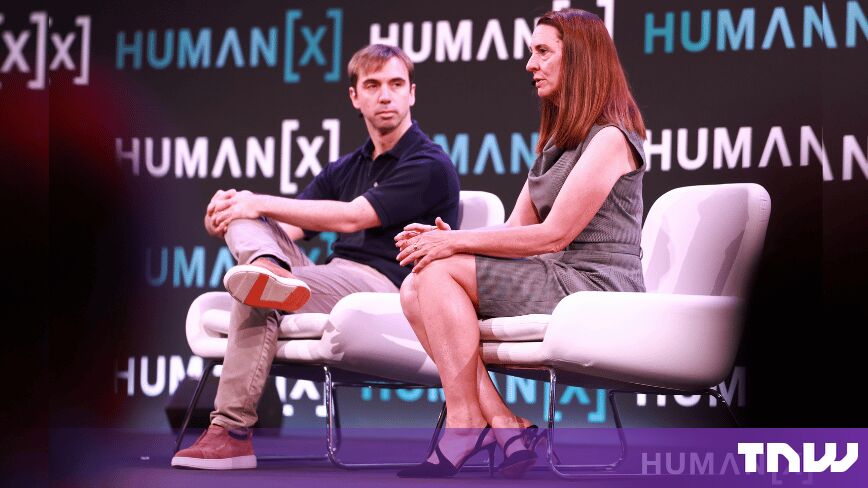
Waters's remarks came on a panel at HumanX in Amsterdam moderated by Bloomberg's Amsterdam bureau chief, Dasha Afanasieva, alongside Diageo chief digital officer Susan Jones. Both executives described the same underlying problem from different angles: the tools moved faster than their organizations did. Booking.com built AI orchestrations it now wishes it had never built, because frontier model makers shipped the same capabilities soon after. Diageo's early experiments added AI on top of existing processes and did not work, which is why Jones says companies have to fix their processes and data first.
The two companies also differ in how they push adoption. Booking.com told its product and tech teams to stop work on their backlogs for two sprints and explore how AI could change their work, and a central team owns the tools, training and support. Diageo instead puts tools in the hands of the people doing the jobs, with a cross-functional marketing team reviewing regulatory and ethical issues and seeing every agent and tool in development. Waters measures his central team partly on how much generative AI use is delivered without its help — too high means the core team is not innovating, too low means the business has not learned.
What the panel leaves open is how quickly traveler behavior catches up. Waters leans on his own research, where 89% want AI for travel research but only 6% trust it to make decisions, and he compares the risk to self-driving cars: one crash takes them all off the road, while human error does not. For Booking.com the crash would be irrelevant content or wrong prices. Whether agentic booking spreads may depend on whether that trust gap closes, and on how services like Google Maps' Ask Maps, which began offering hotel booking in August, handle the same problem.
For example, today's edition would include:
AI-summarized, only the topics you pick: one digest a day via Email, LINE, or Slack.
Free · 30 seconds with Google · unsubscribe anytimeWhat is AIToday? →
Ask AI anything about this article. The AI reads this article, earlier AIToday articles, and Wikipedia, and cites its sources. Q&As are published on this page for other readers too.
Tamara Grant, who finished Purdue University's Master of Science in Artificial Intelligence in spring 2026, wa…

In a Sept. 25 letter, Walmart CEO John Furner said the retailer will not use AI, customers' income, shopping h…

Texas Instruments is trading around $278.05, above its $275.21 breakout level, and is testing resistance at $2…
Qualcomm introduced the Snapdragon 8 Elite Gen 6 and Elite Extreme Gen 6 chips with on-device AI, aiming at pr…

ASML trades around 31 times forward earnings and Applied Materials near 27 times, the article notes
CleanTechnica writer Fritz Hasler says Tesla's in-car Grok bot, Ara, offered an unprompted forecast that FSD V…