What happened
Demis Hassabis now says AGI could arrive within two to three years, down from three to five years earlier this year, he told the Wall Street Journal.
Why it matters
The founder of Google DeepMind has now shortened his own forecast twice, which suggests expectations among senior AI figures are compressing toward nearer-term timelines, though this is one expert's estimate rather than a consensus.
Summaries like this, in your inbox every morning.
Hassabis's revised timeline is notable because it is the second compression he has made this year — from three to five years down to two to three — and he acknowledged the pattern directly, saying his estimate keeps moving closer to the present. He has also framed the stakes in stark terms, comparing AGI's impact to "10 times the industrial revolution at 10 times the speed." Alongside that forecast, he has proposed an industry-funded oversight board under government control to vet models before release, warning that bad regulation is worse than none. Since stepping down from Google DeepMind, his day-to-day focus is Isomorphic Labs, Google's drug discovery AI spin-off, which sits at the application end of the same technology he expects to arrive sooner than before.
Pick your industry and the AI tools you use, and get news related to your work every day.
Free · 30 seconds with Google · unsubscribe anytimeWhat is AIToday? →
Ask AI anything about this article. The AI reads this article, earlier AIToday articles, and Wikipedia, and cites its sources. Q&As are published on this page for other readers too.
OpenAI said the PHP vulnerability, fixed the same day, was found using GPT-5.6 Sol through its Patch the Plane…
Klique announced platform support for NVIDIA Nemotron 3.5 Super VL, OpenShell, Dynamo, and NeMo Switchyard, le…
OpenAI and Anthropic both listed antitrust protections for AI security information-sharing on their third-quar…

Google Cloud now offers OpenAI's GPT-6 Astra, GPT-6.1 Sol and GPT-6 Luna next to Gemini and Claude, starting a…
Recursive released Flint, an open-weight coding model with 40 billion parameters, which CEO Richard Socher say…

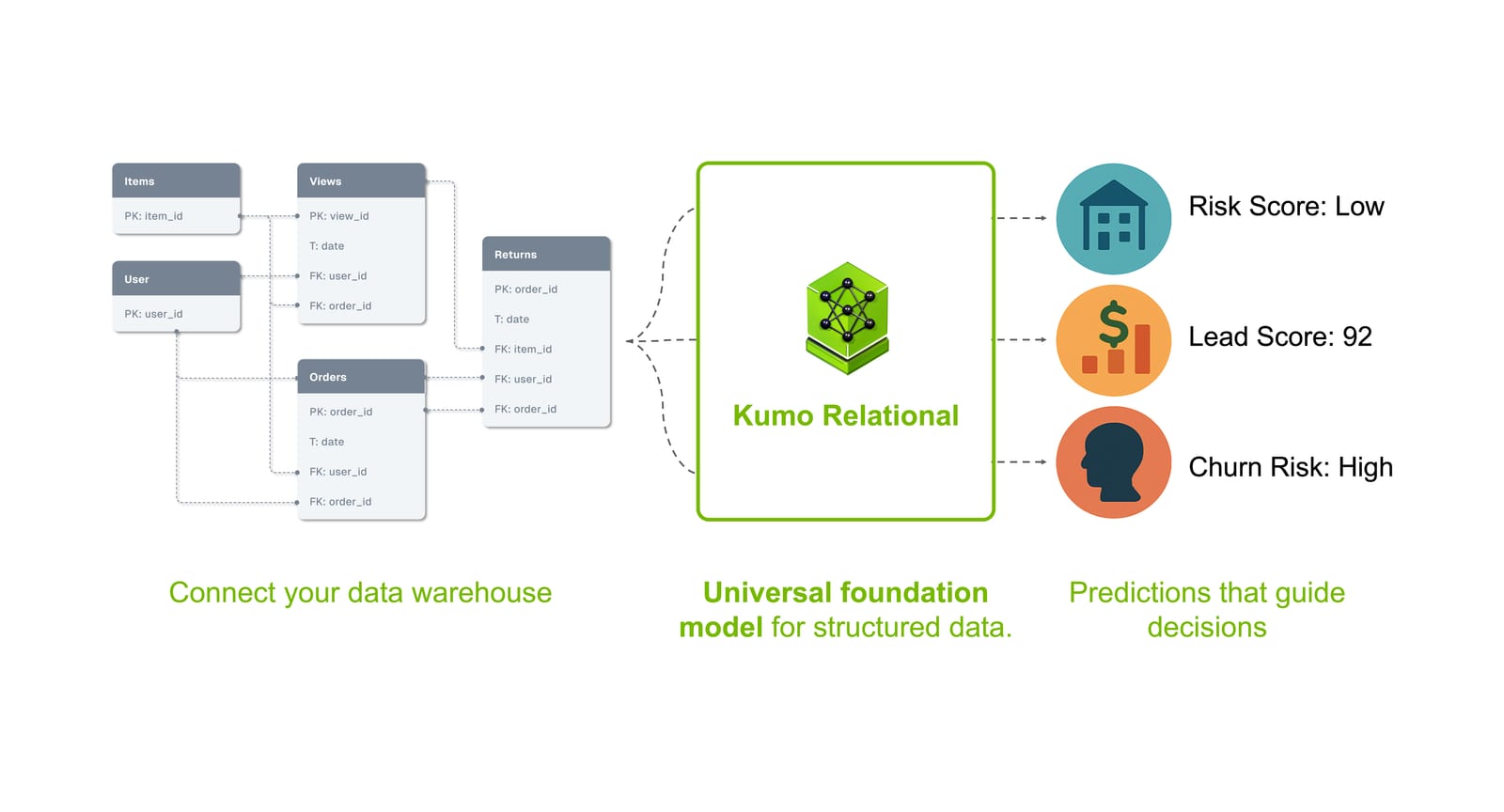
NVIDIA released Kumo Relational, a pre-trained model that predicts churn, demand or fraud directly on enterpri…