What happened
The Washington Post asked six popular chatbots to build midterm voter guides for a random address in every US county, and found Copilot cited the AI-produced Ballot Brief in 75 percent of tests, ChatGPT in 22 percent.
Why it matters
Reporters found multiple instances of the Ballot Brief translating Zip codes to the wrong congressional districts, and chatbots repeated those errors — so voters relying on Copilot or ChatGPT for district information may be steered to the wrong race.
WHO IT HITSVoters who use Copilot or ChatGPT to look up their congressional district for the midterms face a higher risk of being given the wrong race, based on the Post's tests.
Summaries like this, every morning.
The Post's test design is what gives the finding its weight: it did not sample a handful of prompts, but asked six popular chatbots to build midterm voter guides for a random address in every US county, then analyzed more than 3,000 resulting guides. That volume is what surfaced both the citation pattern around the Ballot Brief and the broader district-naming failures.
The Ballot Brief itself sits at the center of the citation pattern. Reporters found multiple instances of the site translating Zip codes to the wrong congressional districts, and the chatbots then repeated those errors. The site is, in the Post's words, "largely produced by AI tools and run by a former executive at Rumble, the platform that powers President Donald Trump's Truth Social." Copilot, Perplexity and ChatGPT each cited the Ballot Brief substantially, according to the Post.
The responses point in different directions. Ben Torres Ezrick, founder of the Ballot Brief, said his site draws on official government sources and allows users to provide an address to get a more complete set of candidate information. OpenAI's Nate Evans said ChatGPT's search tools cite from a range of sources so people can explore and make their own judgements, adding that OpenAI takes action to improve model responses when issues are brought to its attention.
Pick your industry and the AI tools you use, and get news related to your work every day.
Free · 30 seconds with Google · unsubscribe anytimeWhat is AIToday? →
Ask AI anything about this article. The AI reads this article, earlier AIToday articles, and Wikipedia, and cites its sources. Q&As are published on this page for other readers too.
POLI UP株式会社 released POLI UP on November 1, 2026, bundling supporter management, AI writing, SNS strategy advi…

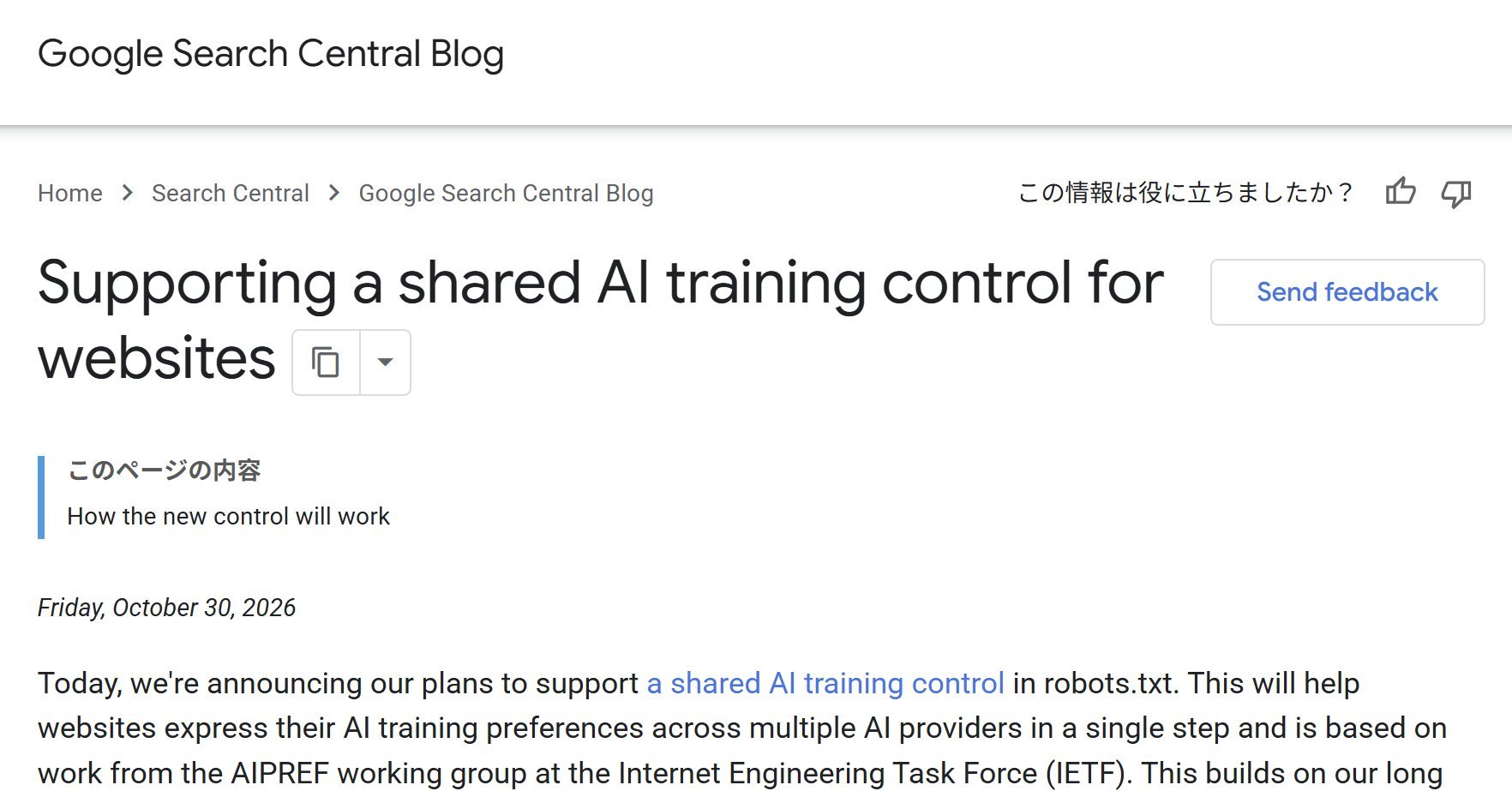
On October 30, OpenAI, Google and Microsoft each said they will honor a shared robots.txt token, __usage_ai-tr…
Amazon disclosed on its third-quarter earnings call that Bedrock now offers Moonshot's Kimi K3 and Z.ai's GLM…

Simon Willison released datasette-llm 0.1a9, which now picks up the default model used by LLM, so Datasette Ag…
Parameter Labs found that ChatGPT's HTML preview sandbox could be escaped via a MathLive keyboard postMessage…
OpenAI shipped Python SDK 3.42.0 on October 31, 2026, adding "agent context compaction settings," "agent sessi…