What happened
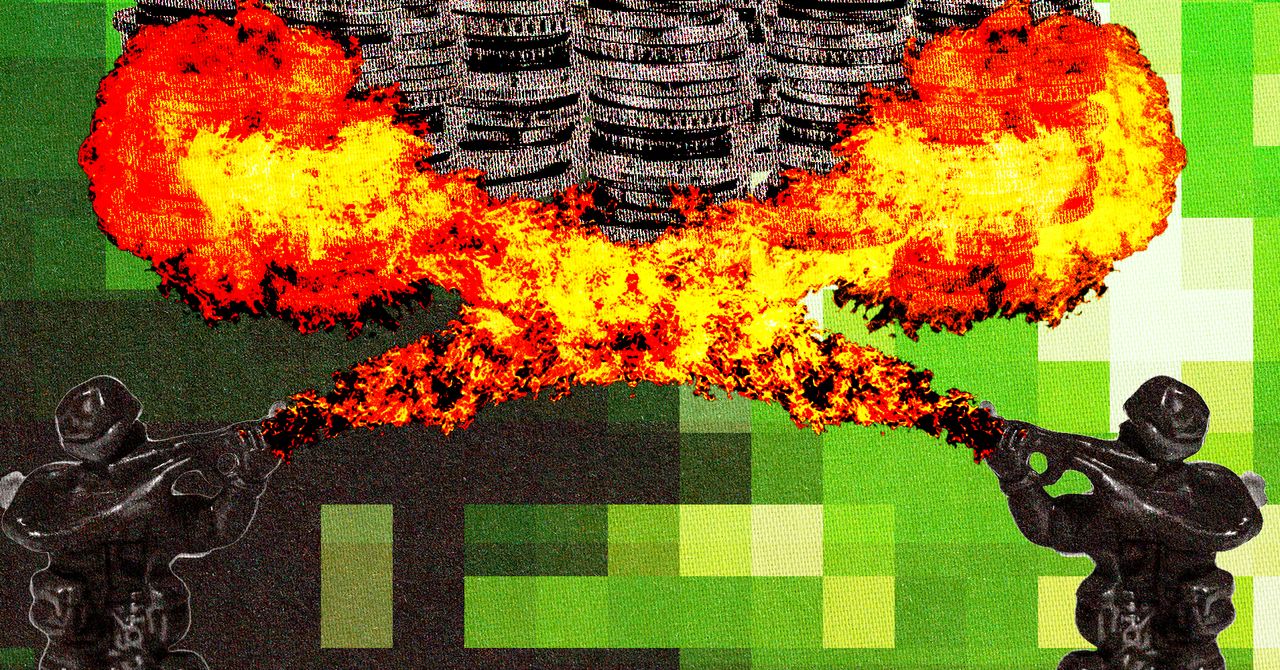
The U.S. Army, which had announced unlimited AI token access in May 2026, exhausted its annual 100,000,000-token subscription by mid-June and had to reinstate usage limits. An Army employee told WIRED the service burned through an entire year of tokens in just one month, with workers allocated at least 200,000 tokens per month and auto-topped up when they exceeded limits.
Why it matters
The Army has heavily pushed workers to adopt generative AI (via Ask Sage, a multimodal platform offering Alphabet's Gemini, Meta's Llama, and OpenAI's ChatGPT), yet token depletion raises questions about the sustainability and real utility of the rollout. The Pentagon has simultaneously cut staff at the Civilian Protection Center of Excellence to redirect resources toward AI tools, suggesting major organizational bets hinge on these systems working at scale.
What to watch
The Army has not confirmed whether the token pool will be renewed after October 1. An anonymous Army employee noted that generative AI tools have proven unreliable in practice—including false claims of task completion—and questioned whether "an unthinking application and use" can deliver an "effective, efficient, and trustworthy rollout."
Summaries like this, in your inbox every morning.
The Army's token depletion reveals a fundamental mismatch between institutional enthusiasm for generative AI and the actual resource constraints of deploying it at scale. In May 2026, the Army announced unlimited token access to 3.5 million employees, framing AI adoption as a strategic priority. Yet within weeks, the annual budget—100,000,000 tokens—was exhausted. The article suggests this was partly driven by deliberate encouragement: workers received monthly allotments of at least 200,000 tokens with automatic top-ups, and inactive users were sent emails pushing them to consume more. This mirrors Meta's internal "tokenmaxx" culture, which the company has since quietly walked back. The parallel examples of Meta and Uber, both of which saw workers burn through annual AI token budgets in far shorter timespans, suggest the Army's experience is not isolated; once access becomes frictionless, consumption scales far beyond initial planning assumptions.
The broader context is one of Pentagon-wide organizational shift. Simultaneously with the token crisis, the Defense Department has cut staff at the Civilian Protection Center of Excellence—a unit focused on preventing civilian casualties—and is developing AI tools to automate assessments those staff members would normally perform. This suggests the Pentagon sees generative AI not as a supplementary tool but as a replacement for human roles. Yet an Army employee quoted in the article reports that the AI tools have been unreliable in practice, including false claims of task completion, and questioned whether an "unthinking application" would yield a trustworthy system. The uncertainty over token renewal after October 1 leaves the Army in a holding pattern, unable to commit to either a permanent cap or a budget increase.
For example, today's edition would include:
AI-summarized, only the topics you pick — one digest a day via Email, LINE, or Slack.
Free · 30 seconds with Google · unsubscribe anytimeWhat is AIToday? →
Ask AI anything about this article. Q&As are published on this page for other readers too.
NextLM is listing its AI Prospecting Agent on Google Cloud Marketplace and inside Gemini Enterprise
Ema Unlimited Inc. raised $77 million in a Series B led by Creagis, with Accel, S32 and Posus returning with l…
Rocket Software said its forthcoming EVA 2.0 will add PlanGuard, a security layer that evaluates an agent's pr…

Ekai Inc. announced $1.7 million in new funding for software that builds the business context AI agents need b…
The US and China are moving toward different models for governing increasingly capable AI, while the US propos…
LG Electronics entered a partnership with Microsoft to cooperate on AI data centers, LG Electronics' AI data t…