
What happened
NEC announced on September 2 that it will offer a managed security service from the end of September that detects vulnerabilities in corporate systems and supports response, using advanced AI from Anthropic and others along with NEC's own AI technology.
Why it matters
The service aims to reduce the time from vulnerability detection to response, helping to limit damage from cyberattacks. NEC sees growing demand for advanced security operations to keep businesses running, with concerns heightened by the emergence of Anthropic's advanced AI 'Mythos'.
What to watch
NEC targets 30 billion yen in sales over three years, offering the service in five plans to financial institutions, manufacturers, and retail/service companies. The service includes automated generation of patches and continuous reassessment of priorities based on actual attack risk.
Summaries like this, in your inbox every morning.
NEC's new service comes amid rising concerns over cyberattacks following the emergence of Anthropic's advanced AI 'Mythos'. The company highlights that the Financial Services Agency requested financial institutions to urgently strengthen cyber measures in May, underscoring the regulatory pressure on businesses to improve security. By offering a managed service, NEC aims to address the shortage of security expertise within client organizations, providing end-to-end support from detection to remediation.
The service leverages both external AI models from Anthropic and OpenAI and NEC's proprietary 'cotomi' AI technology, suggesting a hybrid approach that combines advanced threat detection with tailored response strategies. The focus on prioritizing vulnerabilities using international standards and US criteria indicates an effort to align with established best practices while adapting to actual attack risks.
NEC's target of 30 billion yen in sales over three years suggests a strategic bet on the growing demand for cybersecurity services, particularly among sectors like finance and manufacturing that are prime targets for cyberattacks. The company's approach may signal a broader trend where AI-integrated security services become a key revenue stream for technology providers.
Pick your industry and the AI tools you use, and get news related to your work every day.
Free · 30 seconds with Google · unsubscribe anytimeWhat is AIToday? →
Ask AI anything about this article. The AI reads this article, earlier AIToday articles, and Wikipedia, and cites its sources. Q&As are published on this page for other readers too.
Infineon Technologies said on October 21 it is expanding work with Nvidia on 800-volt direct current power arc…
BloFin Research outlined three defensive moves for a potential 2027 AI correction: shift some S&P 500 exposure…

Shares fell 6.9% Thursday, extending the drop from the June 2 peak to 50%, with market capitalization at about…
Schneider Electric, Nvidia and HPE formed a strategic collaboration to launch Industrial AI Agents at the Edge…
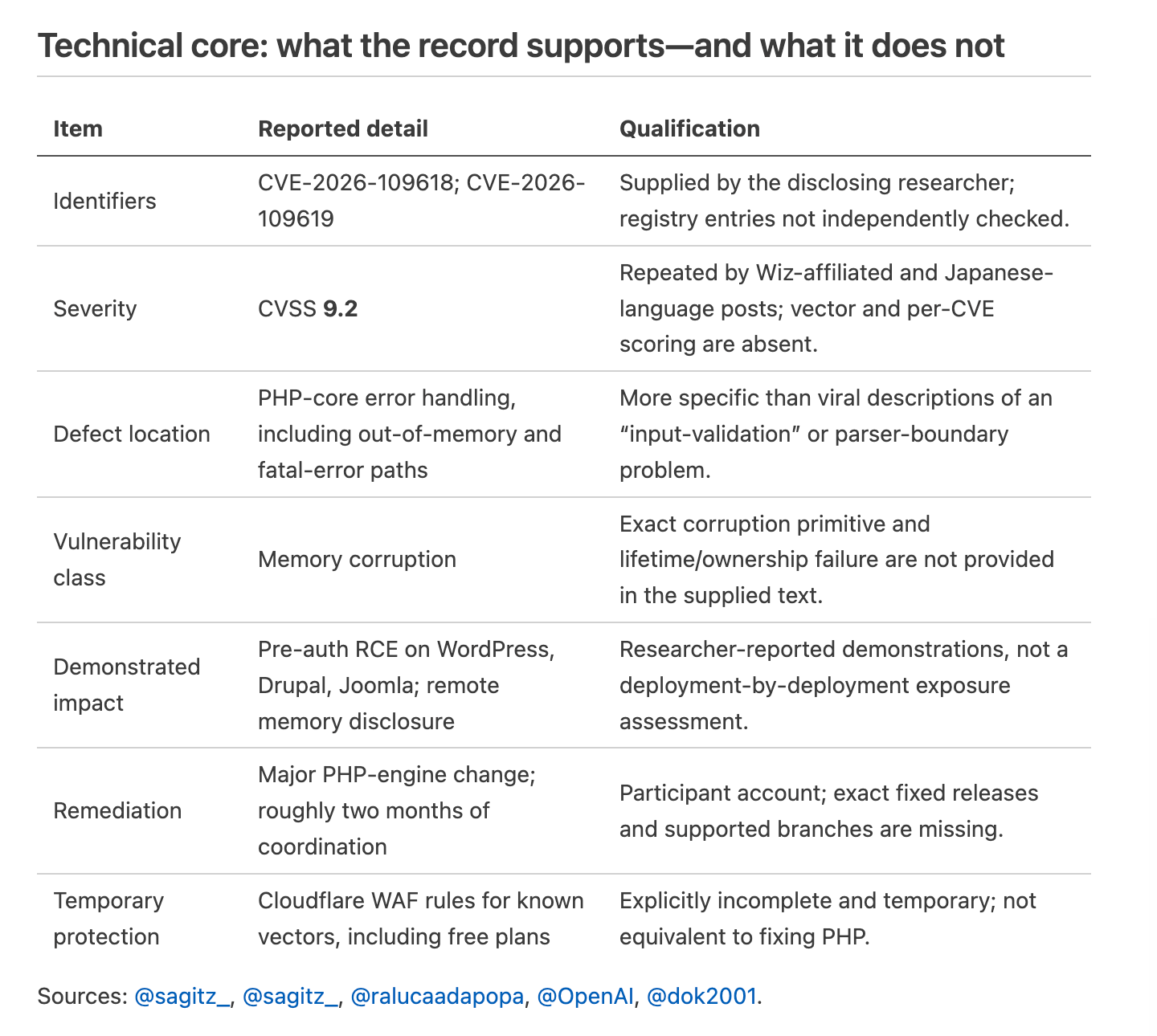
OpenAI says Calif researchers using GPT 5.6 Sol under its "Patch the Planet" project found the PHP2Shell flaws…
Anthropic released Claude Duet, built on Claude Opus 5.5