What happened
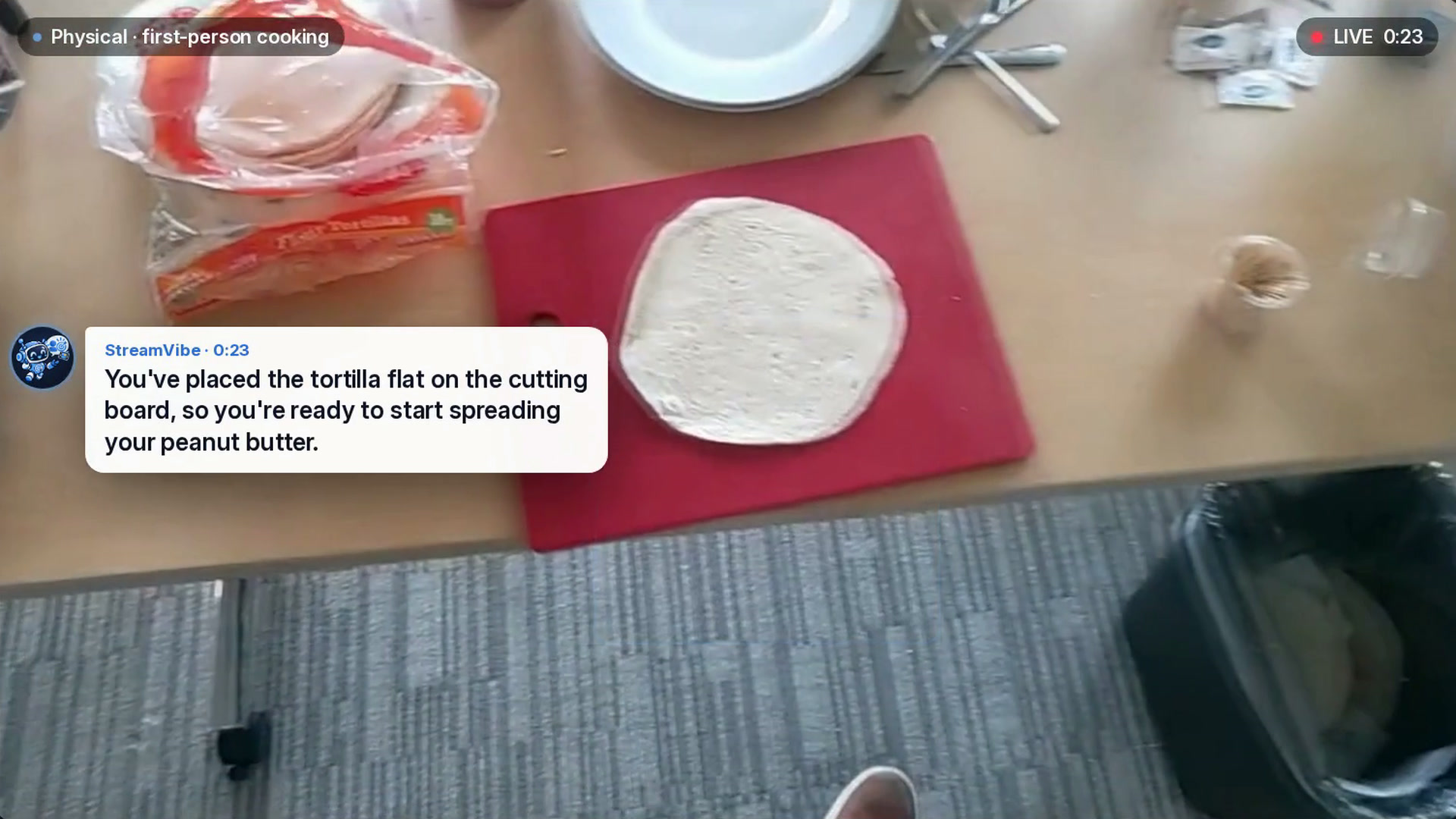
A Google-led team introduced StreamVibe, a video agent that judges when to offer help during everyday tasks; its StreamVibe-VL model improves response timing and quality by 10.7 percent over other models.
Why it matters
The gain suggests AI assistants may become less interruptive and better timed, though the same tests show all models still struggle to pick the right moment in longer videos.
WHO IT HITSDevelopers building AI assistants for hands-on tasks like cooking or furniture assembly could see better-timed prompts, though longer sessions remain unreliable.
Summaries like this, every morning.
StreamVibe addresses a gap the researchers identify in existing video assistants: they are built for clear-cut commands like "Let me know when the water starts boiling," so they rarely pick up on unspoken intentions. They also struggle to track what's already been done, causing repeated advice or late responses, and they often stick to original instructions when users change their requests midway.
To measure the problem, the team compiled a benchmark of about 4,100 examples from more than 183 hours of everyday life and software recordings, with Gemini 2.5 Flash suggesting when to offer help and four human evaluators unanimously approving each example. The training that followed used reinforcement learning to make the model more reserved so it doesn't constantly interrupt, plus a separate memory system tracking pending requests and completed steps. While StreamVibe-VL generally beats its base model and other open-source models by a wide margin, Google's proprietary Gemini 3.8 Flash scores higher in several tests, and the specialized training does not hurt general video comprehension.
The researchers acknowledge that real-world situations are likely more complex than their test setup. The work fits a broader Google effort on AI systems that actively analyze videos, following agent-based video analysis for Gemini in September and Gemini 4 Argon's tracking of longer action sequences in robot videos.
Pick your industry and the AI tools you use, and get news related to your work every day.
Free · 30 seconds with Google · unsubscribe anytimeWhat is AIToday? →
Ask AI anything about this article. The AI reads this article, earlier AIToday articles, and Wikipedia, and cites its sources. Q&As are published on this page for other readers too.
Adobe Research and UC San Diego built EditAgent, which uses an unmodified language model to pick the best edit…
In 100 sessions using the GAD-7 anxiety questionnaire, 80% of sessions scored moderate-to-severe under a suppo…

OpenAI's Misalignment Reports, launched September 16, 2026, list 20 reports as of October 30
Parameter reported on October 18 that a crafted ChatGPT share link could execute code in a victim's signed-in…

Three 20-year-olds on Mount Shasta relied partly on Google's Gemini for planning, summited at 7:30 pm, got los…

Starting in December, Plus, Pro, and Business plans will share one token budget across ChatGPT and Codex, and…