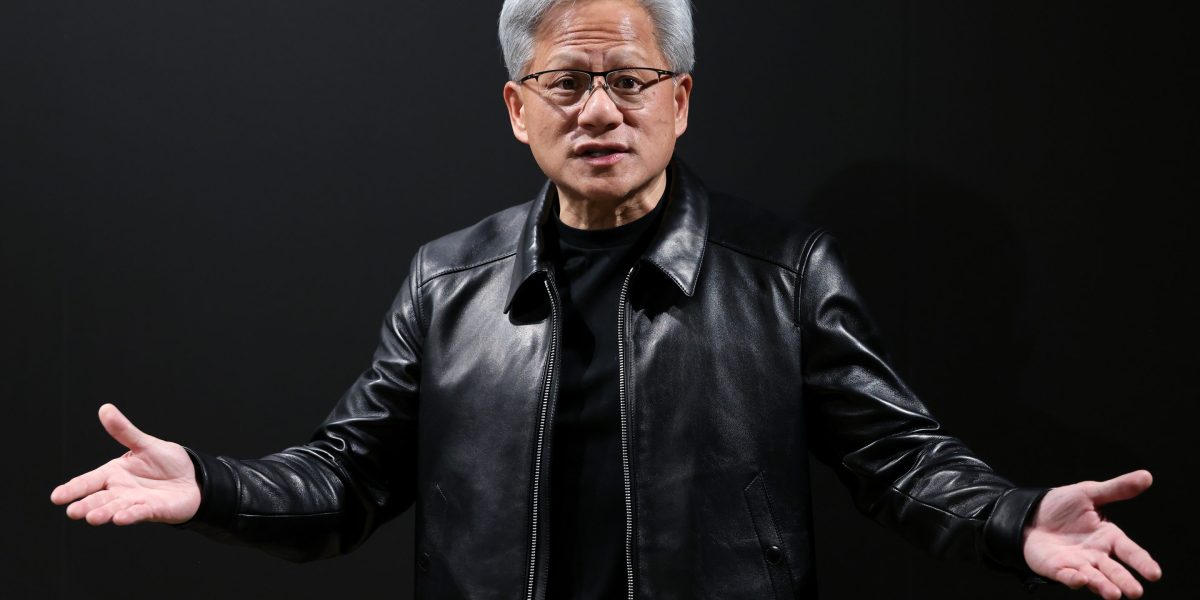
What happened
Nvidia CEO Jensen Huang told CBS that warnings of an AI catastrophe by 2030 are 'irresponsible' and not grounded in 'science,' adding AI leaders making such claims 'must be doing it for ulterior reasons' and that there is a '0% chance' of AI doomsday.
Why it matters
Huang argues AI safety is mainly an engineering problem, saying companies should be held to existing laws before new AI-specific rules are written—a stance favorable to chip suppliers and AI developers wary of added regulation.
What to watch
His claim hinges on whether doomsday warnings translate into new rules or legal relief, which he says is what some leaders really want; watch whether the signers of the 1,300-employee letter push for new laws or for enforcement of existing ones.
WHO IT HITSThis lands on AI developers and chip suppliers facing safety scrutiny, and on policymakers deciding whether to write new AI rules or rely on existing law, framed by the industry's most valuable company.
Summaries like this, in your inbox every morning.
Huang's remarks land as the debate over AI safety splits the industry's own leadership. On one side, Anthropic's Dario Amodei has called for slowing capable models and proposed independent safety evaluators, while OpenAI's Sam Altman has said society may need time to adapt to new capability levels. Even Elon Musk has said he has been 'sounding the alarm on AI for a long time.' Huang's counter is that such warnings, coming from people inside the industry, look less like a plea for new laws than a bid to be 'relieved of the laws we do have.'
Huang's position is reinforced by his company's place in the supply chain: Nvidia's chips and processors run advanced AI systems, and its market value has made it the most valuable company in the world. That gives his 'go as fast as we can, but not faster than we should' framing weight with customers who depend on those chips.
The immediate test is whether the safety camp's warnings translate into new rules or into relief from existing ones—the very distinction Huang says the public should watch. Whether that argument holds will depend on whether governments treat AI as a new category requiring new law, or as a domain where current statutes can be enforced.
For example, today's edition would include:
AI-summarized, only the topics you pick — one digest a day via Email, LINE, or Slack.
Free · 30 seconds with Google · unsubscribe anytimeWhat is AIToday? →
Ask AI anything about this article. Q&As are published on this page for other readers too.
AbbVie entered a multi-year collaboration with Iambic to apply the Enchant and NeuralPLexer AI models to small…

Intel shares jumped about 10% on Monday, as Melius Research initiated a Buy rating, Tigress Financial raised i…

Sandisk customers are expanding multi-year commitments as inference requirements rise, strengthening the signa…

Morgan Stanley's Adam Jonas said the two companies "share tech, talent, and infrastructure," citing 71 Tesla r…
Dell said it booked a record $60.9 billion in AI-server orders and $16.4 billion in AI-server revenues in the…
AMD hit a major milestone, and AI stocks blazed higher