What happened
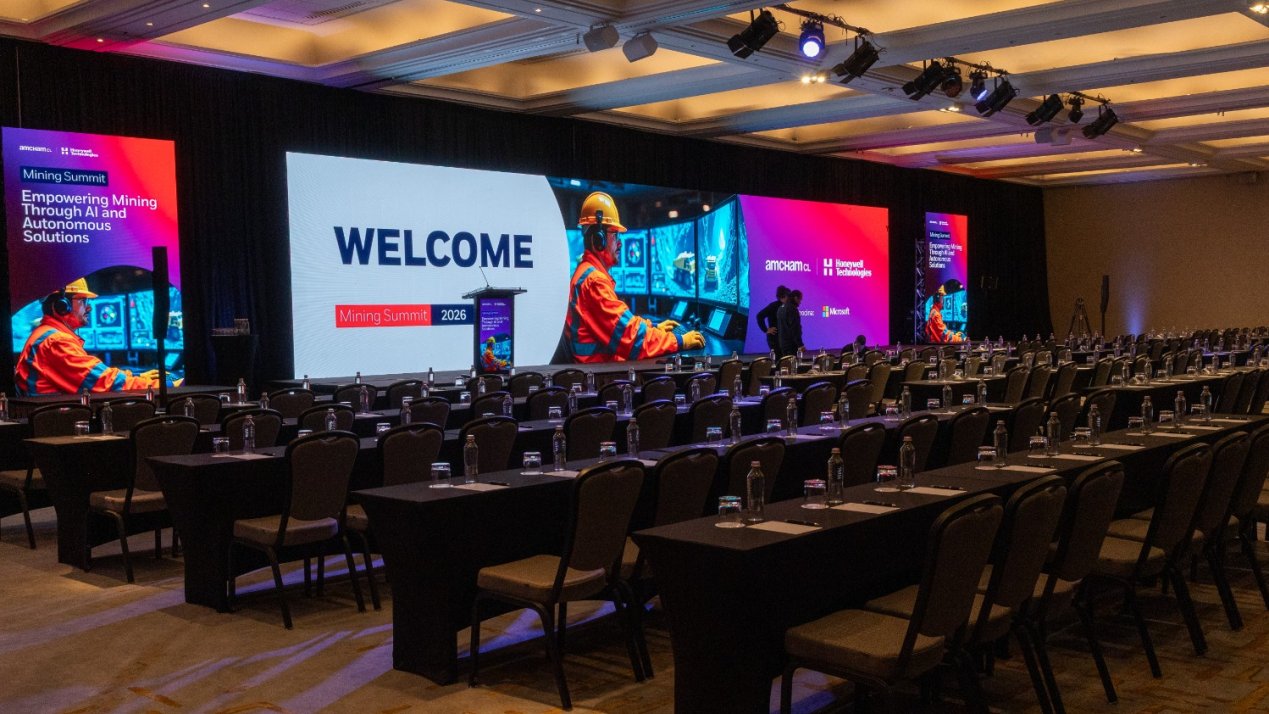
At a Sept. 24 Santiago summit organized by AmCham Chile and Honeywell, Honeywell's José Simón proposed expanding advanced process control, training simulators, and remote operation centers first.
Why it matters
As copper concentration in rock falls, more material must be processed for the same metal, so these upgrades are presented as the base for later AI and autonomous operations.
What to watch
Mining Council's Joaquín Villarino warns that the capacity to acquire technology far exceeds the capacity to use it, so adoption likely hinges on management and boards dedicating time and training.
WHO IT HITSExecutives and operations managers at mining companies weighing AI projects, plus their training and maintenance teams, are the audience here — the message is to fix existing processes before buying new AI tools.
Summaries like this, in your inbox every morning.
The summit, organized by AmCham Chile and Honeywell with sponsorship from Microsoft, framed mining's AI push against a straightforward demand story: data centers need electrical infrastructure and minerals such as copper, and mines want AI to lift production. Honeywell's José Simón tied the difficulty to geology — falling copper concentration in rock means more material must be processed for the same metal — and to a shortage of specialized personnel and the cost of unscheduled downtime. His remedy was not a new AI product but the expansion of existing tools: advanced process control, training simulators, remote operation centers, and equipment performance systems.
A second thread at the event concerned capability rather than equipment. Mining Council's Joaquín Villarino said the capacity to acquire technology far exceeds the capacity to use and leverage it, and pointed to the risk of knowledge loss as experienced personnel retire, requiring new profiles and preserved experience across both miners and suppliers. Honeywell's Jason Urso offered "digital cognition" — sensors, process models, and AI reading maintenance logs, alarm sequences, and operator actions — as a way to retrieve past responses for less experienced workers, while cautioning that AI can err.
Worker safety and resource limits closed the discussion, with Honeywell's Armando Pazos describing local measurement and centralized monitoring for gas exposure, and José Magalhães Fernandes noting that producing more requires more water, energy, and workers, and that technology must help close the gap between production and demand. Whether that gap narrows may depend less on what mines buy than on whether their boards treat the change as a management task.
Pick your industry and the AI tools you use, and get news related to your work every day.
Free · 30 seconds with Google · unsubscribe anytimeWhat is AIToday? →
Ask AI anything about this article. The AI reads this article, earlier AIToday articles, and Wikipedia, and cites its sources. Q&As are published on this page for other readers too.
BlackRock's research paper "The Machine-Native Economy," co-written by digital assets head Robert Mitchnick, a…

ServiceNow trades on roughly 80.4x earnings, above the Software industry average near 29.7x and a peer group c…
Palo Alto Networks launched Cortex XCOR, an AI-native observability platform

John Deere announced JD, an AI assistant embedded in its Operations Center, at a press event at Iowa State Uni…

Salesforce trades at a 14.4x forward P/E versus Palantir's 85.5x, and Agentforce annual recurring revenue pass…

CrowdStrike Holdings has listed its Falcon cybersecurity platform in the OpenAI Marketplace for enterprise buy…