What happened
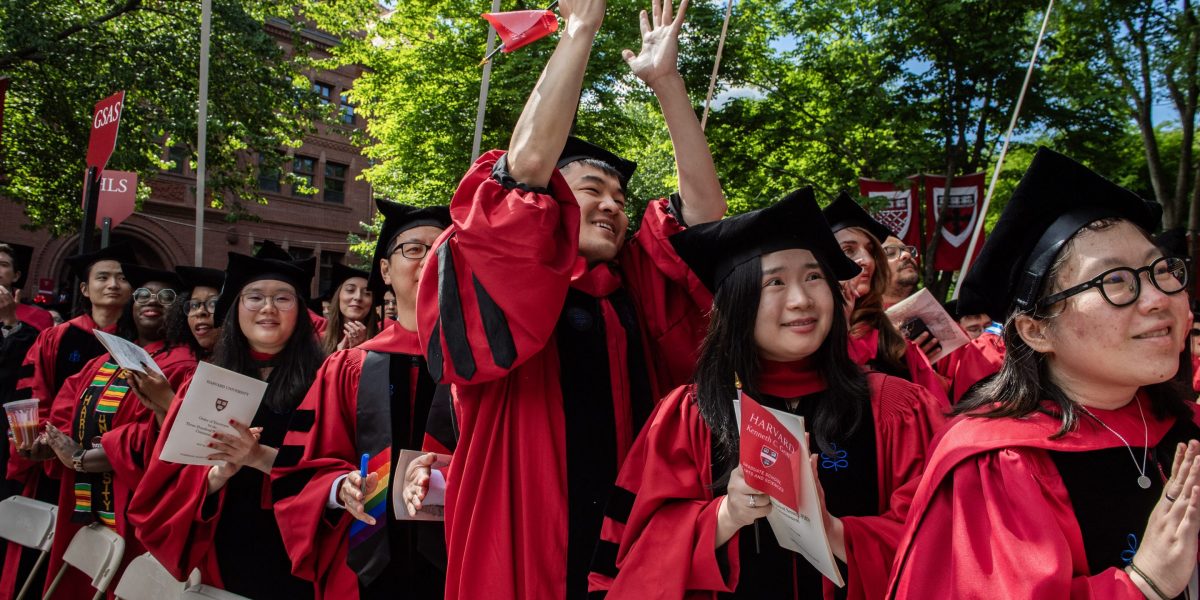
The Justice Department announced Monday it is investigating whether Harvard University allows Chinese donors to create scholarships that exclude American students. The agency says Chinese sources have donated money to Harvard for financial aid programs limited to students from certain countries, which could constitute illegal discrimination based on country of origin.
Why it matters
Harvard has accepted $630 million(約1000億円) from Chinese sources over decades and $4.5 billion(約7200億円) in foreign funding overall. The investigation targets Harvard's practice of offering need-based scholarships to international students on the same basis as U.S. students—a practice most American universities do not permit. The DOJ argues that steering private funding to foreign students based on national origin may constitute a civil rights violation against American applicants.
What to watch
This is a compliance review initiated by the federal government, and the Justice Department has not specified which scholarship programs are being targeted or reached any conclusions. Harvard stated it follows the law on donation reporting and does not unlawfully discriminate in allocating financial aid.
Summaries like this, in your inbox every morning.
The investigation marks the Trump administration's latest line of attack against Harvard, following repeated federal inquiries into the university's admissions, enrollment of foreign students, and other practices. The DOJ's core argument—that accepting private donations restricted to foreign students amounts to discrimination against American applicants—represents an unusual legal theory: it frames private funding decisions, not federal funds, as a potential civil rights violation. This approach reflects the administration's stated concern that foreign funding, particularly from China, poses a national security and compliance risk.
Harvard's position has long distinguished it from most American universities. Unlike the vast majority of U.S. schools, Harvard extends need-based scholarships to international students on the same basis as domestic students and maintains its own funding pools for foreign applicants, meaning it does not rely solely on federal aid (which is reserved for Americans). The 2014 donation from Pan Shiyi and Zhang Xin exemplifies how Chinese donors have explicitly directed gifts toward Chinese students. The Justice Department's investigation challenges whether Harvard can legally accept such restricted gifts while also receiving federal dollars, though the agency has not yet specified which programs it is targeting or reached conclusions.
For example, today's edition would include:
AI-summarized, only the topics you pick — one digest a day via Email, LINE, or Slack.
Free · 30 seconds with Google · unsubscribe anytimeWhat is AIToday? →
Ask AI anything about this article. Q&As are published on this page for other readers too.
China's 15th Five Year Plan (2026-2030) makes embodied AI a top priority, with subsidies and humanoid training…
A Gallup poll across 37 countries found that in 34 of them, more adults feel positively about AI than negative…

China's internet regulator is reportedly investigating DeepSeek and Moonshot AI over allegations they routed m…

Republican Texas Senate nominee Ken Paxton posted an AI-generated ad on X depicting Democratic rival James Tal…
DeepSeek has reportedly been invited to take part in UN Security Council discussions on AI safety, per Nikkei
Greek PM Kyriakos Mitsotakis, speaking to about 250 founders, investors and operators at an Endeavor Greece ev…