What happened
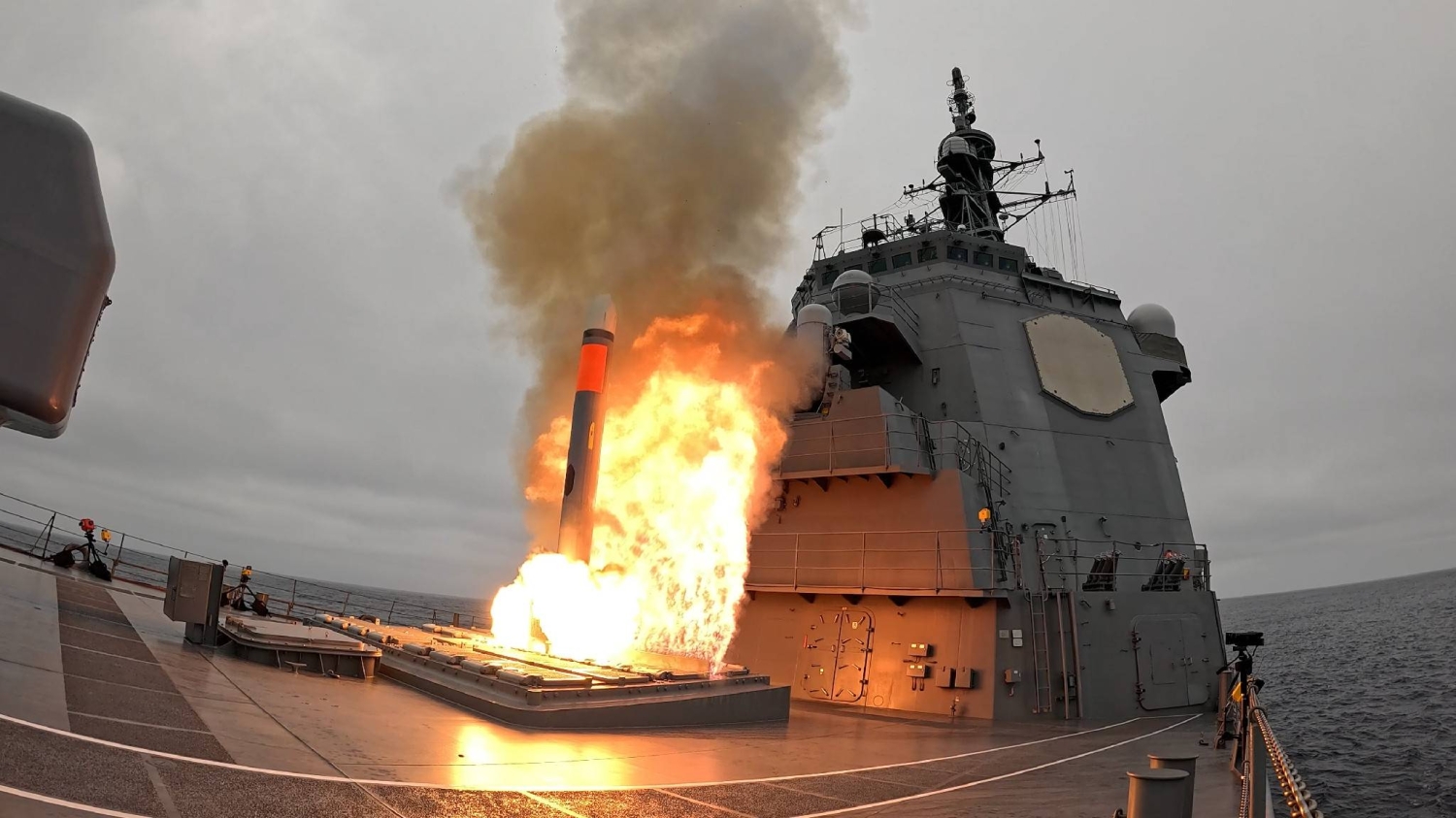
Japan launched a Tomahawk cruise missile from the destroyer JS Chokai in the Pacific Ocean on Wednesday, marking the nation's first operational test of ship-based long-range strike capability. The Defense Ministry confirmed the missile launched successfully and verified crew proficiency in conducting the launch under operational conditions.
Why it matters
Tomahawk missiles are central to Japan's new military strategy to deter aggression from China and North Korea by developing long-range strike capabilities. Japan has ordered about 400 missiles from the U.S., with deliveries scheduled through March 2028; the successful test demonstrates Japan can now execute this deterrence posture operationally.
What to watch
Japan's $2.35 billion order, signed in 2024, faces delivery disruption because the U.S. has used Tomahawks in its war against Iran. Defense Minister Shinjiro Koizumi confirmed there are no changes to the delivery schedule for other Tomahawk missiles, though the April report of disruption suggests timing uncertainty remains.
Summaries like this, in your inbox every morning.
Japan's first operational test of a ship-launched Tomahawk cruise missile reflects a significant shift in the nation's defense posture. For decades constrained by constitutional limits on military action, Japan has progressively expanded its strategic capabilities; the Tomahawk order and now its successful test operationalize Tokyo's stated goal of long-range strike deterrence against regional rivals. The timing is deliberate: China has steadily expanded its military capabilities in the region, and North Korea's missile programs continue to advance, creating pressure on Japan to move beyond air defense into offensive-deterrent systems.
The $2.35 billion purchase, signed in 2024 and among the largest foreign Tomahawk orders on record, underscores the scale of Japan's commitment. However, the April report that U.S. deliveries would be disrupted due to American use of Tomahawks in its Iran operations injects uncertainty into the timeline. The Defense Ministry's statement that delivery schedules for other missiles remain unchanged suggests Japan is managing the disruption, but the gap between the ordered 400 missiles and the March 2028 deadline now carries added risk. The successful test of crew proficiency and launch procedures mitigates some of that risk by proving Japan's readiness to deploy missiles as they arrive.
Pick your industry and the AI tools you use, and get news related to your work every day.
Free · 30 seconds with Google · unsubscribe anytimeWhat is AIToday? →
Ask AI anything about this article. The AI reads this article, earlier AIToday articles, and Wikipedia, and cites its sources. Q&As are published on this page for other readers too.
The Air Force upgraded the X-62 VISTA with advanced radar, expanded sensors and computing, and modern network…
T2 said it will join ENEOS and others in the Agency for Natural Resources and Energy's demonstration project f…
Researchers present neurosymbolic planning using natural language communication for cooperative autonomous veh…
Honeywell Aerospace flew a BFD-SE8 autonomously in mid-June, six weeks after starting Shield AI's Hivemind Ent…
Sony will exhibit at CEATEC 2026, held October 13–16 at Makuhari Messe in Chiba, under the theme "Where Ideas…

PlusAI filed registration documents with the SEC for its proposed merger with Texas Ventures Acquisition III C…