What happened
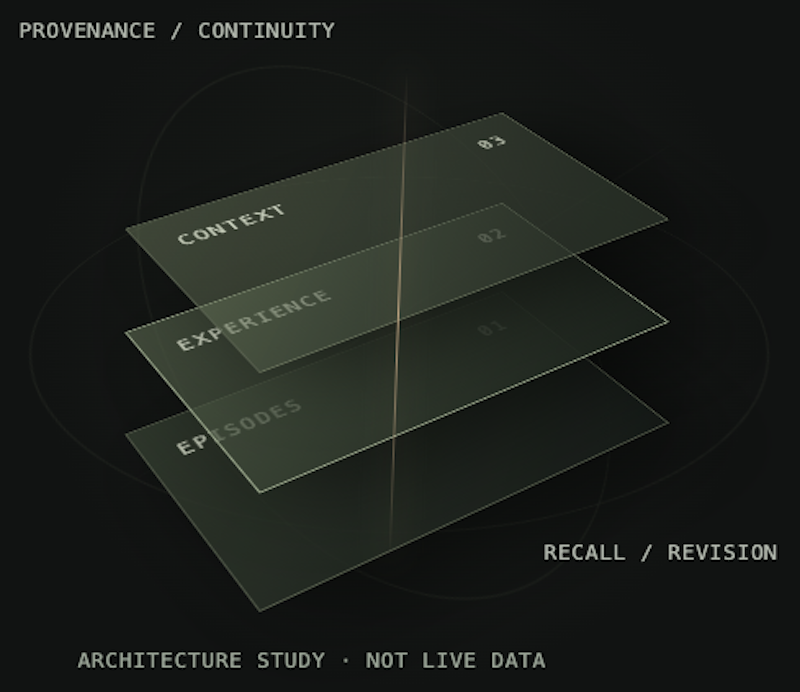
Monolithos launched a public alpha of Robot Brain, a long-term memory system that stores a robot's task histories, failures and human corrections so they can be retrieved for similar future tasks.
Why it matters
Robots could reuse past experience instead of treating each task in isolation, but Monolithos says benefits still need testing on comparable tasks, since robots can use other memory systems.
WHO IT HITSRobotics developers and embodied-AI teams can try Robot Brain without a physical robot, simulator, GPU or local AI model, testing how experience is ingested and recalled before wiring it into a robot or training platform.
Summaries like this, in your inbox every morning.
Robot Brain is built around a specific complaint about how robots normally work: each new task is treated largely in isolation. Monolithos wants to change that by recording not just what a robot did, but also the conditions under which it learned something. That matters because an old fix can be wrong when circumstances have changed, so Robot Brain keeps track of when an experience was acquired and labels memories as revisable.
The launch fits a broader push in embodied AI research toward persistent memory, including work on long-term spatial memory and navigation. Monolithos is careful about what its early demonstrations show. It says these are not measured comparisons of robot performance, and that operational benefits would need to be evaluated using comparable tasks and operating conditions.
For now, the product is aimed at evaluation rather than deployment. Monolithos describes Robot Brain as part of its wider work on memory and continuity systems, with the division of labor clear: machines gain experience they can build on, while control of physical actions stays with the existing robotics system.
Pick your industry and the AI tools you use, and get news related to your work every day.
Free · 30 seconds with Google · unsubscribe anytimeWhat is AIToday? →
Ask AI anything about this article. The AI reads this article, earlier AIToday articles, and Wikipedia, and cites its sources. Q&As are published on this page for other readers too.
AI researcher Jannes Elstner told MIT Technology Review that even after identifying every part of a model gove…
Danaher announced the launch of its first AI powered autonomous laboratory aimed at life sciences research acc…
In a SoftBank dialogue, AI governance chief Tadashi Iida and expert Kyoko Yoshinaga said firms must justify hu…
Renesas has developed its first low-voltage GaN power semiconductor, working with EPC and drawing on its own d…
The European TALOS project wrapped up three years of testing autonomous robots and AI at solar sites in Spain…
Robbyant, Ant Group's embodied AI company, and the Arab Federation for Digital Economy signed a Memorandum of…