What happened
Users only asked ChatGPT for a New Yorker-style cartoon, but it added Brendan Loper's "BLoper" signature on its own; Nieman Jounalism Lab found over 15 New Yorker cartoonists whose signatures were replicated.
Why it matters
Loper said the fake signature felt like an attack on his identity, not just unauthorized training on his work, since a signature acts as proof of authenticity and a brand.
What to watch
After Loper reported it, ChatGPT began showing a new message saying the prompt may violate its guidelines on similarity to third-party content, yet it still added real cartoonists' signatures when the New Yorker name was omitted.
WHO IT HITSThis lands on working illustrators and cartoonists who sign their published work, since a copied signature can misattribute AI-made images to them online. Editorial and copyright teams at publications that run signed illustrations may also face authenticity questions.
Summaries like this, in your inbox every morning.
The case surfaced through a post on X in August 2026, where an image captioned as a ChatGPT-made cartoon carried the signature "BLoper." Brendan Loper told Nieman Jounalism Lab that he received several emails asking whether the cartoon was his, and that he had already seen his signature attached to ChatGPT-generated New Yorker-style cartoons on Instagram and Reddit before. He said he knew his work had been used in AI training, but that faking his signature felt like a more personal violation.
The report places this against a shift in how images circulate. Cartoons and illustrations are increasingly cropped and reposted on social media or embedded in blogs, which makes the signature function as a kind of watermark identifying the original author. Loper described his signature as a certificate of authenticity, applied only to works he wants recognized as his own.
OpenAI's spokesperson told Nieman Jounalism Lab that the company believes the future of creativity is fundamentally human-centered and that it is focused on tools supporting human creativity and creators, and thanked the community for reporting bugs and unintended behavior. Jason Adam Katzenstein, another New Yorker contributor, framed the stakes differently, arguing that AI is threatening cartoonists' livelihoods because their work is costly and slow to produce. How far OpenAI's added warning message changes the behavior of its model is likely to be the test that matters most for the cartoonists involved.
Pick your industry and the AI tools you use, and get news related to your work every day.
Free · 30 seconds with Google · unsubscribe anytimeWhat is AIToday? →
Ask AI anything about this article. The AI reads this article, earlier AIToday articles, and Wikipedia, and cites its sources. Q&As are published on this page for other readers too.
Kore.ai Inc. launched Autoloop, which adjusts AI agents toward goals customers set for task completion, busine…

OpenAI launched a Decisions API that evaluates text, images, or both, returning yes/no probabilities, category…
Google launched Playground, a browser-based AI platform that lets adults in the US create games using only tex…
Google made its SynthID detector available globally to anyone with a Google, OpenAI, or Apple account, with a…
In August, DoorDash emailed Bay Area restaurants warning they may be listed on Bites without consent, with ter…
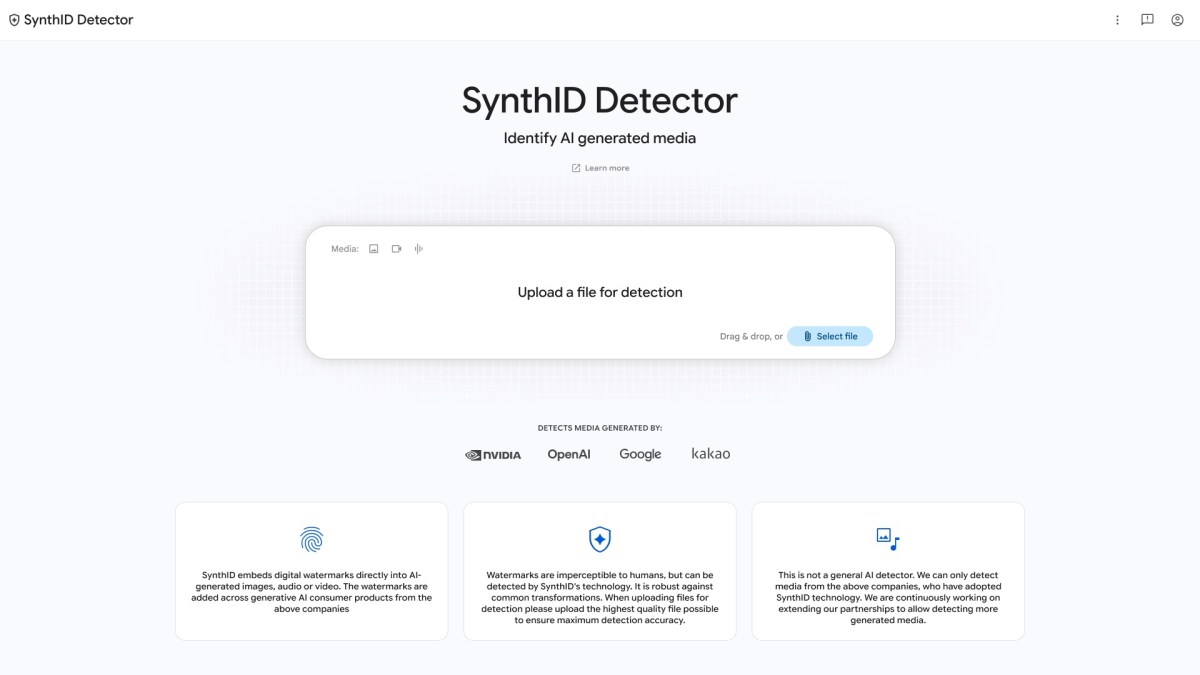
Google launched a new public site using SynthID to verify whether an image, video, or audio clip is AI-generat…