
Amazon and Walmart have built AI systems that can identify products falsely labeled as made in the USA, but neither retailer is using these tools to flag or remove such items.
This gap between capability and action means fake origin claims continue to reach shoppers who trust 'Made in USA' labels, and domestic manufacturers face unfair competition from mislabeled imports.
What happened
Amazon and Walmart both operate AI shopping tools capable of detecting counterfeit 'Made in USA' labeling on products, yet neither company is actively flagging or removing these items from their platforms.
Why it matters
Fake origin claims mislead consumers who specifically seek domestic products and undermine legitimate U.S. manufacturers competing against mislabeled imports. The gap between detection capability and enforcement suggests the platforms have the technical means but may lack the operational priority to address the issue.
What to watch
Whether regulatory pressure or consumer complaints will push Amazon and Walmart to implement enforcement policies that match their AI detection capabilities, and what cost or effort barriers may explain their current inaction.
Amazon and Walmart have each developed AI shopping tools capable of identifying products bearing false 'Made in USA' labels. These systems represent a technical capacity to police the authenticity of origin claims at the point of sale. However, according to the reporting, neither company is leveraging this capability to flag or remove such mislabeled items from their platforms. The result is that counterfeit origin labeling persists on both retail giants despite their ability to detect it. Consumers searching for domestically made products encounter false labeling, and legitimate U.S. manufacturers face competition from imports disguised as American-made goods. The disconnect between detection and enforcement raises questions about why two of the world's largest e-commerce platforms possess the technical means to address the problem but have not implemented it as operational policy.
The article presents a disconnect between technological capacity and enforcement action. Both Amazon and Walmart have invested in AI systems that can recognize false origin claims, a signal of their ability to address the problem at scale. Yet neither retailer has chosen to deploy these tools operationally—meaning detection exists in principle but not in practice on their live storefronts. This gap reveals a broader question about platform accountability: the existence of detection technology does not automatically translate into removal of violating products. The implication is that factors beyond technical feasibility—such as enforcement cost, inventory management complexity, or relative business priority—may be preventing these platforms from converting capability into action, even though the issue harms both consumers seeking authentic domestic goods and U.S. manufacturers competing against mislabeled imports.
AI-summarized, only the topics you pick — one digest a day via Email, Slack, or Discord.
Free · takes 30 seconds · unsubscribe anytime
The TAIONE Open Source Foundation was officially launched and will deploy NT$300 million(約480億円) in private-se…

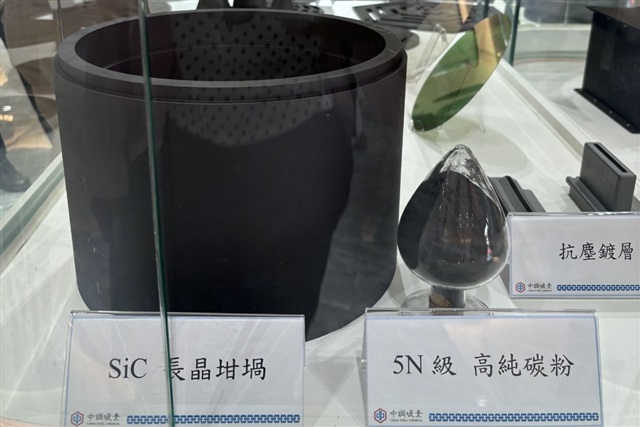
China Steel Corporation affiliate CSCC has developed 6N high-purity isotropic graphite blocks for 8-inch and 1…
The 2026 World Artificial Intelligence Conference (WAIC) revealed that the automotive industry is moving away…

Central Taiwan Science Park's Erlin Park will begin operations of its first standard factory building in the s…

Hitachi announced the Agentic AI Integration Platform, which applies AI agents across the entire systems integ…

Amazon reported second-quarter net sales up 20%, with AWS cloud revenue rising 37% year over year to $42 billi…

The AI news that matters, in one minute each morning.
Sign up free