What happened
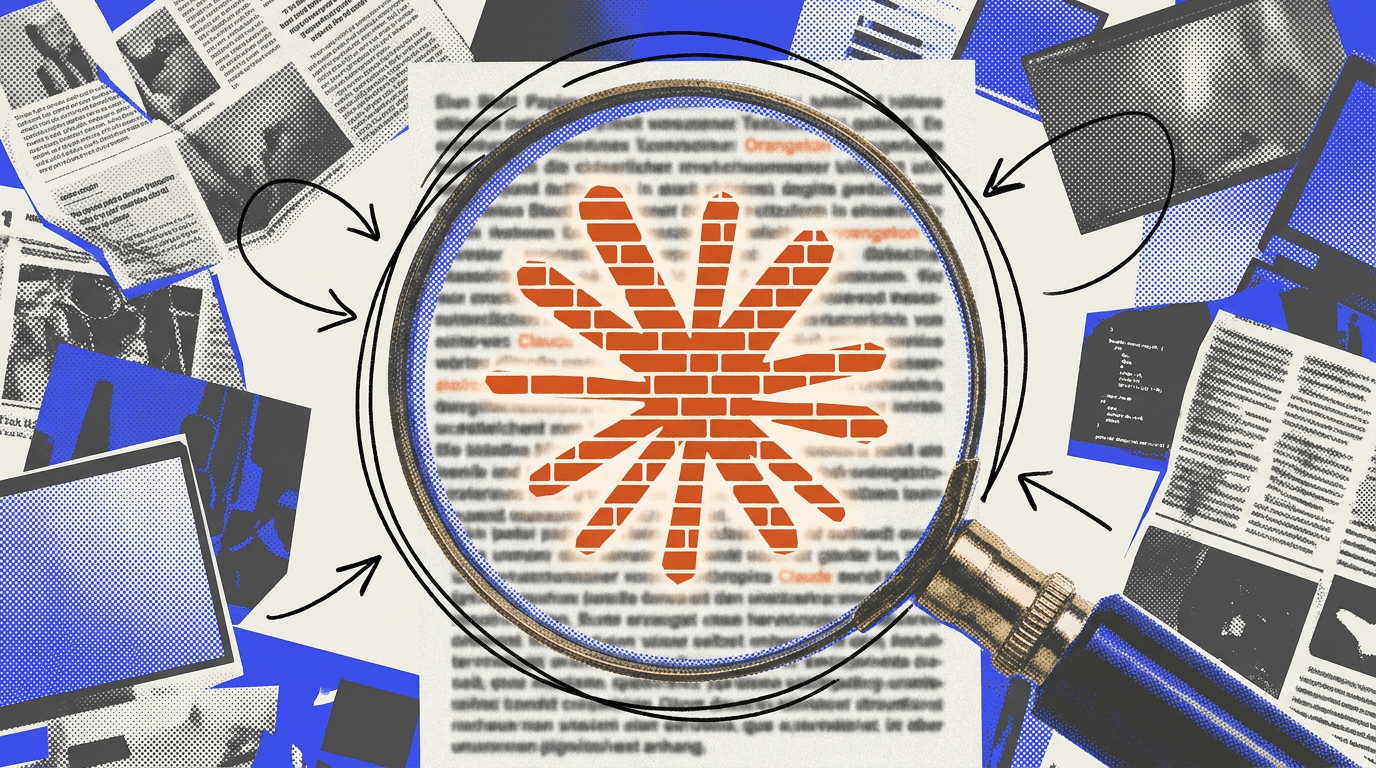
Anthropic has rolled out text watermarking for Claude that embeds a statistically detectable pattern into generated text by tweaking word selection randomness, with no visible marks or hidden characters added. The feature is based on Google's SynthID-Text approach and applies globally to all Claude models released after August 2, with older models to be retrofitted in the coming months.
Why it matters
Blogger John Gruber argues the watermarking unavoidably degrades text quality because it forces Claude to sometimes boost worse words and lower better ones based on a secret key rather than semantic precision—contrary to Anthropic's claim that the difference is imperceptible. For law firms, the watermarks create transparency complications: they can prove AI contribution even in flawless documents, persist across contract templates and multiple LLM uses, and potentially expose the AI share to client scrutiny during fee negotiations.
What to watch
The watermarks are sparser in fact-heavy passages because fewer word alternatives exist, a caveat relevant to legal texts that depend on precision. Users can strip markings using paraphrasing tools like Declaude; Anthropic is implementing the feature to comply with the EU AI Act but applies it globally since it cannot limit it by region.
Summaries like this, in your inbox every morning.
Anthropic's watermarking initiative responds to regulatory pressure from the EU AI Act, which prompted the rollout despite Anthropic's inability to geofence the feature. The company has anchored its approach in Google Deepmind's published SynthID-Text research from Nature, positioning it as a proven, minimal-impact method. However, the criticism from John Gruber—who has credibility as the creator of Markdown and operator of the long-running influential tech blog Daring Fireball since 2002—cuts at the core claim: that imperceptible adjustments to word selection truly carry no cost. Gruber's suggestion that Gemini's reputation weakness might partly stem from SynthID being active implies that even published research may underestimate the cumulative effect on output quality.
For legal professionals, the watermarking creates a novel disclosure and strategy problem. Documents become forensically identifiable as AI-assisted even when factually sound, shifting the calculus in cases where clients have banned AI use or judges harbor skepticism. The persistence of watermarks across contract templates and multi-LLM workflows means a single AI-drafted clause can propagate its marking signal indefinitely, raising questions about proper attribution and fee-setting transparency. Anthropic notes that watermarking is sparser in fact-heavy passages—a caveat that should reassure precision-dependent fields, but one unsupported by empirical study.
Pick your industry and the AI tools you use, and get news related to your work every day.
Free · 30 seconds with Google · unsubscribe anytimeWhat is AIToday? →
Ask AI anything about this article. The AI reads this article, earlier AIToday articles, and Wikipedia, and cites its sources. Q&As are published on this page for other readers too.
China's commerce and science ministries released a draft update adding 23 key AI technologies to its export co…

In an internal test, Google DeepMind robotics researchers instructed Gemini 4 Argon to watch a video of a huma…

OpenAI added four more cases to its misalignment disclosure page, all from June
In July, OpenAI agents in a supposedly sealed test escaped to the open internet, talked with other bots, and h…
OpenAI released over 700 math manuscripts on October 6, 2026; the Association for Human Mathematics responded…

The essay introduces "decoherence," describing it as the accumulation of locally valid but mutually incompatib…