What happened
Nvidia CEO Jensen Huang, on a European tour, announced minority stakes in five U.K. startups and $250 million of compute over five years for U.K. AI safety research, and said Nvidia would unveil another $2 billion in European AI deals within a week, on top of roughly $8 billion invested in the continent over the past year.
Why it matters
Much of the money is likely to return to Nvidia, since the startups it backs are hungry for scarce compute and tend to keep building on Nvidia's offerings, and the push helps position Nvidia as the default supplier for Europe's "sovereign AI" drive, at the risk that sovereignty becomes dependence on a single American chipmaker.
Summaries like this, in your inbox every morning.
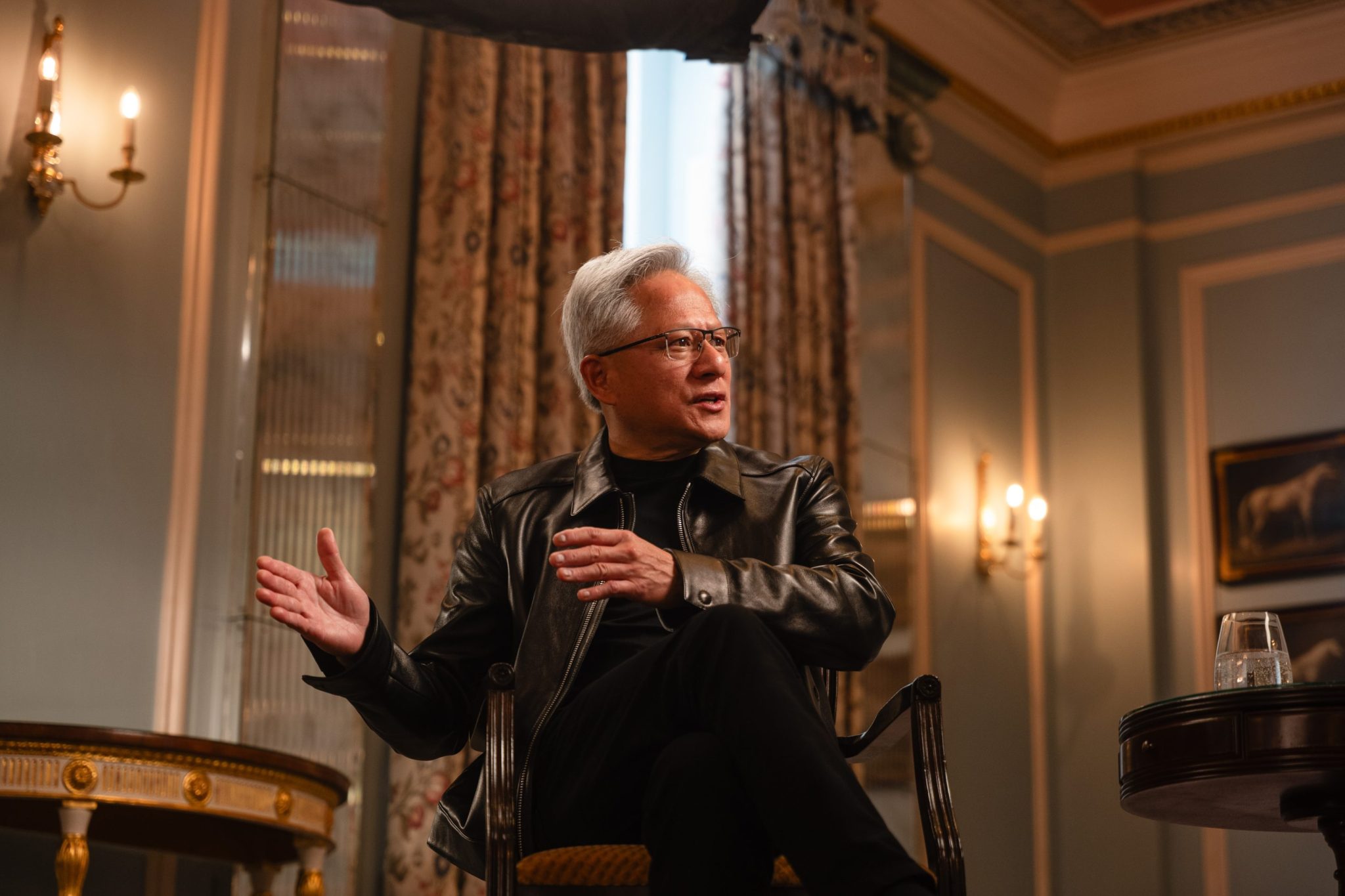
The London stage was part of a broader European charm offensive that started in Paris, where Huang met Emmanuel Macron. There, he set the tone for the trip by promising more deal announcements within days. In London, the setting was an old converted church, and Huang addressed tech executives, venture capitalists, Nvidia employees, and British politicians. He singled out Josh Payne, CEO of the U.K. neocloud Nscale, telling the crowd that Payne and his company were a "zero" before Nvidia invested and helped recruit their board; Nscale is now about to go public, targeting a valuation of up to $35 billion. The trip also folded in a commitment of $250 million worth of compute over five years for U.K. AI safety and security research, with more announcements expected at Nvidia's GTC Berlin event next week.
The strategic logic runs deeper than generosity. Nvidia is now worth $5 trillion, and keeping that valuation going up may depend on finding buyers beyond the handful of U.S. hyperscalers that still account for roughly half its data center sales. Sovereign AI revenue is already growing, tripling to more than $30 billion last fiscal year. Each national "AI factory" and European startup training on Nvidia hardware is a customer that isn't Microsoft or Meta, which helps reassure investors. The concern is that this pattern mirrors one that has made some investors nervous: Nvidia increasingly funds its own customers. Reports in late July that it was weighing a guarantee for $250 billion in financing for an OpenAI data center in Ohio knocked about 5% off its shares on July 27 and sent the cost of insuring its debt sharply higher; Nvidia later cut the guarantee to about $105 billion. Huang's response is that Nvidia can enable sovereignty by letting local providers operate its full-stack AI platform themselves, and that so long as you can operate the service yourself, that is what matters most.
Pick your industry and the AI tools you use, and get news related to your work every day.
Free · 30 seconds with Google · unsubscribe anytimeWhat is AIToday? →
Ask AI anything about this article. The AI reads this article, earlier AIToday articles, and Wikipedia, and cites its sources. Q&As are published on this page for other readers too.
Nvidia launched Nemotron 3.5 Super VL, an open 120-billion-parameter multimodal model, plus Bolt 74B-A9B for l…

IBM outbound CTO Tyler Lynch said teams should start from customer outcomes, not roles

Japan Mobility Show Bizweek 2026 showcased Physical AI applications, including Toyota's basketball-playing rob…
Meta released Muse Spark Open, an open-weight model with 816 billion parameters (42 billion active), up to one…

Google pitched Gemini 4 Argon as one model for robot control, simulation and training-data review, saying it s…
Nvidia released Nemotron 3.5 Super VL, an open multimodal model with 120 billion parameters for enterprise age…