Microsoft unveiled MAI-Cyber-1-Flash, a new AI model specialized for detecting software vulnerabilities, achieving 96% accuracy on the industry's leading benchmark—outperforming competitors from Anthropic, Google, and OpenAI.
The model, integrated with Microsoft's MDASH system and GPT-5.4, cuts costs by 50% compared to previous versions by handling routine security work itself and reserving expensive processing for the hardest cases.
Microsoft is rolling it out cautiously to existing MDASH customers only, citing the need for careful security calibration.
What happened
Microsoft introduced MAI-Cyber-1-Flash, its first cybersecurity-specific AI model, built into MDASH (its multi-agent vulnerability-hunting system) and paired with GPT-5.4. The combination scored 96% on CyberGym, the industry's leading vulnerability-detection benchmark, topping rivals from Anthropic, Google, and OpenAI.
Why it matters
The model handles about 90% of everyday security tasks autonomously while routing only the toughest 10% to the more expensive GPT-5.4, delivering a 50% cost cut versus Microsoft's previous MDASH offering. Microsoft's claim rests on access to over 100 trillion security-related signals daily across 1.6 million customers—a data advantage competitors cannot easily replicate.
What to watch
Microsoft has limited the initial rollout strictly to businesses already using MDASH, following the same cautious pattern as Anthropic, OpenAI, and Google. The timing coincides with reported security vulnerabilities in widely used code libraries, underscoring how quickly offensive applications of this technology are also advancing.
Ask the AI about this article →
Microsoft's move into cybersecurity-specific AI marks a deliberate bet on vertical specialization. Rather than relying on general-purpose models, the company has built MAI-Cyber-1-Flash from a foundation of proprietary security data—over 100 trillion daily signals from 1.6 million customers—creating a moat that rivals cannot easily bridge. The 96% CyberGym score and 12-point lead over Anthropic signal meaningful performance, though the benchmark measures only one dimension of real-world security needs.
The cost structure reveals Microsoft's routing strategy: by reserving GPT-5.4 for the toughest 10% of tasks and automating the remaining 90% through MAI-Cyber-1-Flash, the company achieves a 50% cost reduction versus its prior multi-model approach. This efficiency calculation suggests Microsoft sees cybersecurity as a volume business within its enterprise base. However, the cautious rollout—limited to existing MDASH users—reflects genuine uncertainty about model reliability in a domain where errors can have outsized consequences. The simultaneous emergence of new vulnerabilities in widely used libraries reinforces the stakes: as AI becomes better at finding flaws, the offensive applications advance just as quickly.
For example, today's edition would include:
AI-summarized, only the topics you pick — one digest a day via Email, Slack, or Discord.
Free · takes 30 seconds · unsubscribe anytimeWhat is AIToday? →
Ask AI anything about this article. Q&As are published on this page for other readers too.
Phonely Ltd. launched Alma, a large language AI model built for voice agents and trained on over 10 million re…

Aranya Inc., a startup founded last year, launched today with $11 million in funding

CBTS Technology Solutions LLC launched Forge Agents, a platform that turns a plain-language job description in…

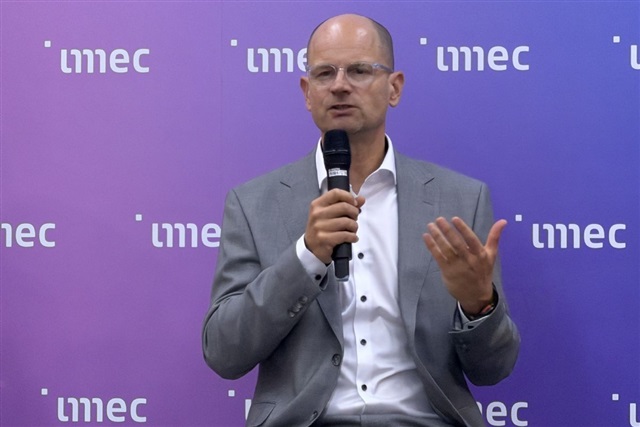
Imec CEO Patrick Vandenameele said at SEMICON Taiwan 2026 that the Belgian research center is broadening its c…
Alphabet's AI Overviews now reach over 2.5 billion monthly users through Google Search, and its ad business ge…
Sarah O’Connor's book 'We Are Not Machines' explores how mechanization and AI have transformed the workforce…