
What happened
Across experiments PI-048 to PI-051, the author compared AI answers and AI evaluations against a pre-prepared Known Answer; if the AI answered 4 where the known result of len([1, 2, 3]) is 3, the mismatch exposed the error.
Why it matters
An AI saying an answer is correct only shows that the AI judged it so, not that the answer is actually right, so teams need a benchmark outside the AI before trusting its verdicts.
Summaries like this, in your inbox every morning.
The experiments build on the author's earlier Self Evaluation work, where an AI was asked to judge its own or another AI's answers. That raised the question of what standard could confirm such a judgment, since the evaluator is itself an AI. PI-048 and PI-049 introduce a Known Answer prepared outside the AI, so a response like 4 against the known 3 exposes an error even when the AI calls the answer correct.
PI-050 extends the check to the question itself: if a prompt states a false premise, the AI may accept it and then rate its own answer as correct, so the premise needs independent checking. PI-051 looks at Consistency across repeated questions, but the author stresses that stability is not the same as correctness — an AI can be consistently wrong. The author frames AI evaluation as one layer among several, to be combined with rules, tests, external evidence, and human review where needed.
Pick your industry and the AI tools you use, and get news related to your work every day.
Free · 30 seconds with Google · unsubscribe anytimeWhat is AIToday? →
Ask AI anything about this article. The AI reads this article, earlier AIToday articles, and Wikipedia, and cites its sources. Q&As are published on this page for other readers too.
DeepSeek released DeepSeek-V4.1-Flash-1017, a “minor update” that reduces task execution time and output lengt…
NEC's Kei Noguchi described how employee engagement fell to 19%, with 8 in 10 staff saying they wanted to leav…

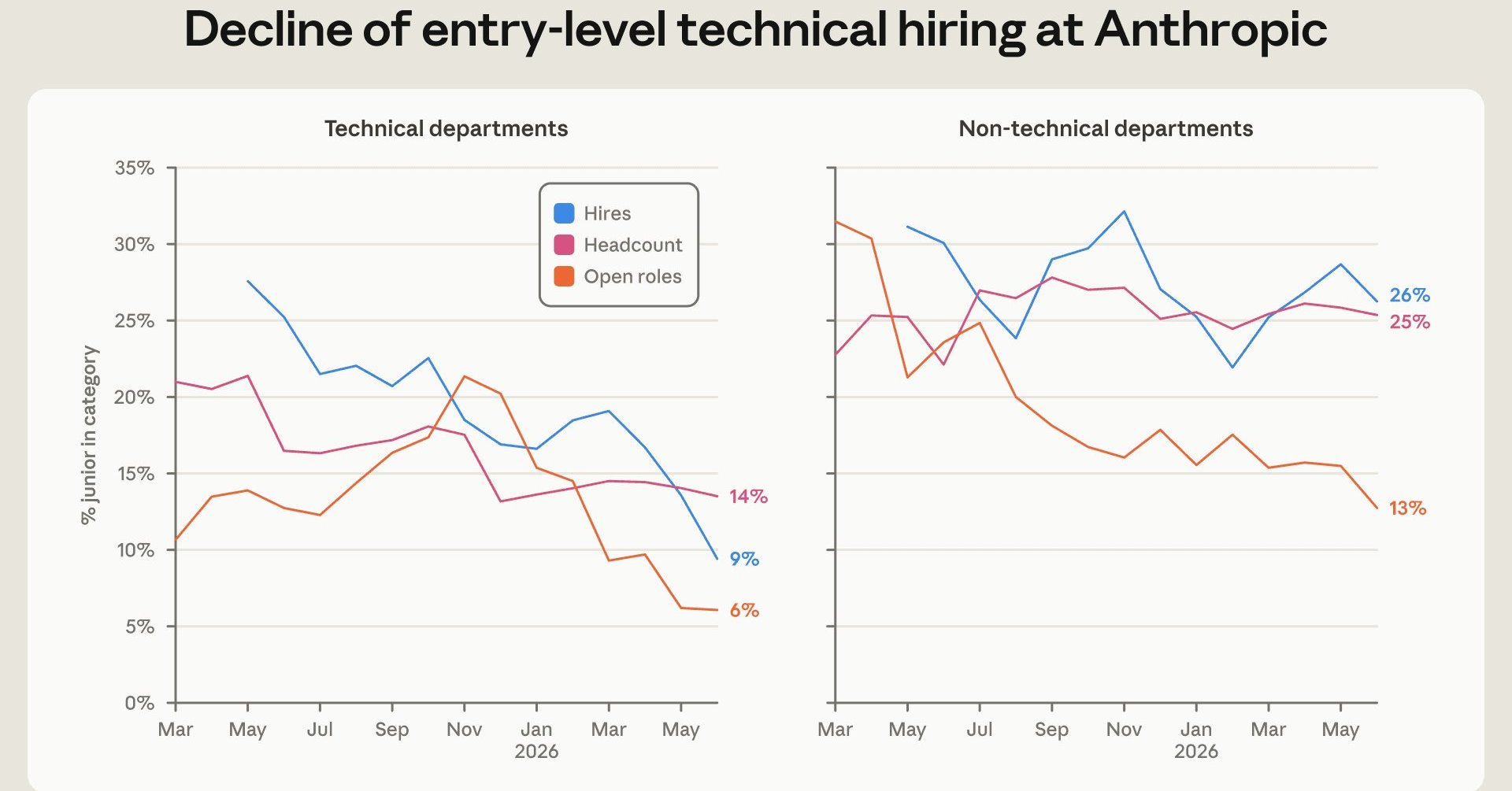
Anthropic's internal report says entry-level workers fell from 21% to 14% of technical staff, and entry-level…
Simon Willison shipped llm-echo 0.5, a debug plugin whose "echo" model involves no LLM at all and just repeats…

On October 13 (US time), Apple announced HomeView, a $299 smart home display running Siri AI and HomeKit but w…

The author detailed a Python script that uploads MP3 audio to Google Cloud Storage (GCS), transcribes it with…

