What happened
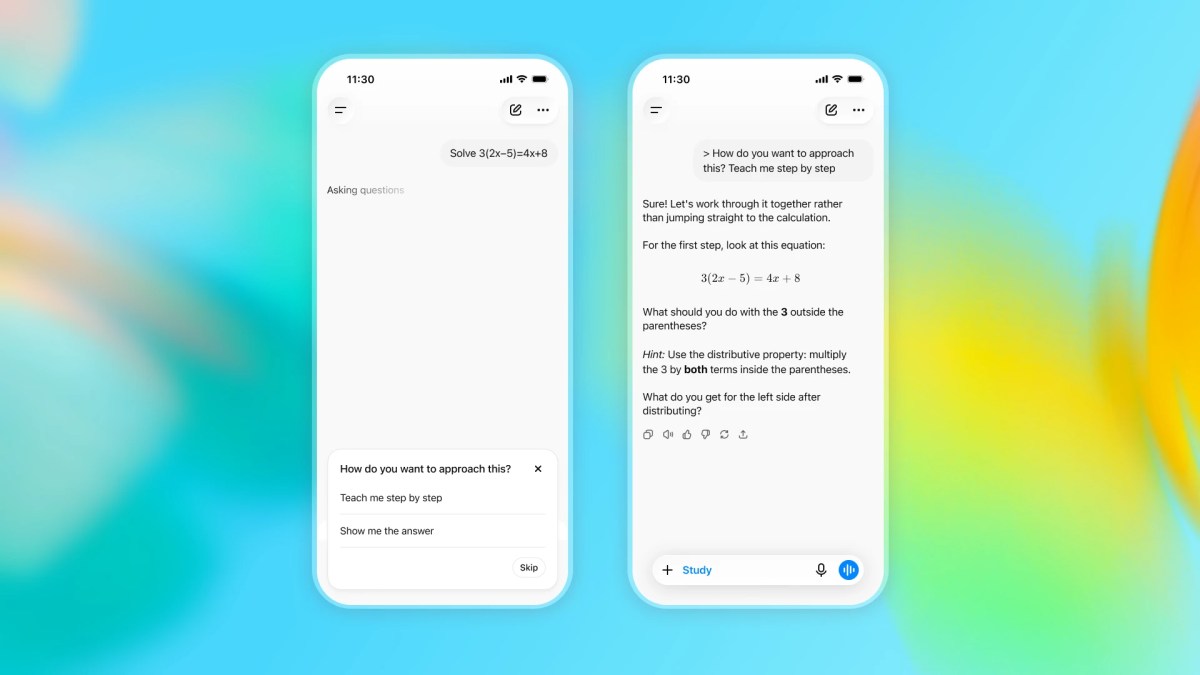
OpenAI announced ChatGPT for Teens on Monday, introducing a Study Mode feature that provides guiding questions and step-by-step support, homework reminders designed to discourage cheating, quizzes, learning visualizations, and parental controls. Age-appropriate protections are now enabled by default to reduce exposure to harmful or developmentally inappropriate content.
Why it matters
The launch comes years after ChatGPT reached 900 million weekly users (first arriving in late 2022) and after numerous lawsuits over the chatbot's lack of safety measures tied to teen suicides and mental health concerns. The move signals OpenAI is attempting to address both the safety gap and the educational crisis of ChatGPT-assisted cheating in schools.
What to watch
The real-world effectiveness of these guardrails remains uncertain—teens are typically adept at circumventing parental controls and digital locks, and until the teen mode undergoes rigorous testing, it is unclear how difficult these safety measures will be to bypass in practice.
Summaries like this, in your inbox every morning.
OpenAI's ChatGPT for Teens represents a delayed response to longstanding concerns about the platform's lack of age-appropriate design. The chatbot achieved 900 million weekly users without any guardrails specifically tailored to minors, a gap that became increasingly problematic as lawsuits emerged linking the tool to teen mental health crises and suicides. The company also faced criticism over classroom cheating, where students used ChatGPT to bypass learning entirely rather than engage with problem-solving.
The new product bundle—Study Mode, homework detection, parental controls, and content filtering based on OpenAI's Under-18 Principles—attempts to address both safety and educational misuse in a single offering. OpenAI's framing emphasizes developmental science and expert guidance, suggesting the company has incorporated feedback from researchers. However, the article itself raises a critical unknown: whether teens, who are historically skilled at circumventing digital controls, will find these protections easy to disable or work around. Without real-world testing under "strenuous" conditions, the actual durability of these safeguards remains speculative.
Pick your industry and the AI tools you use, and get news related to your work every day.
Free · 30 seconds with Google · unsubscribe anytimeWhat is AIToday? →
Ask AI anything about this article. The AI reads this article, earlier AIToday articles, and Wikipedia, and cites its sources. Q&As are published on this page for other readers too.
The Motley Fool argues Amazon is the AI company of the two, since AWS was just 21% of first-half 2026 revenue…

Hewlett Packard Enterprise stock is down 5% at $55.87

Cammarata reinterprets InceptionV1's cat-car neuron as a V-shape detector, not two unrelated concepts
Google Deepmind's Gemini 4 Argon scored 97.5 percent on ARC-AGI-3 at a cost of $4,800, second only to GPT-6 As…
Microsoft's Surface Laptop Ultra, using Nvidia's RTX Spark platform, starts at $2,599 (up to $5,899)

Meta's new commercial terms, effective October 30th, appear to let it crawl and train AI on content from websi…