What happened
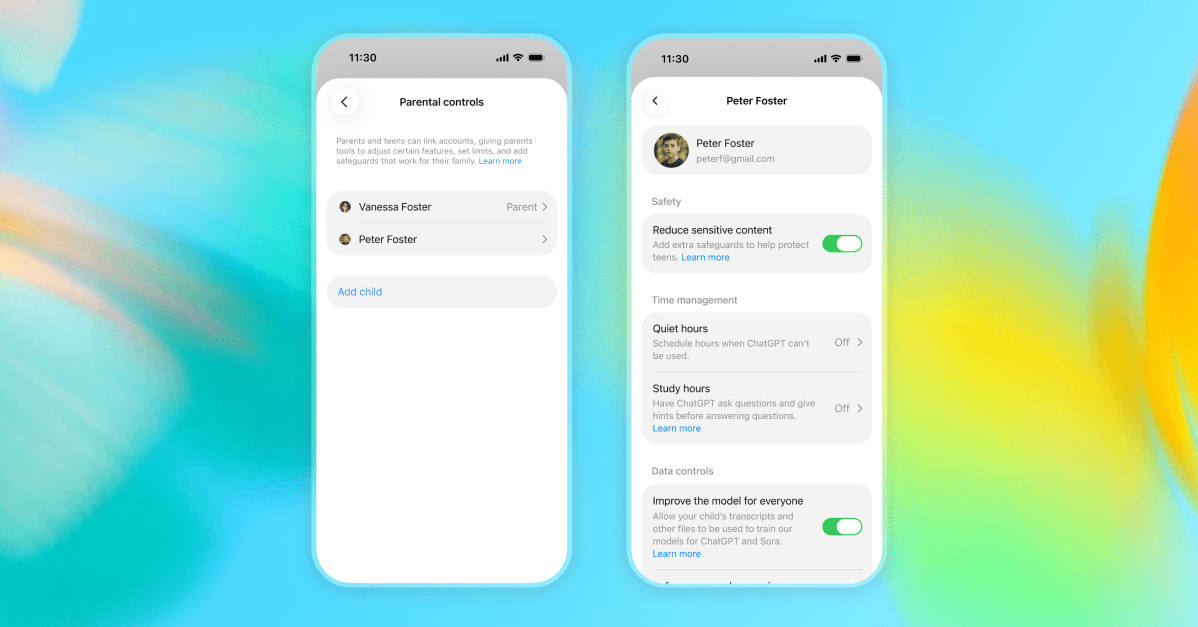
OpenAI introduced ChatGPT for Teens, a dedicated mode that automatically applies to users aged 13–17 and those the system estimates to be under 18. The mode bundles existing protections—tighter restrictions on graphic violence, self-harm depictions, and sexual roleplay—with new features like homework reminders that detect when a teen is trying to shortcut an assignment and redirect them to study mode, plus parental controls for quiet hours and safety alerts.
Why it matters
The launch responds to mounting public scrutiny over how AI tools affect younger users. OpenAI is consolidating safeguards that were previously scattered across separate rollouts (age-prediction features from the start of the year, parental controls and study mode from roughly a year ago, and break reminders announced last month) into one coherent teen experience, signaling that major AI platforms are moving to build age-appropriate protections as regulatory and social pressure intensifies.
What to watch
OpenAI says it will publish more findings from its ongoing safety research and plans to build additional safety features for teens over time. The company frames teen protections as foundational to letting young people benefit from AI responsibly, though many of the guardrails described are existing features rather than entirely new ones.
Summaries like this, in your inbox every morning.
OpenAI's introduction of ChatGPT for Teens reflects a broader industry shift toward age-gated and developmentally tailored AI experiences. The company has spent roughly a year rolling out piecemeal protections—age detection, parental oversight, study aids, and break prompts—each addressing specific concerns around younger users' safety and healthy engagement. By consolidating these features under a single teen-specific mode, OpenAI is signaling that it sees teenage safeguards as a core product concern rather than an afterthought.
The timing is significant: the announcement comes amid mounting public and regulatory scrutiny of AI's effects on younger users, with other platforms also implementing age checks and teen-specific protections. OpenAI's framing of the teen mode as designed to help teens "learn, think critically, deepen understanding, and use AI with confidence" suggests the company is attempting to balance access with responsibility—acknowledging that teenagers should benefit from AI tools while receiving protections that reflect their developmental stage. The homework reminder feature, which detects assignment shortcuts and redirects to study mode, is particularly notable as it moves beyond passive content filtering toward behavioral guidance aimed at "healthy, balanced use."
Pick your industry and the AI tools you use, and get news related to your work every day.
Free · 30 seconds with Google · unsubscribe anytimeWhat is AIToday? →
Ask AI anything about this article. The AI reads this article, earlier AIToday articles, and Wikipedia, and cites its sources. Q&As are published on this page for other readers too.
The Motley Fool argues Amazon is the AI company of the two, since AWS was just 21% of first-half 2026 revenue…

Hewlett Packard Enterprise stock is down 5% at $55.87

Cammarata reinterprets InceptionV1's cat-car neuron as a V-shape detector, not two unrelated concepts
OpenAI is launching the Rosalind Academic Plan, offering eligible research labs at US universities up to 30 fr…
Google Deepmind's Gemini 4 Argon scored 97.5 percent on ARC-AGI-3 at a cost of $4,800, second only to GPT-6 As…
Microsoft's Surface Laptop Ultra, using Nvidia's RTX Spark platform, starts at $2,599 (up to $5,899)