What happened
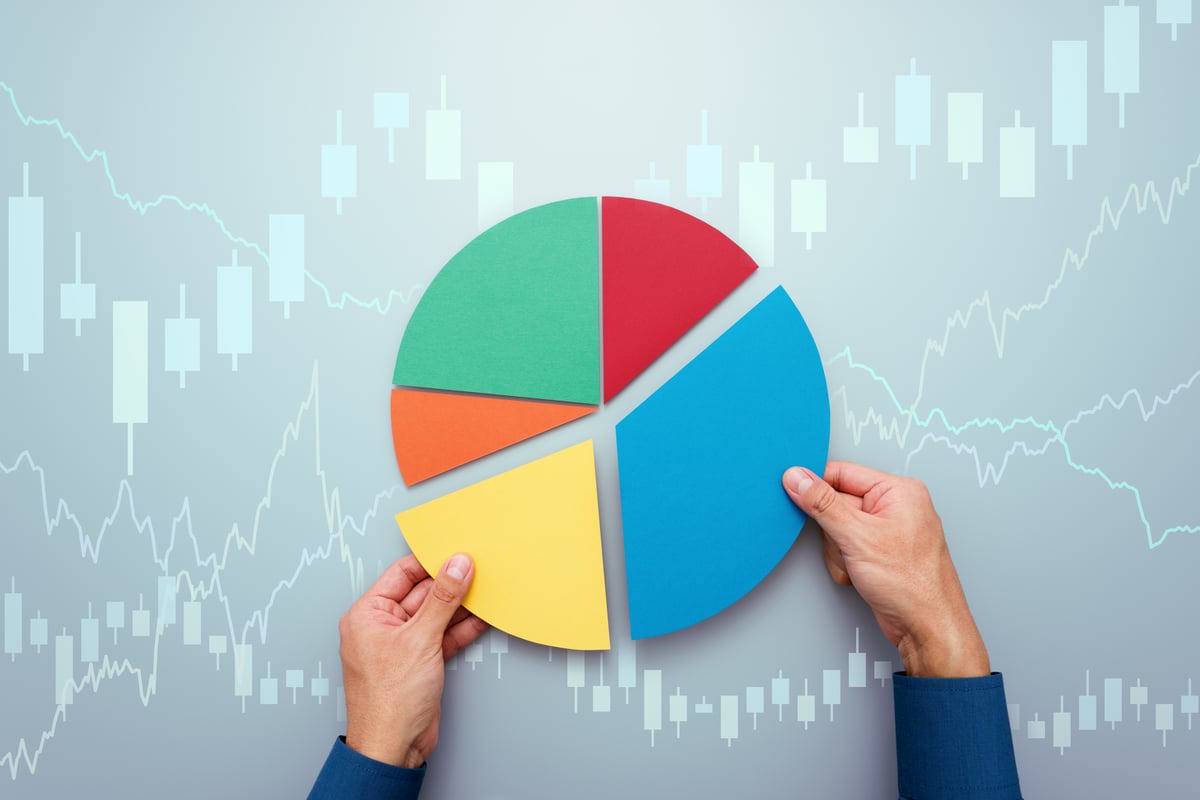
The Vanguard Growth ETF (VUG), which holds $220 billion in assets across 147 stocks, concentrates about 60% of its portfolio in just 10 holdings (representing nine companies, since Alphabet trades in two share classes). Nvidia is the largest at 12.6% of assets, followed by Apple at 11.7%, Microsoft at 7.6%, Alphabet at a combined 10.3%, Amazon at 4.5%, Broadcom at 4.3%, Meta Platforms at 3.4%, Tesla at 3.3%, and Eli Lilly at 2.8%.
Why it matters
The concentration stems from the fund's design—it tracks the CRSP US Large Cap Growth Index, which weights stocks by market value, so the market's biggest winners automatically grow into larger portfolio positions. This means the fund's returns are heavily dependent on a small set of technology and AI-linked companies. If those top 10 stocks fell 30%, the fund would lose about 18% before accounting for declines in smaller AI-adjacent holdings further down the list. In 2022, when growth stocks declined, VUG lost 33.1%.
What to watch
The same concentration that created drawdowns also drove outsized gains—the fund returned 46.8% in 2023, 32.7% in 2024, and 19.4% in 2025, with an expense ratio of just 0.03%. Investors who already own these same companies through an S&P 500 fund or directly should understand that adding VUG doubles down on positions they already hold.
Summaries like this, in your inbox every morning.
The Vanguard Growth ETF's structure illustrates a fundamental tension in passive index investing. Because it tracks the CRSP US Large Cap Growth Index by market-cap weighting, the fund automatically mirrors whatever the market has been rewarding most. For the past several years, that has meant an increasingly concentrated bet on technology and AI-linked names. This is not a flaw in the fund's mechanics—it is the intended behavior of a cap-weighted index fund applied to a market where a small number of companies have dominated returns.
The arithmetic of concentration works symmetrically. On the way up, owning the market's largest winners at minimal cost (0.03% expense ratio) has been a powerful strategy: the fund returned 46.8% in 2023, 32.7% in 2024, and 19.4% in 2025. On the way down, the same dynamic magnifies losses. The five largest positions—Nvidia, Apple, Microsoft, and Alphabet's two share classes—represent 42% of assets, so a 20% decline in those five names while all other holdings remain stable would cut the fund by about 8%. The 2022 experience (a 33.1% loss) provides a concrete precedent for what sustained weakness in growth stocks can mean.
For investors, the key insight is clarity about what they actually own. VUG functions as a concentrated bet on America's technology giants dressed in the language of a 147-stock diversified fund. That is not inherently wrong, but it is worth making deliberately rather than by accident. Anyone with existing exposure to these names through an S&P 500 fund or direct ownership should recognize that adding VUG concentrates rather than diversifies their portfolio. The fund's appeal remains real for those who believe in the AI trade and want low-cost exposure to its leading beneficiaries—but only if they size the position knowing they can withstand drawdowns of the magnitude seen in 2022 if that trade falters.
For example, today's edition would include:
AI-summarized, only the topics you pick — one digest a day via Email, LINE, or Slack.
Free · 30 seconds with Google · unsubscribe anytimeWhat is AIToday? →
Ask AI anything about this article. Q&As are published on this page for other readers too.
Microsoft CEO Satya Nadella was expected at this week's White House state dinner for Chinese President Xi Jinp…
Meta shares rose as much as 7.6% Monday after Wells Fargo analyst Ken Gawrelski raised his price target to $79…
Meta rallied 6.5% on Monday, lifting the Nasdaq 100 by 2.15%, while Arm surged 15%, Intel jumped 13% and AMD c…

The Gates Foundation is committing at least $1 billion over the next two years to make AI work across more lan…
Apple is paying $250 million to settle claims it failed to deliver an AI-upgraded Siri
Google said its AI-native Googlebook laptop is now available for pre-order at $899, after first being unveiled…