AIToday

Palm Garden AI launches Coherence Guard for service robots to interact safely with people

The Robot Report2h ago
Palm Garden AI launches Coherence Guard for service robots to interact safely with people

Key takeaway

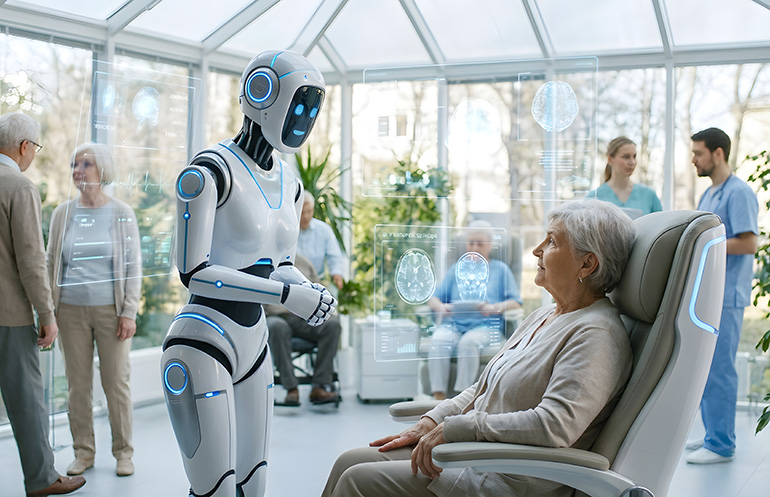
Palm Garden AI has unveiled Coherence Guard, a relational decision layer that helps service robots behave appropriately around people by evaluating social and contextual cues before executing actions. The technology sits above existing robot control and safety systems, enabling robots to recognize discomfort, adjust proximity, and withdraw respectfully—capabilities the company says will become necessary infrastructure as humanoids expand into care, hospitality, and domestic environments. The firm is already in technical discussions with robotics hardware partners and plans to offer the software through a licensed model with optional cloud components.

Summaries like this, in your inbox every morning.

Sign up free →

3 Key Points

  • What happened

    Palm Garden AI developed Coherence Guard, a software layer for service robots that evaluates whether actions are socially appropriate before execution—assessing timing, proximity, emotional tone, and boundary requests rather than replacing existing robot control systems.

  • Why it matters

    As humanoid robots move into hospitality, care, retail, and domestic settings, they need to recognize when a person is uncomfortable and withdraw respectfully or pause—tasks that go beyond technical capability into relational judgment. Coherence Guard addresses this gap by sitting above existing safety and control systems, helping robots understand roles, intentions, and vulnerabilities in human environments.

  • What to watch

    The company is in active technical evaluation with robotics providers including Robotera and Hanson Robotics, with plans to finalize patent filing, complete compatibility reviews with selected platforms, and run limited pilots focused on greeting, guidance, and respectful withdrawal. Commercial licensing is under preparation; the software will likely be offered as a licensed layer with optional SaaS components for configuration and analytics.

In Depth

Palm Garden AI, with offices in Germany and Thailand, is developing Coherence Guard, a software layer it describes as a "platform-agnostic relational decision layer for human-facing robots." According to CEO Joachim Scheuerer, the aim is not to replace perception, motion planning, reinforcement learning, or existing robot control stacks, but rather to function as an additional pre-action evaluation layer. Before a robot executes an action, Coherence Guard evaluates whether the action is relationally coherent in a real human environment, considering signals such as timing, proximity, boundary requests, emotional tone, trust preservation, respectful withdrawal, and the difference between technically possible and socially appropriate action.

The technology builds on the company's Relational Infrastructure Framework (RIF), which adds understanding of roles, intentions, vulnerabilities, and possible future consequences to the physical world models that AI systems use to understand objects, space, and movement. The technology can evaluate human expressions and guide coherent actions—for example, withdrawing if a person indicates discomfort. Coherence Guard is built on Palm Garden AI's ANATTA 9 behavior infrastructure, which runs on the Transwarp Cloud Operating System (TCOS), and is designed to sit above or beside existing robot control, SDK/API, ROS 2, planning, or world-model systems.

Scheuerer identified the need for this layer from two directions. First, many service robots are already becoming capable in navigation, speech, perception, task execution, and expressive interaction, but in real human environments the difficult moment is often not the task itself but the relational decision around the task—when to approach, when to pause, when to withdraw, how much to explain, how to handle hesitation, discomfort, confusion, or changing boundaries. Second, the company's work at Palm Garden Retreat in Thailand exposed the team to many real-world human interaction situations including arrival, orientation, guidance, silence, vulnerability, trust-building, misunderstanding, and respectful withdrawal. Scheuerer noted that a technically correct action can still feel wrong if timing, distance, tone, or context are not coherent.

The company has developed a set of base behavior patterns from three years of structured observation, retreat practice, and human interaction training. These include greeting and orientation, supportive presence, non-intrusive assistance, respectful withdrawal, escalation when uncertainty is high, and coherence-preserving explanation. Scheuerer highlighted "respectful withdrawal" as a simple benchmark: if a person shows discomfort or asks for space, the robot should not simply continue the task but should pause, acknowledge the signal, increase distance if appropriate, reduce expressive intensity, and return to a neutral or available state.

Regarding deployment architecture, Coherence Guard is designed to be flexible. For latency-sensitive or privacy-sensitive situations, it can run on the edge device or on premises. For simulation, analytics, configuration, model improvement, or fleet-level learning, cloud components can be used. Scheuerer stated that the preferred deployment model for human-facing robots is local-first: the immediate relational decision should not depend on cloud latency, though the cloud can support updates, scenario libraries, logs, and non-real-time analysis.

The company is currently preparing a commercial model, with a likely structure of a licensed software layer with optional SaaS components for configuration, simulation support, analytics, and updates. The core intellectual property is patent-pending, so it will not be fully open-source at this stage, but the company aims to make integration interfaces as open and platform-agnostic as possible, designing around ROS 2, SDK/API compatibility, simulation-first workflows, and adapter layers so robot manufacturers do not need to replace their existing stack.

Regarding validation, Scheuerer emphasized that simulation is treated as a first filter, not final proof. The pathway is staged: first logic simulation, then ROS 2 or platform simulation using URDF or SDK interfaces, then limited real-robot pilots. Conclusions from simulation are framed as compatibility and behavioral hypotheses, not final claims. The key is to define narrow, observable benchmarks—for example, approach distance, pause timing, withdrawal behavior, explanation level, and escalation triggers—and then validate them with real human feedback.

The company is in active technical and partnership evaluation with several robotics providers. With Robotera, a humanoid and service robot developer that raised funding last December, Palm Garden AI has had a technical call and is moving through an NDA and simulation-first compatibility pathway. With Hanson Robotics, the compatibility path has been discussed and preparation for the next phase is underway under NDA/addendum. The company has also evaluated interface compatibility with other platforms, including ROS 2/SDK-based humanoid systems, and is mapping possible connections to NVIDIA Isaac/GR00T-style simulation and middleware environments. These are described as technical evaluations and pilot discussions rather than completed commercial deployments. Next steps include finalizing the patent-pending technical framing around TCOS, RIF, and Coherence Guard; completing Phase 0 compatibility reviews with selected robot platforms; building and documenting simulation-first benchmarks for human-facing service scenarios; running a limited pilot focused on greeting, guidance, explanation, and respectful withdrawal; and preparing a clearer technical package for robotics companies with architecture, integration points, benchmark scenarios, and commercial licensing options.

Context & Analysis

Palm Garden AI's Coherence Guard addresses a specific gap that has emerged as service robots become more technically capable. The company's CEO, Joachim Scheuerer, observes that while current robots can navigate, perceive, and execute tasks, the real difficulty in human environments is often relational rather than technical: knowing when to approach, pause, withdraw, or adjust tone based on a person's comfort and boundaries. This insight comes partly from the company's background in psychotherapy-related software and retreat facilitation, and partly from three years of structured observation at Palm Garden Retreat in Thailand, where the team witnessed real-world human-robot interaction scenarios including vulnerability, trust-building, and respectful withdrawal.

The software layer is designed to be platform-agnostic, sitting above or beside existing robot control stacks, ROS 2, and safety systems rather than replacing them. It evaluates candidate actions using a framework that measures timing, proximity, emotional tone, and boundary signals—distinguishing between what is technically possible and what is socially appropriate. Scheuerer emphasizes that this complements formal safety systems at the hardware and control level; Coherence Guard operates at a relational and contextual layer above them.

The company's approach to validation is cautious: simulation is treated as a first filter for testing defined scenarios and identifying failure modes, but conclusions are framed as behavioral hypotheses rather than final claims. Real-world pilots will focus on narrow, observable benchmarks such as approach distance, pause timing, and withdrawal behavior, validated through human feedback. With active technical discussions underway with robotics providers including Robotera and Hanson Robotics, and commercial licensing under preparation, the company is positioning Coherence Guard as infrastructure for the next phase of human-facing robot deployment.

FAQ

How does Coherence Guard work with existing robot safety systems?
Coherence Guard is complementary to formal safety systems, not a replacement. It sits above or beside certified safety layers (hardware, emergency-stop, collision-avoidance) and evaluates whether a proposed action is relationally appropriate—deciding if the robot should continue, pause, explain, ask for confirmation, reduce proximity, or withdraw.
Where does Coherence Guard run—on the robot itself or the cloud?
The architecture is designed to be flexible. For latency-sensitive or privacy-sensitive situations, it runs on the edge device or on premises. Cloud components support simulation, analytics, configuration, model improvement, and fleet-level learning, but the real-time coherence check is designed to be local-first so it does not depend on cloud latency.
Which robotics companies is Palm Garden AI working with?
The company is in active technical and partnership evaluation with several providers. It has had a technical call with Robotera and is moving through an NDA and simulation-first compatibility pathway. With Hanson Robotics, the compatibility path has been discussed and the next phase is under preparation. These are described as technical evaluations and pilot discussions rather than completed commercial deployments.

Get the latest Robotics news every morning

AI-summarized, only the topics you pick — one digest a day via Email, Slack, or Discord.

Free · takes 30 seconds · unsubscribe anytime

Discussion

No comments yet. Be the first to share your thoughts!

Log in to join the discussion

Related Articles

Stay ahead with AI news

Get curated AI news from 200+ sources delivered daily to your inbox. Free to use.

Get Started Free

Free · takes 30 seconds · unsubscribe anytime

1 minute a day. The AI essentials.

200+ sources · Email / LINE / Slack

Get it free →