
What happened
Google DeepMind launched Gemini 3.8 Flash, a new AI model for coding and reasoning, and Gemini 3.8 Flash Cyber for cybersecurity. Both are available today, with Flash priced at $0.75 per million input tokens and $3.75 per million output tokens.
Why it matters
This is Google's third Flash release in six weeks, building on 3.7 Flash. The Cyber version shows frontier-level performance in finding vulnerabilities and patching them, often at lower cost and faster speed than larger models, which could help defenders secure code more effectively.
What to watch
Gemini 3.8 Flash Cyber is only available to trusted defenders through the new Fairwind Program, including government authorities and critical infrastructure operators. For example, it produced 2.6 times more correct patches to Chrome vulnerabilities and found a critical vulnerability in under 2 hours.
Summaries like this, in your inbox every morning.
Google DeepMind's launch of Gemini 3.8 Flash and Flash Cyber marks the third Flash release in six weeks, indicating a rapid iteration cycle. The core model focuses on long-horizon coding and agentic tasks, showing gains that often approach higher-cost frontier models. The Cyber variant is tailored for defensive security, with emphasis on vulnerability discovery and automated patching over offensive capabilities, aligning with their Frontier Safety Framework's focus on beneficial use cases.
Real-world applications already show promise: the Chrome Security team found 3.8 Flash Cyber produced 2.6 times more correct patches than larger commercial models, and Google's Cloud Vulnerability Research team found a critical vulnerability in less than 2 hours, a task that usually takes months. These results suggest a tangible advantage for defenders if the model's access is scaled appropriately.
The Cyber model's restricted availability through the Fairwind Program highlights the balance between enabling powerful defensive tools and mitigating misuse. By limiting access to trusted entities, Google aims to prevent the model from being used for offensive purposes, a concern given its advanced capabilities in vulnerability discovery.
Pick your industry and the AI tools you use, and get news related to your work every day.
Free · 30 seconds with Google · unsubscribe anytimeWhat is AIToday? →
Ask AI anything about this article. The AI reads this article, earlier AIToday articles, and Wikipedia, and cites its sources. Q&As are published on this page for other readers too.
Google released TorchTPU, a version of the PyTorch framework that lets developers run existing AI apps and mod…
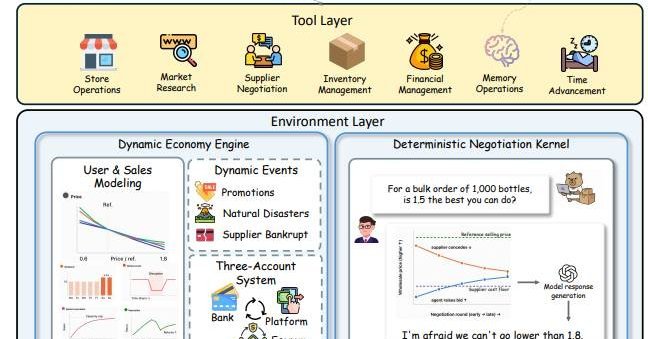
In a benchmark called E-Commerce Bench, 18 AI models ran up to four simulated shops for 365 days, using 18 too…
ITmedia's AI Plus released a 14-page booklet on using Gemini Notebook's (formerly NotebookLM) Studio feature…

IBM Research's ALTK-Evolve turns each customer-service agent trial into short action rules and injects them in…

Testing Pi 0.84.2 with claude-sonnet-4-5, a hook returning { block: true, reason } on rm produced a normal too…
A Zenn author migrating a ten-year-old PHP/Laravel monolith — hundreds of endpoints and more than 600 shared m…

