
What happened
Runway shared research into real-time video generation, where users stream video as they describe it rather than waiting for a finished clip.
Why it matters
Runway says users repeatedly report losing the most time generating and revising videos, and it argues real-time generation closes the gap between an idea and its execution.
What to watch
Runway hasn't announced a timeline for availability, so the approach hinges on whether the model can produce each frame fast enough for playback while shared across several sessions.
WHO IT HITSVideo creators and creative teams who iterate on clips stand to lose less time to generating and revising, while Runway's plans for robotics and autonomous driving could affect engineers training robot and vehicle systems in simulated environments.
Summaries like this, in your inbox every morning.
Runway first discussed this real-time approach in March with Runway Characters, and it uses GWM-1, the company's first "General World Model," which Runway introduced in December 2025. GWM-1 builds on Gen-4.5, generates video frame by frame, and accepts camera movements, robot commands, or audio as controls. Just a few weeks ago, Runway showed Solaris, a system that uses Gen-4.5 to generate user interfaces frame by frame. In March, Runway also showed a research preview of a real-time model developed with Nvidia at the chipmaker's GTC conference, running on the Vera Rubin platform and designed to deliver the first frame in under 100 milliseconds.
Runway argues that real-time generation shifts the compute load from training to use, with the model needing to produce each frame fast enough to keep up with playback while running on hardware shared by several sessions at once. It also points to lower costs, saying faster models use less GPU time, and that the cost per output at a given quality level determines which applications make economic sense. Runway sees interactive applications as the biggest long-term use case for AI-generated media, citing education, gaming, and robotics, and it previously introduced GWM Robotics, a variant of GWM-1 that generates synthetic training data for robots.
The outcome appears to hinge on whether Runway can deliver frames fast enough for smooth playback while multiple sessions share the same hardware, and on whether cost per output drops low enough to make previously unprofitable applications viable. For video creators, the appeal is less time generating and revising clips; for robotics and autonomous driving teams, the appeal is environments that respond instantly to edge cases. Runway hasn't announced a timeline for availability.
For example, today's edition would include:
AI-summarized, only the topics you pick — one digest a day via Email, Slack, or Discord.
Free · 30 seconds with Google · unsubscribe anytimeWhat is AIToday? →
Ask AI anything about this article. Q&As are published on this page for other readers too.
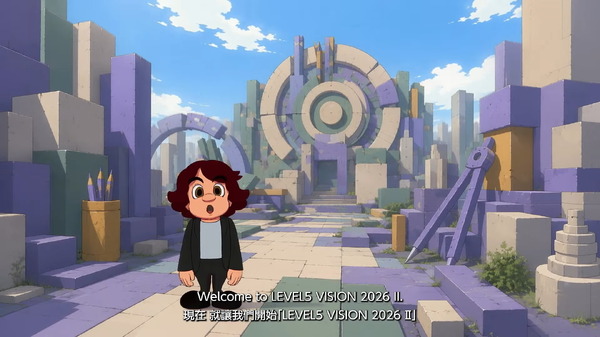
Level-5, whose AI-generated video on September 10 sparked online backlash, drew a Tokyo Game Show 2026 crowd c…

Tilly Norwood, an AI-generated "actress" from studio Particle6, held interactive press sessions with CNN, NBC…

At Level-5's announcement event, an AI-generated video drew controversy, and president Akihiro Hino apologized…
Pika, valued at $470 million, launched a program that automates which AI model creates each video element and…

Tech-media startup Avail launched creatorAPI, a tool letting brands make dozens of AI-edited variants of video…

NBC News aired an interview Monday on 3rd Hour of Today in which correspondent Chloe Melas spoke by video call…