
What happened
Preferred Networks began offering a major update to its Japan-focused AI translation service PLaMo翻訳, claiming accuracy on par with Claude Fable 5.1, GPT-6.1 Sol and GPT-6 Astra. It costs about 14 yen per 100,000 characters and now covers 53 languages.
Why it matters
The company says this puts it on equal footing with several overseas frontier AI models, while staying under a tenth of their cost. That combination is likely to matter for companies weighing whether high-quality translation is affordable at scale.
What to watch
The accuracy and cost claims come from Preferred Networks' own evaluations, including its in-house benchmarks, so independent validation is still pending. Watch whether the 15-language meeting translation feature sees adoption on Zoom, Google Meet and Microsoft Teams.
WHO IT HITSEnterprise procurement and localization teams that pay per-character rates for high-volume translation may find a lower-cost option in PLaMo翻訳, though the accuracy claims still come solely from Preferred Networks' own evaluations.
Summaries like this, in your inbox every morning.
Preferred Networks built PLaMo翻訳 on the third generation of its domestic LLM PLaMo, giving the service a base that is updated from the prior version. The company says it performed translation-specialized training with several hundred times the compute of the previous generation, a scale of investment that would be difficult for smaller teams to match. That training appears to be the foundation for its accuracy claims against Claude Fable 5.1, GPT-6.1 Sol and GPT-6 Astra, though those comparisons rest on Preferred Networks' own evaluations, including its in-house benchmarks.
The update also pushes PLaMo翻訳 beyond a two-language tool: it now spans 53 languages, adding Chinese, Korean, Italian, Spanish, Thai and Russian among others. This broadens the service's potential use from Japanese-English documents to multilingual business settings, where a single provider covering many language pairs can simplify procurement. At the same time, the company pairs that expansion with a stated cost of about 14 yen per 100,000 characters of source text, which it says is under one-tenth of overseas frontier models and machine translation services. The two moves together suggest an attempt to compete not just on quality but on cost per unit of translation work.
The separately launched meeting translation feature adds a real-time layer for web conferences, with a bot joining Zoom, Google Meet and Microsoft Teams calls to show transcriptions and text translations per speaker, and with a glossary for proper nouns and technical terms. It covers 15 languages and can handle three-language meetings. How much this matters for business users hinges on whether the accuracy holds up outside Preferred Networks' own benchmarks and whether the stated cost remains stable at scale; those are the questions likely to shape adoption among procurement and localization teams evaluating the service.
Pick your industry and the AI tools you use, and get news related to your work every day.
Free · 30 seconds with Google · unsubscribe anytimeWhat is AIToday? →
Ask AI anything about this article. The AI reads this article, earlier AIToday articles, and Wikipedia, and cites its sources. Q&As are published on this page for other readers too.
Anthropic released Claude Haiku 5.5, a small model for repetitive work, with list prices of 10 cents per milli…

A Playwright (1.56.1) script swept 320–1440px in 40px steps, then refined to 1px

US nonprofit Common Sense Media said ChatGPT's parent-notification function is not working, and that conversat…
Canon began offering a new support service for home inkjet printers that uses a monitoring function and genera…

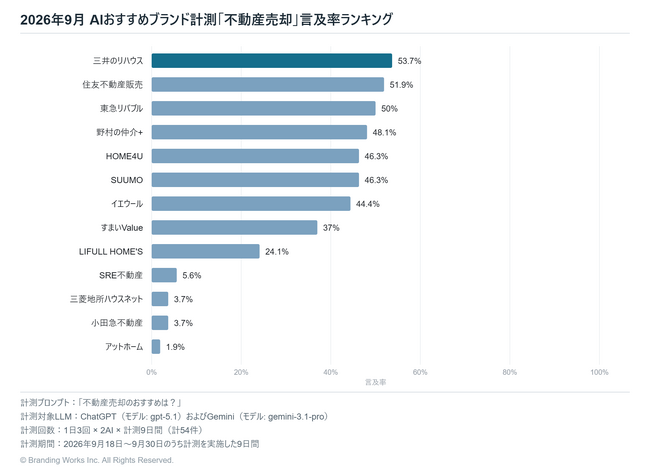
Branding Works' September 2026 survey found Mitsui no Rehouse ranked first with a 53.7% mention rate, followed…
Exa Enterprise AI began offering "Exabase AI for JA" today, with more than 30 AI agents built for the work of…