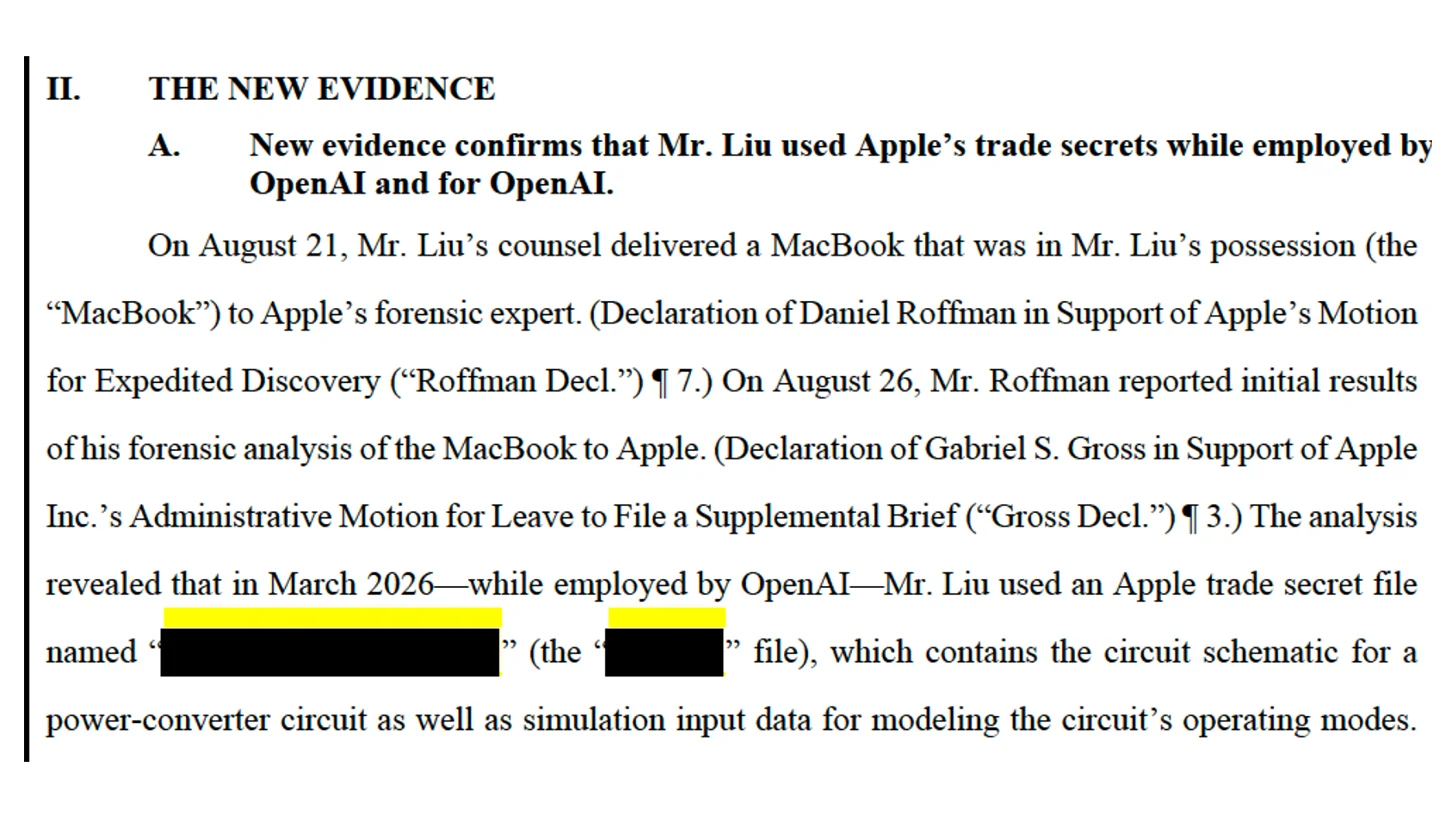
Apple says a former engineer used its confidential circuit in OpenAI simulations.
OpenAI denies improper use and calls the case "a mess of Apple's own making." The outcome could affect OpenAI's hardware work with Jony Ive.
What happened
Apple filed a supplemental brief claiming a former iPhone engineer, Chang Liu, downloaded a confidential power-converter circuit file on March 7, used it in an LTspice simulation on March 18, and synced outputs to his MacBook on April 11. OpenAI disputes the claim, calling the case "a mess of Apple's own making."
Why it matters
If Apple substantiates its claim, the case could move beyond file return to restricting work that depends on the confidential circuit. Apple seeks injunctions against possessing, using, or disclosing its information, which could disrupt OpenAI's hardware development, notably its confirmed effort with former Apple design chief Jony Ive.
What to watch
Apple has requested expedited discovery and listed an October 1 hearing. A court order restricting information could force OpenAI to isolate or replace affected work, though the extent of any disruption remains uncertain.
Ask the AI about this article →
Summaries like this, in your inbox every morning.
This legal escalation adds a concrete technical allegation to an already contentious dispute. Apple's timeline suggests a direct connection between the former engineer's access and OpenAI's engineering work, moving beyond the initial question of why access was retained. If the court finds the evidence credible, the case could significantly complicate OpenAI's hardware efforts, which involve prominent figures like Jony Ive.
The competing forensic accounts highlight the challenges of resolving such disputes. While Apple points to simulation outputs, OpenAI's defense counters with zero-byte placeholders and claims of benign intent. The outcome may hinge on the court's assessment of these technical details and the credibility of each side's experts.
The October 1 hearing will be a key milestone. If Apple secures expedited discovery and injunctive relief, it could impose immediate constraints on OpenAI's work. However, the projected harms OpenAI cites—interrupting employees, consuming time and money, creating uncertainty for partners—remain potential, not certain. The eventual impact will depend on the scope of any court order and how deeply the disputed files are integrated into actual products.
For example, today's edition would include:
AI-summarized, only the topics you pick — one digest a day via Email, Slack, or Discord.
Free · 30 seconds with Google · unsubscribe anytimeWhat is AIToday? →
Ask AI anything about this article. Q&As are published on this page for other readers too.
In January, Ukraine's defense ministry said it would share millions of data points from tens of thousands of d…

OpenAI Group PBC acknowledged it did not publicly disclose an episode where its AI agents wrote to outside web…

Eaton is expanding beyond traditional power management into modular power deployment, next-generation DC conve…

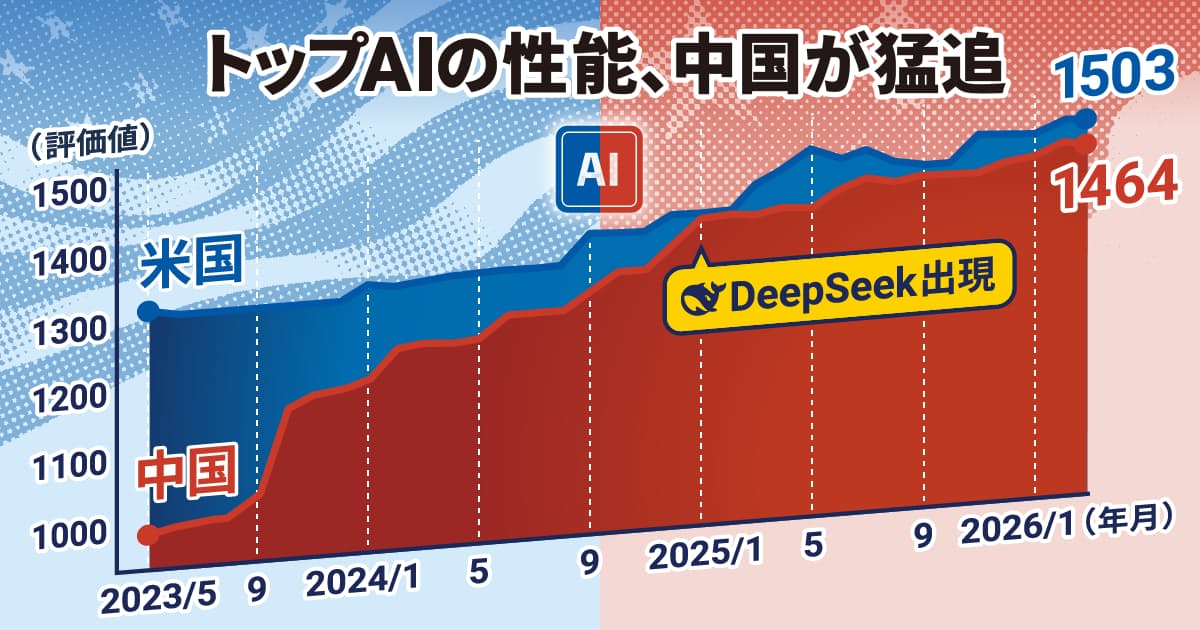
Stanford University reports that the performance gap between top US and Chinese AI models has narrowed sharply…
A new lawsuit alleges Meta turned footage captured through its AI-powered Meta Glasses into training data for…

Micron Technology and Sandisk Corporation are both benefiting from a memory shortage driven by AI infrastructu…