
What happened
In a controlled English/French HuBERT setting, two interventions — an auxiliary language classifier and per-language k-means targets — cut phone-ABX error from 11.6% to 10.4%, below the monolingual 10.8%.
Why it matters
Multilingual speech models have generally trailed monolingual ones on each language, so this suggests the extra cost of multilingual learning is not unavoidable, and cross-language sharing is largely preserved.
What to watch
Most of the gain came when language discrimination was introduced in the first training iteration; later or repeated interventions helped less and increased language-wise segregation, so timing appears to be the deciding factor.
WHO IT HITSTeams building multilingual speech recognition or voice products — where one model must handle several languages — could see accuracy closer to single-language systems without giving up shared learning across languages, according to this research.
Summaries like this, in your inbox every morning.
The work addresses a long-standing puzzle in speech AI: models trained on several languages tend to perform worse on each one than models trained on a single language, even when the total amount of training data is the same. The authors tested this in a tightly controlled English/French HuBERT setup, where they could compare multilingual and monolingual models directly.
Their fix was to push the model to tell languages apart during pretraining, using an auxiliary language classifier and per-language k-means targets. That adjustment improved several measures of linguistic quality, including phone discrimination, lexical performance, and prosody. The timing mattered: introducing language discrimination early in training produced the biggest gains, while later or repeated interventions helped less and came with more separation between languages.
These results point to language discrimination as a causal factor in reducing the multilingual penalty, though the study covers only two languages and one model family, so it is unclear how far the finding extends. The test is whether the same approach scales to settings with many more languages.
Pick your industry and the AI tools you use, and get news related to your work every day.
Free · 30 seconds with Google · unsubscribe anytimeWhat is AIToday? →
Ask AI anything about this article. The AI reads this article, earlier AIToday articles, and Wikipedia, and cites its sources. Q&As are published on this page for other readers too.
Microsoft AI launched MAI-Transcribe-2-Streaming, which Microsoft says ranks first for accuracy on Artificial…

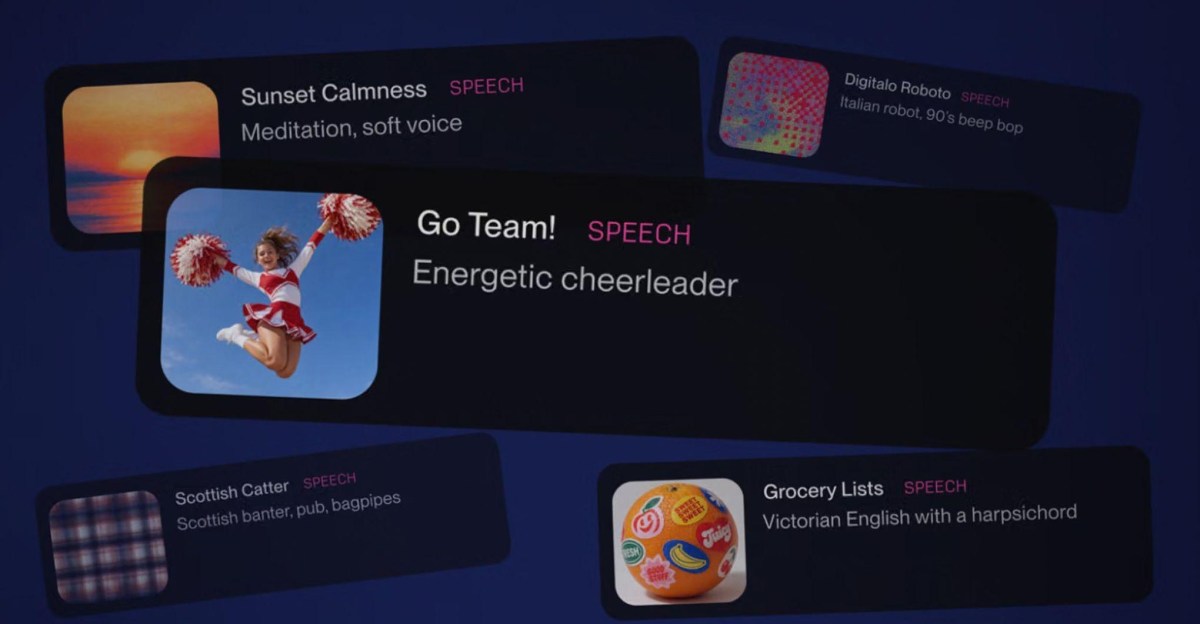
Suno launched Speech in public beta across its web and mobile platforms, letting users generate voiceovers and…
Microsoft launched MAI-Transcribe-2-Streaming, its first streaming transcription model, priced at 54 cents per…

Microsoft AI said it released MAI-Transcribe-2-Streaming, which returns provisional results in just over 100 m…
Microsoft released MAI-Transcribe-2-Streaming on October 1, 2026

Starkey announced Omega AI+, succeeding last year's Omega AI