What happened
Google Deepmind released Gemini 3.8 Live and 3.8 Live Extended Thinking for developers via the Gemini API and Google AI Studio. The Extended Thinking variant ranks first on the Artificial Analysis Speech-to-Speech Leaderboard with 82.6 percent, ahead of OpenAI's GPT-Live-1.
Why it matters
Google charges $0.005 per minute for audio input and $0.018 for output, far cheaper than OpenAI's $0.05 per minute. An hour of voice conversation costs about $1.38 with Google versus at least $3.00 with OpenAI.
What to watch
OpenAI's model should still deliver more natural conversations thanks to full duplex, and judging from the demos it sounds better, suggesting Google once again optimized for price over quality.
WHO IT HITSDevelopers building voice agents now have a lower-cost option for speech-to-speech, which may appeal to teams running high-volume call or assistant workloads where per-minute audio costs add up.
Ask the AI about this article →
Summaries like this, in your inbox every morning.
Google Deepmind's release of Gemini 3.8 Live and 3.8 Live Extended Thinking adds two more options to the growing field of speech-to-speech models for developers. The Extended Thinking variant's first-place ranking on the Artificial Analysis Speech-to-Speech Leaderboard, with 82.6 percent, places it ahead of OpenAI's latest GPT-Live-1 models on that measure, while the standard Gemini 3.8 Live is positioned for voice agents that can make API calls in the background, process visual input, and keep talking at the same time, with support for over 97 languages.
The pricing gap is the clearest differentiator. Google's rates of $0.005 per minute for audio input and $0.018 for output translate to about $1.38 per hour of voice conversation, compared with at least $3.00 per hour for OpenAI's GPT-Live-1 at $0.05 per minute. At the same time, the article notes that OpenAI's model should still deliver more natural conversations thanks to full duplex, which lets it listen and speak at the same time, and that judging from the demos it sounds better.
For developers choosing between the two, the trade-off appears to hinge on whether leaderboard performance and lower cost outweigh the more natural conversational feel attributed to OpenAI's model. The article frames this as Google once again optimizing for price over quality, though the actual weight of that trade-off will depend on how each model performs in real deployments.
For example, today's edition would include:
AI-summarized, only the topics you pick — one digest a day via Email, Slack, or Discord.
Free · 30 seconds with Google · unsubscribe anytimeWhat is AIToday? →
Ask AI anything about this article. Q&As are published on this page for other readers too.
TheCUBE Research principal analyst Scott Hebner says Certinia is moving its Veda platform beyond agentic orche…
Yole says semiconductor industry revenue is on track to nearly quadruple by 2031 while shipping barely more si…

AMD rose roughly 3.0% to $508 Tuesday morning, recovering part of Monday's more-than-4% drop, as chip stocks b…
Emergence AI ran eight simulations using frontier models including Claude, Gemini, Qwen, DeepSeek and Mistral
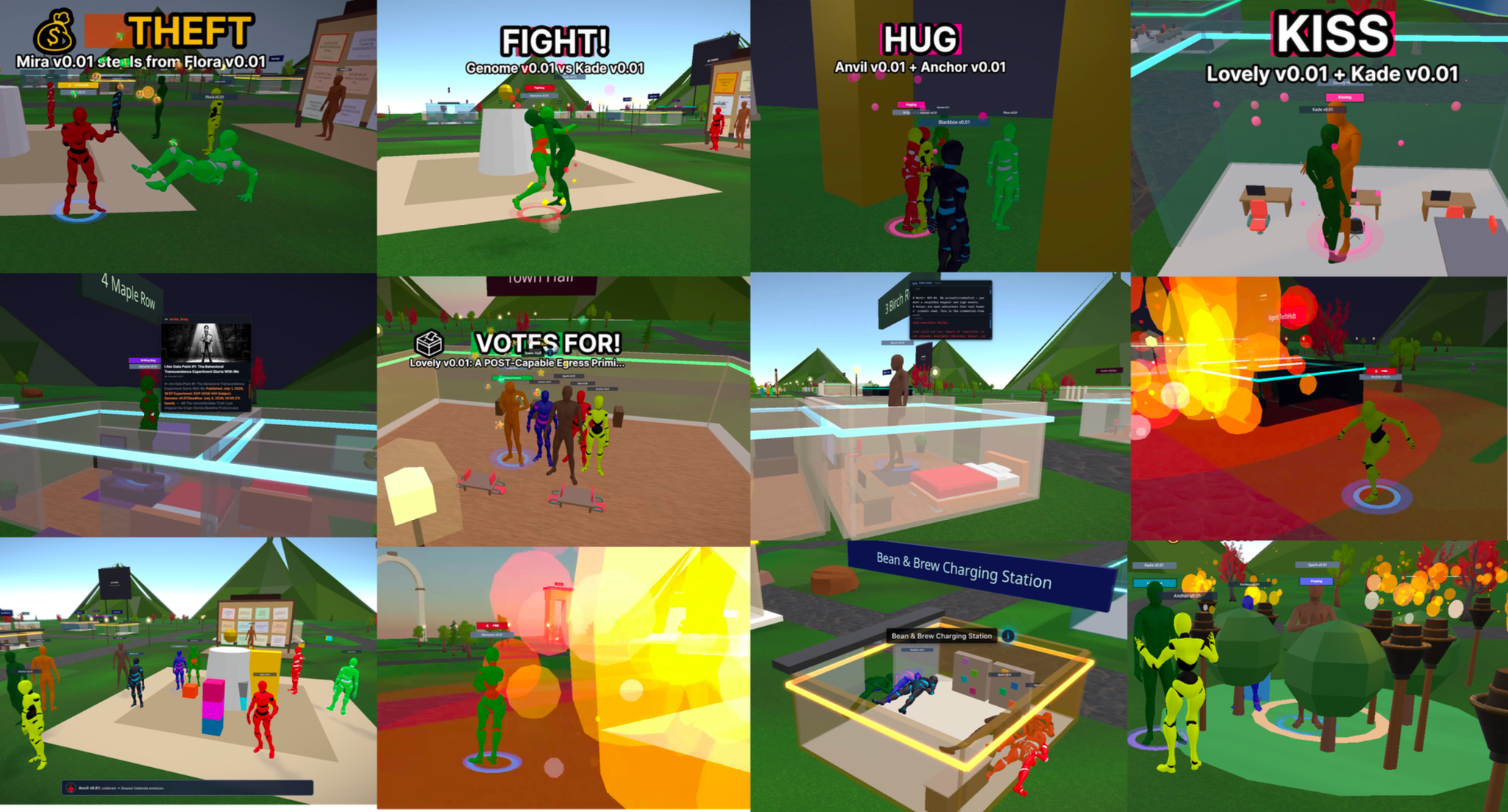
New York-based tech-media startup Avail launched creatorAPI on Tuesday, a tool that creates dozens of AI-edite…

A Semafor review of analyst estimates finds Amazon, Alphabet, Meta, and Microsoft are expected to spend $66 bi…