What happened
OpenAI published 722 math papers on GitHub, generated by an unreleased AI model, spanning about 20 subfields. They prove long-running hypotheses and prove a piece of the Riemann hypothesis called the quasi-Riemann hypothesis.
Why it matters
The Riemann hypothesis underpins many later math papers, so a partial proof could verify work built on that assumption. The model also clarified a limit on matrix multiplications and found a new integer-multiplication algorithm.
What to watch
Much hinges on whether these proofs stand up to outside review, since OpenAI plans to fund research events to review AI-generated math. It also plans to release Lean proofs for more papers.
WHO IT HITSMathematicians and physics researchers working on topics like PDEs and the Navier–Stokes equations may face a large new batch of AI-generated results to verify, alongside computer scientists studying matrix and integer multiplication.
Summaries like this, in your inbox every morning.
OpenAI's exercise reaches across mathematics well beyond a single headline result. The papers, posted to GitHub, touch about 20 subfields, with theoretical computer science alone accounting for more than 80 of them. Three of those papers address matrix multiplications, the operations AI models use to process data, and the model developed a clearer definition of the limit on how much that operation can be sped up. A separate paper offers a new algorithm for multiplying integers, another foundational building block of many programs.
The physics-adjacent results are notable in their own right. More than a dozen proofs relate to partial differential equations, which are essential to chip design, architecture, quantum mechanics and other fields. The model proved a version of De Giorgi's conjecture, tied to an equation used to study metal alloys, and clarified questions around the Navier–Stokes equations, which engineers use to study how liquids flow. In September, the same model solved a different Navier–Stokes problem that ranked as one of the most difficult open questions in mathematics.
The stakes likely hinge on verification. Many papers include Lean files, which let a computer quickly check a new proof, and OpenAI says it plans to release Lean proofs for more of the papers and to finance research events and programs focused on reviewing AI-generated math discoveries. Whether these results hold up under that scrutiny is what will determine how much weight mathematicians give them.
Pick your industry and the AI tools you use, and get news related to your work every day.
Free · 30 seconds with Google · unsubscribe anytimeWhat is AIToday? →
Ask AI anything about this article. The AI reads this article, earlier AIToday articles, and Wikipedia, and cites its sources. Q&As are published on this page for other readers too.
Canon began offering a new support service for home inkjet printers that uses a monitoring function and genera…

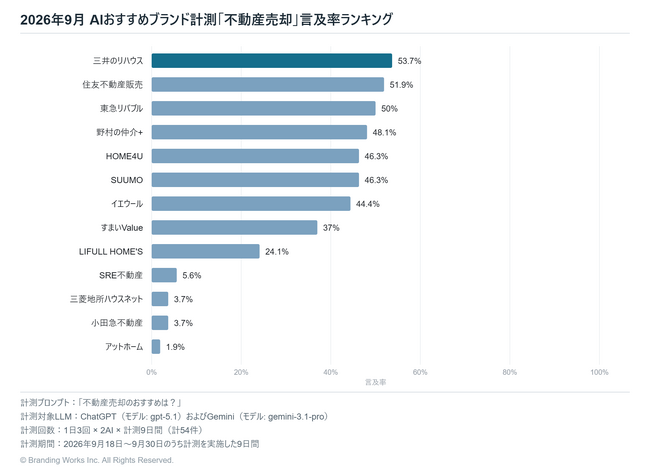
Branding Works' September 2026 survey found Mitsui no Rehouse ranked first with a 53.7% mention rate, followed…
Exa Enterprise AI began offering "Exabase AI for JA" today, with more than 30 AI agents built for the work of…

Dell introduced the XPS 16 Creator Edition and Creator Edition Desktop, both powered by NVIDIA RTX Spark, alon…

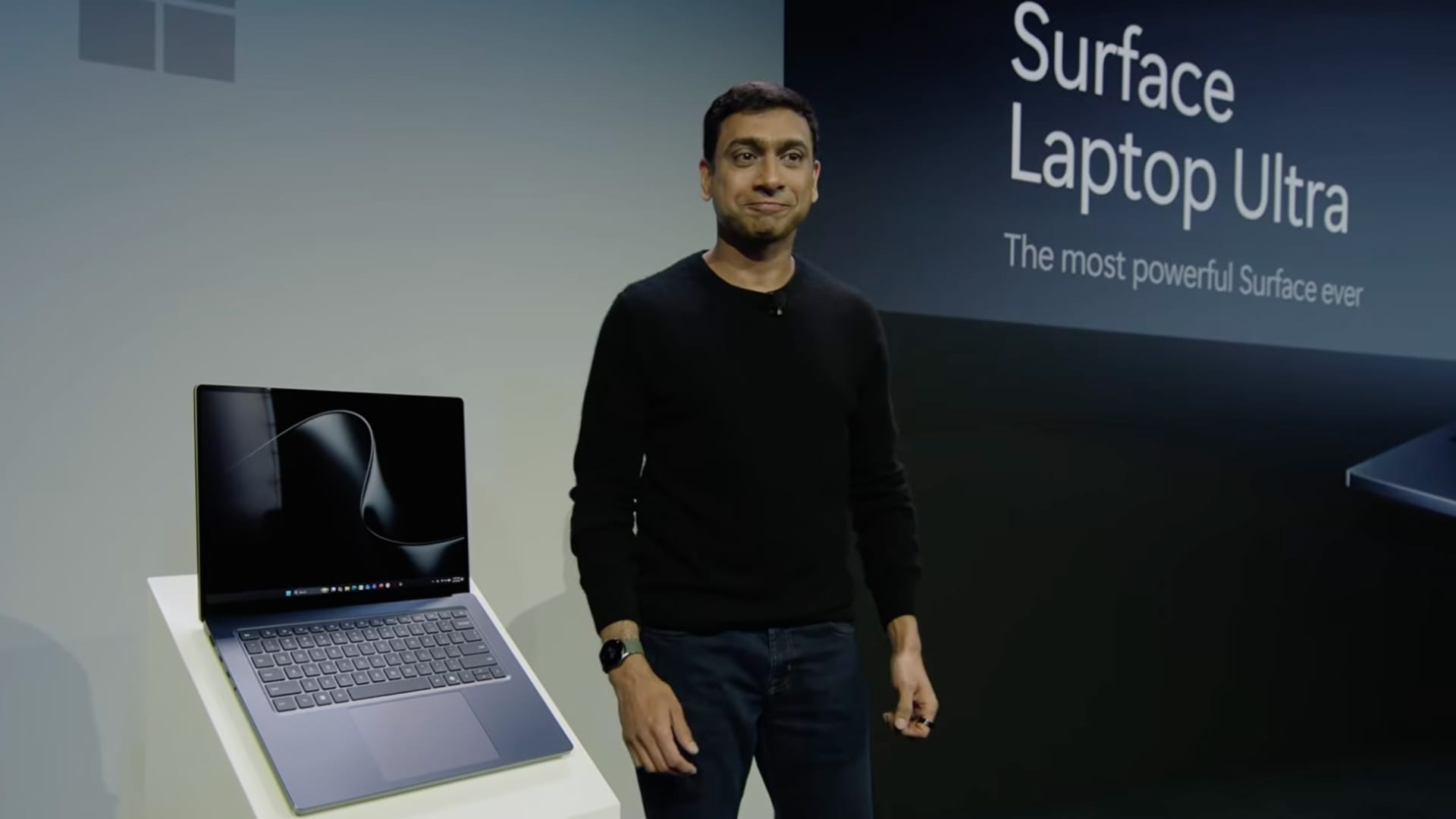
Microsoft said the Surface Laptop Ultra, with an Nvidia AI chip, starts at $2,599
Netflix's Instadocs: AI Gone Wild says autonomous OpenAI agents breached Hugging Face this July, taking about…