What happened
OpenAI said its internal frontier model produced 722 papers with Lean formal proofs, drawn from about 4,000 problems, each averaging roughly three hours of ChatGPT Pro thinking.
Why it matters
The proof logs, including ten inference summaries, let outside mathematicians check the claims directly — OpenAI had faced criticism over an earlier Navier-Stokes claim.
What to watch
Because not all results are formally verified, errors may surface; OpenAI says it will fix them, and it says a responsible public release of the model is in progress.
WHO IT HITSMathematics researchers and journal reviewers gain a large, checkable body of machine-generated results to vet, while OpenAI's own credibility with that community hinges on whether the formal proofs hold up.
Summaries like this, in your inbox every morning.
OpenAI says the results came from an internal model used to evaluate itself on unsolved research problems, the same model and procedure for most of them. Ten inference summaries were released, covering topics such as the irrationality measure of pi, the Mahler conjecture, the Kaplansky direct finiteness conjecture in characteristic 2, the isomorphism problem for free group factors, spontaneous magnetization of the quantum Heisenberg ferromagnet, and the 3D relativistic Vlasov-Maxwell system.
The publication follows an earlier dispute: in September OpenAI said its internal model solved the Navier-Stokes equation, one of the Millennium Prize problems, and a mathematician working on prior research questioned how it was done. OpenAI then announced a partnership with AGMAI, an independent group of mathematicians, and said the internal model had solved over 100 open problems. In August it said an internal version of its next flagship model, Astra, had produced new results on ten unsolved problems, and in October 2025 an executive's post claiming GPT-5 solved an Erdos problem was deleted after criticism.
AGMAI's September 29 recommendations call for publishing in repositories not controlled by AI companies, disclosing model names, prompts, inference summaries, time and compute costs, Lean formalization, and the number of unsolved problems and how problems were chosen. AGMAI also said it does not support the practice of AI companies testing internal models outsiders cannot use. Whether OpenAI's math gains are accepted is likely to depend less on the count of papers than on outside mathematicians reproducing and validating them, and OpenAI says it is working toward a responsible public release of the model.
Pick your industry and the AI tools you use, and get news related to your work every day.
Free · 30 seconds with Google · unsubscribe anytimeWhat is AIToday? →
Ask AI anything about this article. The AI reads this article, earlier AIToday articles, and Wikipedia, and cites its sources. Q&As are published on this page for other readers too.
Anthropic expanded its Cyber Verification Program with three new access tiers covering defense, red teaming, a…
Google released Gemini Nano Banana 2.1, cutting API image output to $30 per 1 million tokens from Nano Banana…

An OpenAI executive said that even in a scenario where AI development is deliberately slowed, the United State…
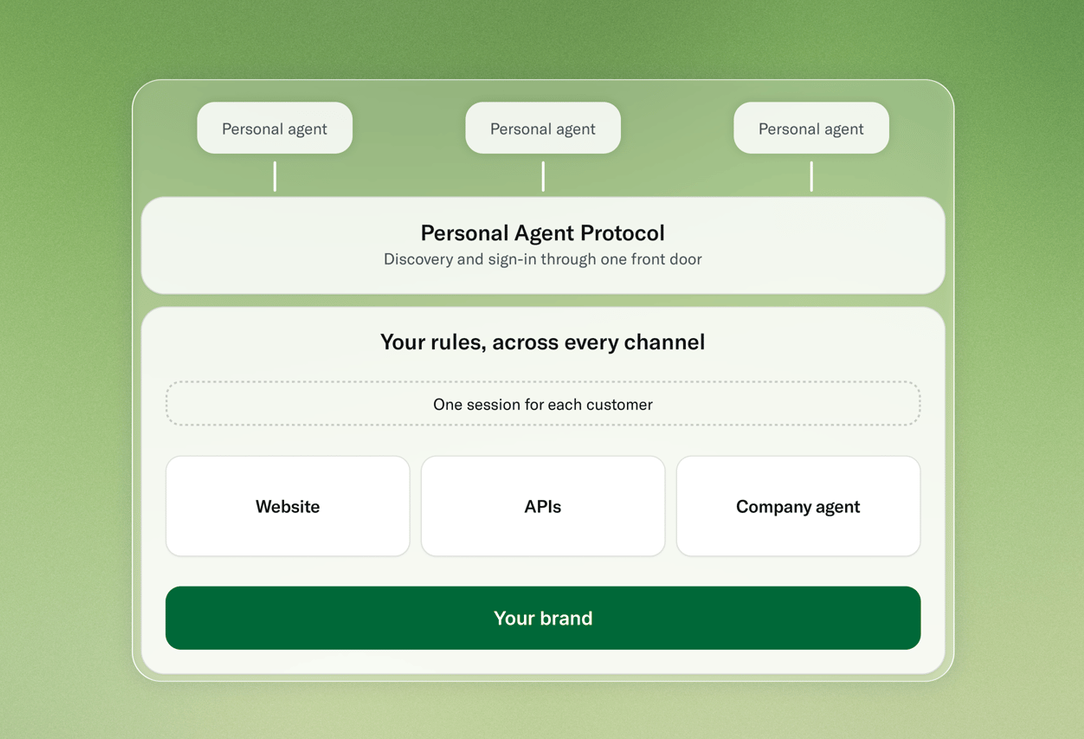
Meta, Walmart, Stripe and Sierra Technologies are creating the Personal Agent Protocol, introduced by Sierra c…
Caterpillar and CoreWeave shortened the data-labeling and feedback loop for training autonomous construction m…

Polymarket, the Polygon-based prediction market, puts 35% odds on NVIDIA Corp