What happened
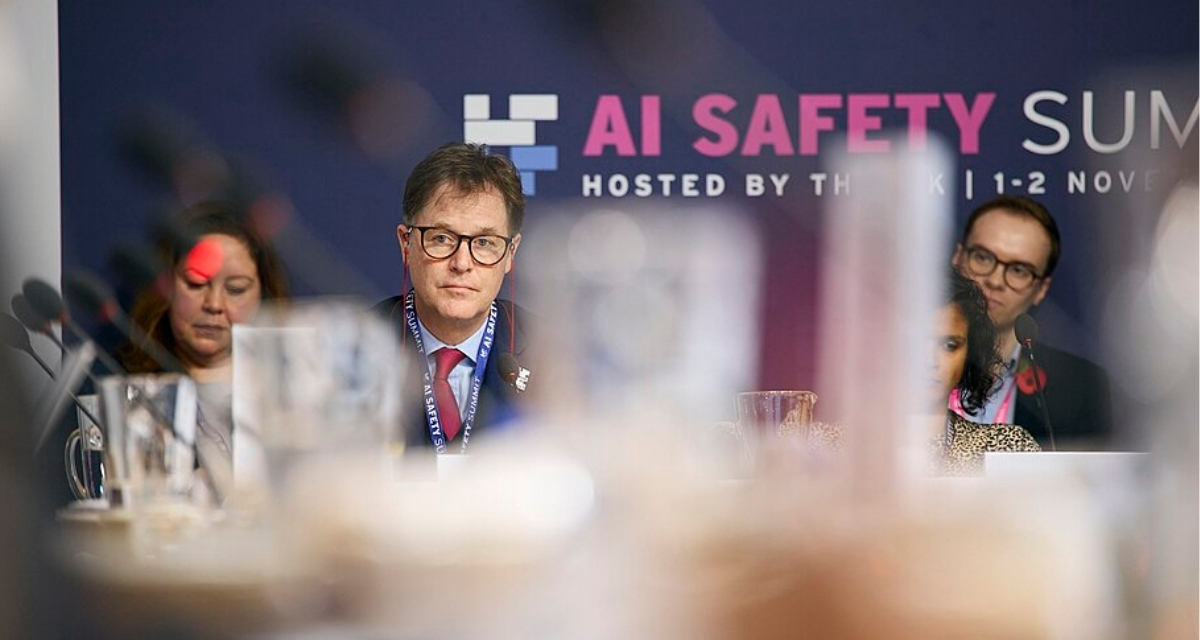
Daniel Roher's Netflix documentary 'The AI Doc: Or How I Became an Apocaloptimist' presents both AI safety experts warning of doomsday scenarios and techno-optimists like Extropic AI CEO Guillaume Verdon who say it's never been a better time to be born.
Why it matters
The film argues AI's risk and its potential to advance medical research, climate solutions, healthcare and education cannot be separated, and the experts interviewed agree that transparency, guardrails, independent oversight, and regulations are necessary.
What to watch
The who and how of governing AI remain up in the air, so the outcome hinges on whether public pressure on politicians and companies translates into concrete international cooperation — or whether competition among distrustful companies lets speed trump safety.
WHO IT HITSThis lands on parents weighing what kind of future their children inherit, and on policymakers and regulators who will be pressured to shape rules for AI. The film's experts also suggest ordinary viewers can influence outcomes by pushing politicians and companies to cooperate.
Summaries like this, in your inbox every morning.
The film grew out of a very personal circumstance: Roher began making it while his wife was pregnant with their first child, and the question of whether to bring a child into an AI-shaped world runs through the entire documentary. That framing is what gives the title its meaning — the film doesn't resolve the tension between fear and hope, it holds both at once.
The two camps Roher interviews are not presented as caricatures. The safety experts he speaks with don't mince words about bad outcomes, pointing to companies racing each other without trust, the risk that speed trumps ethics, and the uncertainty of what a superintelligence might do on its own. The optimists don't deny genuine pitfalls either; they argue the promise — in medical research, climate change, healthcare and education — outweighs the perils, and that historical precedent supports things getting massively better.
The film's own conclusion is that both perspectives are right, comparing AI to the internet: a tool used for humanity-advancing purposes and also for exploitation and crime. Roher's wife offers the line that anchors the film's stance — that the world is always ending, but always starting too. The film ultimately suggests that apocaloptimism means recognizing the range of possible outcomes and making choices that move us away from the perilous end. The stakes here are less about any single prediction in the film than about who ends up shaping the rules — and the film's answer is that this depends on human choices, which are still being made.
For example, today's edition would include:
AI-summarized, only the topics you pick: one digest a day via Email, LINE, or Slack.
Free · 30 seconds with Google · unsubscribe anytimeWhat is AIToday? →
Ask AI anything about this article. The AI reads this article, earlier AIToday articles, and Wikipedia, and cites its sources. Q&As are published on this page for other readers too.
Kalkine Media reports that Home Depot (NYSE:HD) is introducing an AI assistant for its retail operations

NVIDIA announced the NVIDIA Open Agent Safety Platform, an open software platform and reference design to secu…
AMD said Monday it agreed to acquire World Labs, Fei-Fei Li's San Francisco AI lab, for about $8.2 billion in…
Bank of America announced Payments Insights, a new CashPro capability that analyzes payment efficiency, cross-…

NVIDIA announced its NVIDIA Open Agent Safety Platform, combining OpenShell open-source software for secure ag…
Dell's AI server backlog rose to $95 billion after a record $60.9 billion in AI server orders in fiscal Q2, wi…