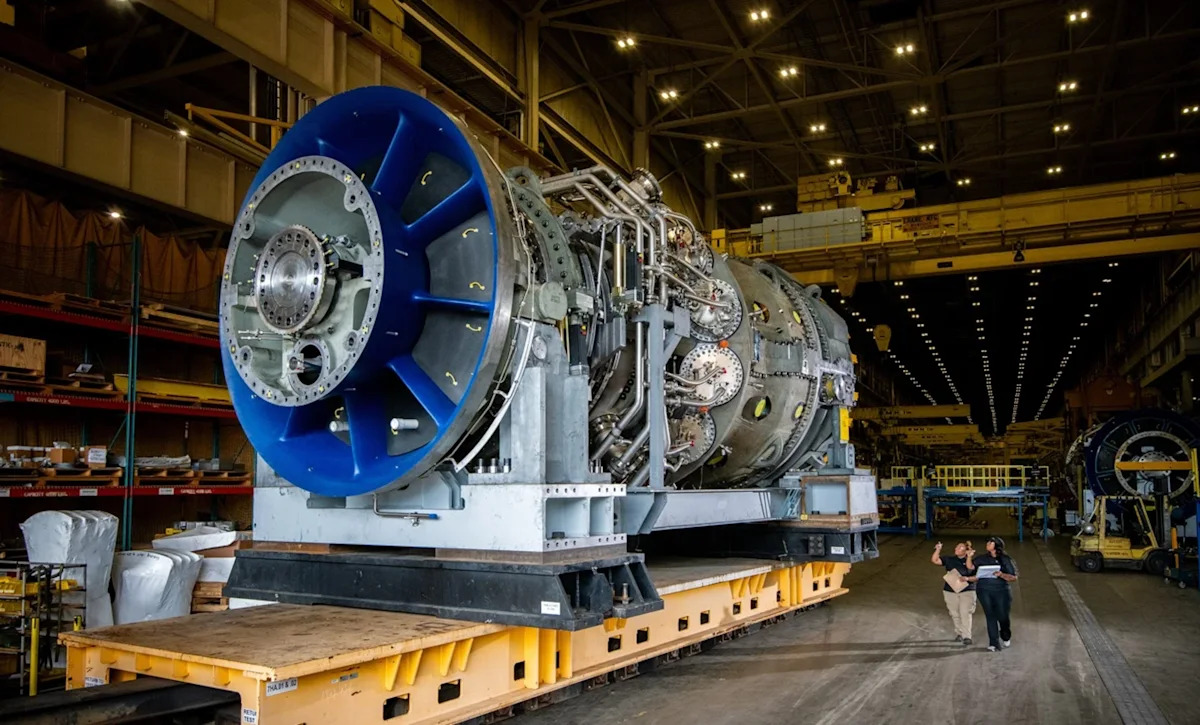
GE Vernova stock fell 6% despite posting strong results: total orders jumped 88% to $24.2 billion(約3.9兆円), driven by surging demand for gas turbines powering artificial intelligence infrastructure and manufacturing. The company raised its 2026 revenue guidance to $45.5 billion(約7.3兆円) to $46.5 billion(約7.4兆円) on a $176 billion(約28兆円) backlog, though a weak wind segment and missed quarterly earnings disappointed investors.
Summaries like this, in your inbox every morning.
Sign up free →What happened
GE Vernova's stock fell roughly 6% on Wednesday after quarterly earnings missed expectations, even though total company orders surged 88% to $24.2 billion(約3.9兆円). The Power and Electrification segment drove the surge, while the wind unit saw a 40% drop in new orders and higher offshore project costs.
Why it matters
The company raised its 2026 revenue guidance to $45.5 billion(約7.3兆円) to $46.5 billion(約7.4兆円) (from $44.5 billion(約7.1兆円) to $45.5 billion(約7.3兆円)), citing a $176 billion(約28兆円) backlog and strong momentum in gas turbines—equipment critical to AI infrastructure build-out and manufacturing expansion. Gas turbines have become a hottest segment in the industrial market as data centers and factories race to secure reliable power.
What to watch
GE Vernova's HA gas turbine fleet has surpassed four million commercial operating hours, with 130 units now commissioned in 21 countries and 195 units under contract. The stock has already rallied more than 65% since the beginning of 2026, hitting an all-time high in April.
GE Vernova reported quarterly earnings that missed investor expectations, prompting a 6% stock decline on Wednesday, even though the company's headline metrics showed considerable strength. The gas turbine maker's total company orders surged 88% to $24.2 billion(約3.9兆円), with the Power and Electrification segment delivering the growth that reflects massive demand in power generation and electrification equipment—much of it tied to artificial intelligence infrastructure expansion. CEO Scott Strazik highlighted the positive momentum in a statement, noting: "With a backlog of $176 billion(約28兆円), continued revenue growth and margin expansion, and significant free cash flow generation, GE Vernova's momentum is building, and we are raising our 2026 financial guidance." The company raised its 2026 revenue forecast to $45.5 billion(約7.3兆円) to $46.5 billion(約7.4兆円), up from a prior range of $44.5 billion(約7.1兆円) to $45.5 billion(約7.3兆円).
However, weakness in the wind segment tempered the overall performance. The company's wind unit saw a 40% drop in new orders and faced higher offshore project costs that dragged on quarterly earnings. This contrast illustrates GE Vernova's dependence on gas turbines at a moment when they have become a hottest segment in the industrial market, powering the boom in AI infrastructure build-out and manufacturing onshoring.
GE Vernova's gas turbine business has reached significant scale: the HA gas turbine fleet surpassed four million commercial operating hours, with 130 units commissioned in 21 countries and another 195 units under contract. The company has positioned itself as what some call the "supermarket" for the electric power industry, offering everything from natural gas turbines for electricity generation to power plant and grid modernization services. Since the beginning of 2026, the stock has rallied more than 65%, hitting an all-time high in April, reflecting investor enthusiasm for its exposure to the AI infrastructure cycle, even as the latest quarterly result proved insufficient to sustain upward momentum.
GE Vernova's mixed quarter reflects the diverging fortunes within its portfolio. The 88% surge in orders and $176 billion(約28兆円) backlog underscore explosive demand for gas turbines, which have become essential infrastructure as data centers race to power artificial intelligence systems and manufacturers accelerate onshoring. The company's raised 2026 guidance signals confidence in this momentum. Yet the market's negative reaction—a 6% stock drop despite the strong order beat—highlights investor concern about execution risks, particularly the drag from the wind segment's 40% order decline and higher offshore project costs. This disconnect suggests the market is pricing in near-term headwinds that could offset the long-term tailwinds from AI infrastructure spending.
AI-summarized, only the topics you pick — one digest a day via Email, Slack, or Discord.
Free · takes 30 seconds · unsubscribe anytime
No comments yet. Be the first to share your thoughts!
Log in to join the discussion



Get curated AI news from 200+ sources delivered daily to your inbox. Free to use.
Get Started FreeFree · takes 30 seconds · unsubscribe anytime
1 minute a day. The AI essentials.
200+ sources · Email / LINE / Slack
