
Amazon has backed a large private gas power plant in Texas to fuel a new data center campus needed for its AI and cloud operations.
The project puts Amazon's climate pledges under scrutiny, as the plant could become one of the largest single sources of greenhouse gas emissions in the US.
This highlights a broader tension facing tech companies: rapid expansion of power-hungry AI infrastructure often relies on fossil fuel generation, challenging their sustainability commitments.
What happened
Amazon.com has been confirmed as a key financial backer of a large private gas power plant built to supply its new data center campus in Texas, designed to support its growing cloud and AI computing needs.
Why it matters
The scale of the plant could make it one of the largest single sources of greenhouse gas emissions in the US, creating tension between Amazon's net zero and sustainability commitments and its rapid data center expansion driven by AI and cloud demand.
What to watch
Investors are now facing questions about how Amazon will balance its heavy capital spending on data center infrastructure—a core driver of AWS competitiveness—with its public climate targets as the company competes against Microsoft and Alphabet.
Amazon.com has been confirmed as a key financial backer of a large private gas power plant constructed to supply electricity to its new data center campus in Texas. The project is intended to support Amazon's expanding cloud and AI computing operations through AWS, the company's main earnings driver. The scale of the facility raises significant concerns: it could become one of the largest single sources of greenhouse gas emissions in the US, placing direct pressure on Amazon's publicly stated net zero and sustainability commitments. This represents a critical test of how Amazon balances its growth narrative—which leans heavily on AWS and AI-driven expansion funded by substantial data center capital expenditure—with its environmental pledges.
The power plant addresses a fundamental operational challenge for Amazon: securing reliable, dedicated electricity generation for data center campuses that power AI and cloud workloads. This approach reflects Amazon's broader strategy to control core infrastructure rather than depend entirely on grid supply, particularly as AWS faces increased capital intensity in custom chips and data center construction alongside mounting competition from Microsoft and Alphabet. Analysts note that AWS is experiencing both heightened capital intensity and growing competitive pressures, with supply constraints presenting additional challenges. The privately backed gas generation plant directly supports the bullish case for Amazon's long-term competitiveness by securing the operational foundation needed for continued data center and custom silicon investment. Yet the plant's reliance on fossil fuel generation underscores the tension at the heart of Amazon's investment thesis: how the company will fund the infrastructure expansion necessary to maintain AWS's competitive edge while fulfilling its public climate targets.
Amazon's backing of a privately built gas power plant reveals the practical constraints facing a cloud giant trying to scale AI infrastructure while maintaining climate pledges. AWS is Amazon's main earnings driver and is experiencing increased capital intensity, particularly in custom chips and data centers, alongside growing competition with Microsoft and Alphabet. Securing dedicated, reliable power generation addresses a major operational bottleneck for AI-heavy cloud workloads—a critical advantage in a competitive market. The Texas plant sits squarely within Amazon's strategy to control core infrastructure rather than rely solely on grid power, reflecting how data center expansion and custom silicon investment are central to keeping AWS competitive. However, the reliance on fossil fuel generation to meet this demand directly challenges the net zero narrative Amazon has publicly committed to, forcing investors to reckon with how the company intends to reconcile rapid infrastructure growth with sustainability targets as AI workloads reshape power demand across the industry.
AI-summarized, only the topics you pick — one digest a day via Email, Slack, or Discord.
Free · takes 30 seconds · unsubscribe anytime
Ask AI anything about this article. Q&As are published on this page for other readers too.
TSMC has roughly doubled its CoWoS and SoIC packaging capacity annually for several years and is now running C…

Tech companies are raising unprecedented sums for AI infrastructure—$194 billion so far in 2026 by just four f…

Broadcom CEO Hock Tan reaffirmed in early June that the company expects fiscal 2027 AI semiconductor revenue o…

Nvidia has partnered with Apollo, BlackRock, Blackstone, Brookfield, Goldman Sachs, and KKR to raise $500bn in…
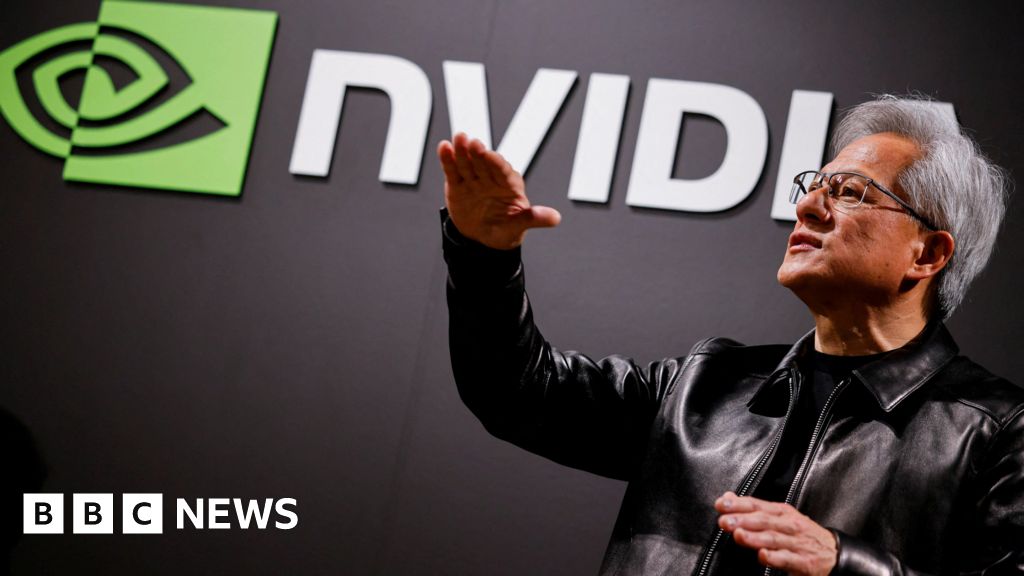
Nvidia has signed letters of intent with Apollo, BlackRock, Blackstone, Brookfield, Goldman Sachs, and KKR to…

Anthropic has signed the EU AI Act Code of Practice and will embed invisible watermarks in Claude-generated te…

The AI news that matters, in one minute each morning.
Sign up free