What happened
V7 says its V7 Go platform, using GPT-5.6 models and its Context Graph, completes 50–100 step workflows in minutes at 99.9% accuracy, with an auditable trail.
Why it matters
Retrieval accuracy is non-negotiable for finance, insurance, and real estate teams, so source-linked context could make long agent workflows usable in those functions.
What to watch
The 99.9% figure is V7's own report, and the harder test is whether its Context Graph keeps working as customer files change — watch the four-difficulty-level benchmark where GPT-6 Astra scored 89% versus GPT-5.6 Sol's 78% on the very-hard level.
WHO IT HITSFinance, insurance, and real estate teams doing document-heavy review work — deal screening, claims processing, underwriting — could cut manual review time if the reported accuracy and speed gains hold on their own files.
Summaries like this, in your inbox every morning.
V7 was founded in 2018 by Alberto Rizzoli and Simon Edwardsson, who had previously built a widely used computer vision accessibility app together. Their pitch is that today's models can reason through complex tasks but do not automatically understand the business context behind them — which fund report is current, how the same entity is named across three systems.
The Context Graph is V7's answer to that gap. It connects to repositories such as SharePoint and Google Drive, scans them for entities, relationships, facts, attributes, and metrics, and preserves cited evidence back to the original source. V7 says this graph is an order of magnitude cheaper and faster to traverse than long-context approaches, and that it can fall back on RAG when the graph lacks enough information. The company's customers include asset managers, a financial services team, and insurance claims processors; V7 reports deal screening 21x faster, a review process cut from more than 100 hours to under 10, a $12,000 expert-cost saving per task, and a 13.5% error reduction in claims processing versus a manual baseline.
V7's model choices also reveal how it weighs cost against capability. It assigns each workflow step to fast, medium, or smart tiers; reports a 78% lower cost per document with GPT-5.6 Luna than with GPT-5.4 mini; and says moving document-heavy workloads to the Responses API cut token use by roughly 5% for some PDF-heavy workflows. On the hardest graph-query set, V7 reports GPT-6 Astra at 89% versus GPT-5.6 Sol at 78%, with both near 100% on easier levels. Whether this holds as customer files change is likely the real test, since the longer-term goal is workflows that start when facts in the Context Graph change and flag analyses still relying on old figures.
For example, today's edition would include:
AI-summarized, only the topics you pick — one digest a day via Email, LINE, or Slack.
Free · 30 seconds with Google · unsubscribe anytimeWhat is AIToday? →
Ask AI anything about this article. Q&As are published on this page for other readers too.
Microsoft CEO Satya Nadella was expected at this week's White House state dinner for Chinese President Xi Jinp…
Meta shares rose as much as 7.6% Monday after Wells Fargo analyst Ken Gawrelski raised his price target to $79…
Meta rallied 6.5% on Monday, lifting the Nasdaq 100 by 2.15%, while Arm surged 15%, Intel jumped 13% and AMD c…

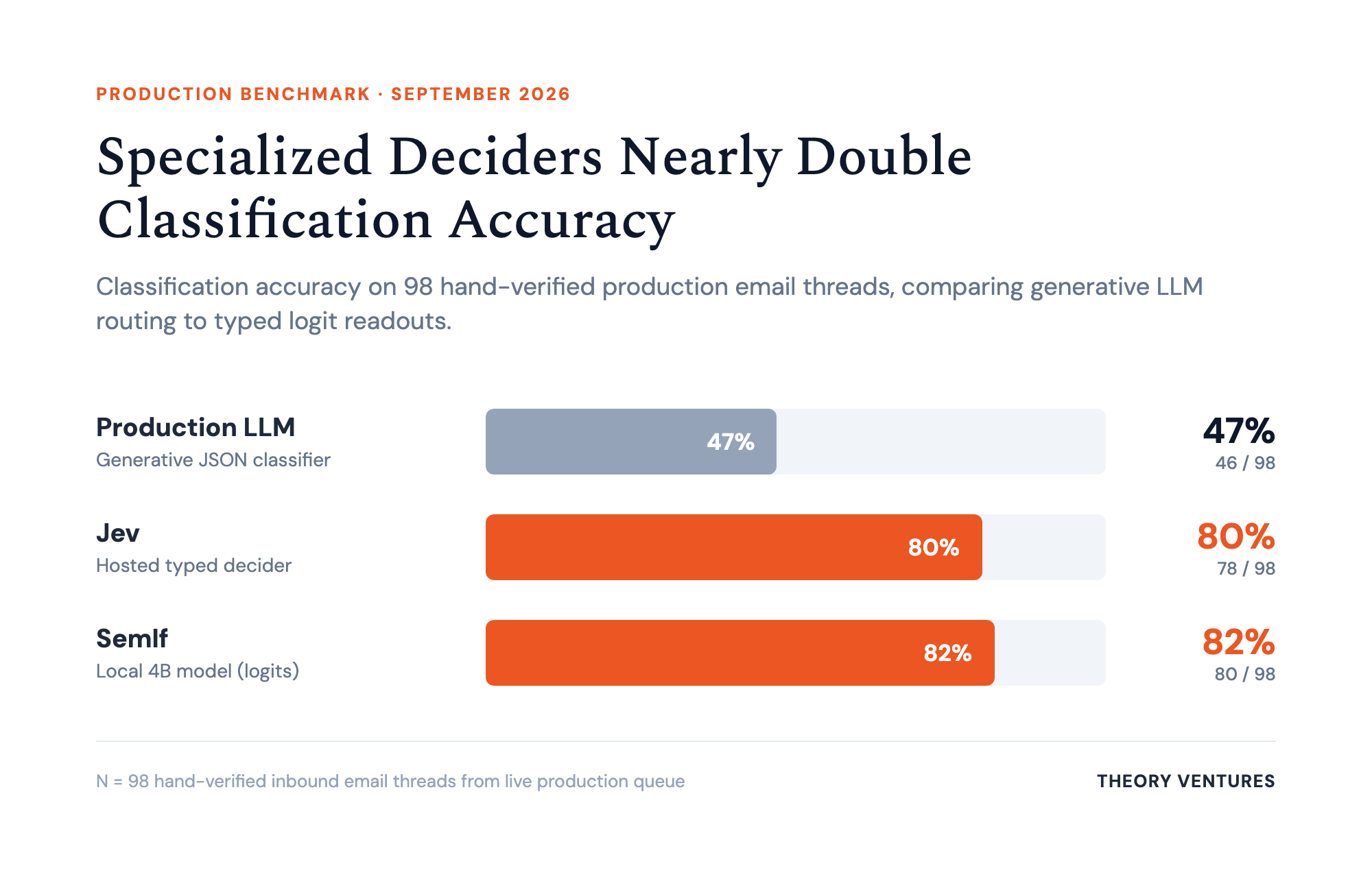
Tom Tunguz describes a new wave of AI 'deciders' — Jev and SemIf — built for if-then questions like 'if planta…
The Gates Foundation is committing at least $1 billion over the next two years to make AI work across more lan…

Apple is paying $250 million to settle claims it failed to deliver an AI-upgraded Siri