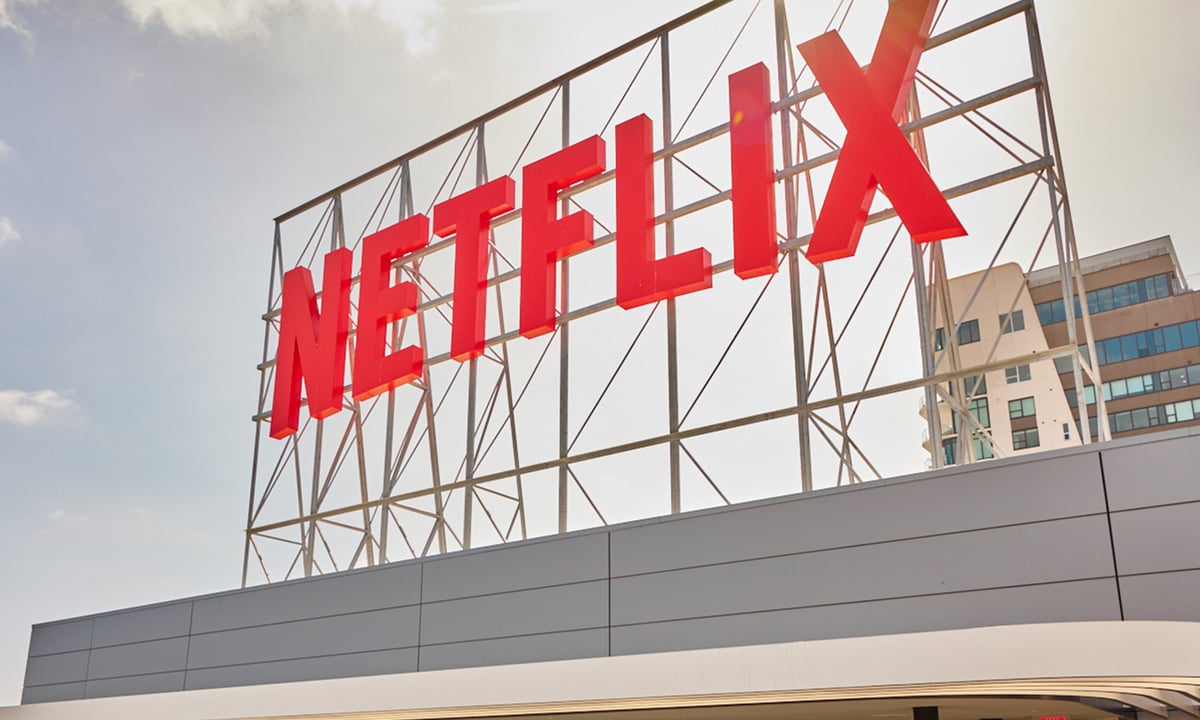
Netflix is deploying AI tools across roughly 300 titles this year, citing a documentary that achieved 17 minutes of AI-enhanced footage twice as fast and at half the cost. The scale is impressive, but the technology follows a 25-year pattern: production tools evolve, studios that adopt them gain advantages, and stories stay in human hands. Netflix's financial results don't yet show material savings, but the company's $20 billion(約3.2兆円) annual content budget and global production footprint give it execution advantages over fragmented competitors.
Summaries like this, in your inbox every morning.
Sign up free →What happened
Netflix says AI tools are being used in roughly 300 titles this year, including a documentary called American Experiment that featured 17 minutes of AI-enhanced footage produced "twice as fast and at half the cost." The company acquired InterPositive in Q1 2026 and also uses tools called iLine and an "animation lab" for crowd enhancement, battle sequences, and establishing shots.
Why it matters
Netflix spends roughly $20 billion(約3.2兆円) annually on content, produces in more than 50 countries, and can mandate tool adoption across productions, giving it structural advantages over fragmented traditional studios. However, AI savings aren't yet showing up materially in Netflix's finances—content amortization is still expected to grow 10% this year, and free cash flow guidance remains unchanged at $12.5 billion(約2兆円)—suggesting the technology is enabling marginal improvements rather than restructuring production economics.
What to watch
Whether AI cost efficiencies eventually show up in Netflix's financial model. Content amortization growth and free cash flow guidance will signal whether these tools move from marginal gains to material impact. The stakes are labor relations: co-CEO Ted Sarandos has framed AI as augmentation, not replacement, a careful message in the recent memory of 2023 guild strikes.
In Q2, Netflix reported that generative AI tools are being used in roughly 300 titles this year. Co-CEO Ted Sarandos highlighted a documentary called American Experiment that featured 17 minutes of AI-enhanced footage produced "twice as fast and at half the cost." That efficiency is striking, yet the company's shareholder letter frames it as part of a long continuum of production technology, not a rupture.
The precedent Netflix points to is Peter Jackson's 2001 Lord of the Rings. To fill battle sequences with thousands of soldiers without ruinous budgets or exhausted extras, Jackson's Wētā Digital company built MASSIVE, a software package that generated autonomous digital agents capable of fighting, fleeing, and dying on their own. It was AI-powered production before the term AI was mainstream. The pitch: once-impossible shots are achievable; productions no longer have to "leave out key sequences" due to budget constraints; studio grunt work becomes digital automation. MASSIVE went on to populate zombie hordes in The Walking Dead and stadium crowds in sports movies—labor-intensive, repetitive visual tasks that had been ripe for automation since computers learned to render polygons. Competitors later offered similar functions through Unreal Engine and Unity Software.
Today, Netflix's toolkit includes InterPositive, acquired in Q1 2026, a tool Sarandos noted was "created specifically for filmmakers and specifically for filmmaking." The company also uses tools called iLine and an "animation lab." Their use cases—crowd enhancement, historical battle sequences, and "world-building establishing shots"—mirror the same repetitive visual work MASSIVE handled. Netflix continues using Nvidia and AMD chips, but from their AI accelerator product lines rather than traditional graphics cards.
Netflix's structural advantages are substantial. The company spends roughly $20 billion(約3.2兆円) annually on content, produces in more than 50 countries, and can mandate tool adoption across its productions. Traditional studios work through fragmented pipelines, third-party VFX houses, and more complex labor agreements—a slower, more distributed ecosystem. Netflix also accumulates vast training material: producing hundreds of titles per year across every genre and geography supplies the data needed to train its own AI models. This scale edge shapes execution.
Yet the financial results remain muted. Netflix has not disclosed aggregate cost savings from AI. The "twice as fast, half the cost" claim is tethered to 17 minutes of one documentary. Content amortization is still expected to grow 10% this year, and free cash flow guidance is unchanged at $12.5 billion(約2兆円). In other words, AI efficiencies aren't yet showing up in Netflix's financial model in a material way. The tools are enabling marginal improvements and previously impossible shots, not restructuring production economics—not yet, anyway.
Labor framing matters. Co-CEO Sarandos has repeated the same message on two consecutive earnings calls: "It takes a great artist to make great art, and AI won't change that. Movies are being made by people who make movies." This is both a genuine philosophical position and a careful labor-relations message in the recent memory of 2023 guild strikes. Netflix needs to frame AI as augmentation, not replacement, regardless of the long-term trajectory. The bottom line for investors is whether Netflix executes on production technology better than competitors. The technology itself is evolutionary—the next step in a lineage that includes sound, color, CGI, and digital editing. Not using these tools well in 2026 would be malpractice; using them well is competent operations.
Netflix's AI strategy is not a break from film history but a continuation of it. The company draws a direct parallel to 2001, when Peter Jackson's Wētā Digital built MASSIVE—software that generated autonomous digital agents for Lord of the Rings battle sequences. MASSIVE solved the same problem Netflix faces today: how to fill the screen with repetitive visual elements at scale and cost. The pitch then and now is identical: once-impossible shots are now achievable, productions no longer need to cut key sequences, and expensive grunt work moves to automation. MASSIVE later populated zombie hordes in The Walking Dead and stadium crowds in sports films, and competitors eventually built similar functions into Unreal Engine and Unity Software.
Netflix's advantage lies not in inventing production technology but in executing it at scale. With a $20 billion(約3.2兆円) annual content budget, production in over 50 countries, and the power to mandate tool adoption across all productions, Netflix can move faster than traditional studios fragmented across third-party VFX houses and complex labor agreements. Yet the financial numbers tell a cautious story: the company has disclosed no aggregate cost savings, content amortization is growing 10% this year, and free cash flow guidance is flat at $12.5 billion(約2兆円). AI is enabling marginal gains and previously impossible shots, not yet restructuring production economics.
AI-summarized, only the topics you pick — one digest a day via Email, Slack, or Discord.
Free · takes 30 seconds · unsubscribe anytime
No comments yet. Be the first to share your thoughts!
Log in to join the discussion

Get curated AI news from 200+ sources delivered daily to your inbox. Free to use.
Get Started FreeFree · takes 30 seconds · unsubscribe anytime
1 minute a day. The AI essentials.
200+ sources · Email / LINE / Slack
