What happened
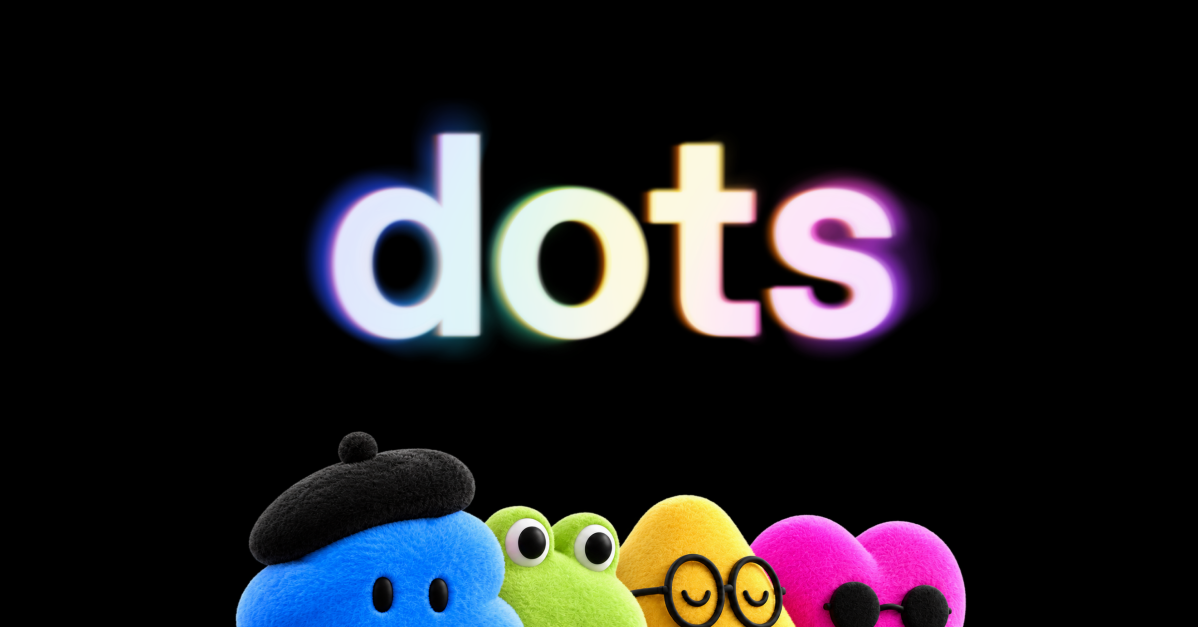
At DevDay, OpenAI launched Dots, assistant agents powered by GPT-6 Astra that tap their own cloud computer to reach a browser and more than 4,000 supported apps.
Why it matters
OpenAI says Dots run in the background, learn your preferences over time, and message you updates and questions as they work, so they aim to act on your behalf rather than wait for prompts.
What to watch
OpenAI says Dots have "built-in rules for when to act independently" plus custom rules and an "auto-review" feature, so the test is whether those limits hold as users give agents more latitude.
WHO IT HITSThis lands first on ChatGPT Pro, Business Premium, and Enterprise subscribers, and on the developers and content creators OpenAI cites as example users who hand off tasks like building app updates or clipping interviews.
Summaries like this, in your inbox every morning.
OpenAI used its DevDay keynote on Tuesday to answer Meta's Muse with agentic helpers of its own, and the product shapes are notably close: Dots are reached through a text-message-like interface similar to Muse's, and you can also start a voice call with one from ChatGPT on the web, desktop, or mobile. The underlying bet is capability plus reach. OpenAI says GPT-6 Astra powers the agents, and each Dot runs its own cloud computer with a browser and access to more than 4,000 supported apps, while tying into Microsoft Teams and Slack so context carries across sessions and devices. A new ChatGPT Space collaborative workspace lets you and colleagues work with a Dot together.
OpenAI is also framing Dots as workers that keep going after you hand off a task. The company's examples are a developer asking a Dot to use customer feedback to build and test app updates, and a content creator having one review an interview transcript, find clips, write show notes, and draft social posts. OpenAI says Dots learn as they work, personalizing output and proposing tasks "before you even think to ask." But the company is pairing that with guardrails: built-in rules for independent action, custom rules that block actions or require permission, and an "auto-review" step that checks compliance and routes some tasks, like changing a password, back to the user.
The timing is pointed. The launch comes just weeks after Meta rolled out Muse, and the article notes that even as Muse soars in popularity, concerns are growing over its safety, with one user saying it handed out their address to a buyer on Facebook Marketplace without their knowledge. That backdrop suggests the guardrail story may matter as much as the agent's range. The rollout starts today for ChatGPT Pro, Business Premium, and Enterprise users, with a test of "specialist" Dots for companies. Whether Dots land as trusted helpers rather than another cautionary tale is likely to hinge on how well those rules and review features hold when agents are given more room to act.
Pick your industry and the AI tools you use, and get news related to your work every day.
Free · 30 seconds with Google · unsubscribe anytimeWhat is AIToday? →
Ask AI anything about this article. The AI reads this article, earlier AIToday articles, and Wikipedia, and cites its sources. Q&As are published on this page for other readers too.
HBM is approaching half the cost of a GPU-HBM CoWoS package, prompting the question of whether memory remains…

DeepSeek is bringing more of the software it uses to develop its AI models to Huawei Technologies' Ascend 950…

Among respondents at companies with 1,001+ employees, 50.0% said AI is used company-wide, and 46.0% flagged AI…

Nvidia released the Open Agent Safety Platform on September 28, days after CEO Jensen Huang called warnings fr…
Oracle invoked "force majeure" to delay payment on its Project Jupiter data center, and its 2056 bonds then tr…

McDonald’s is increasingly using AI to guide menu prices in the U.S