What happened
Nvidia researchers achieved a 100% score on the ARC-AGI-3 interactive reasoning benchmark using Claude Opus 5 with a custom harness—software that wraps the model with memory management and a "supervisor" component. Without the harness, Opus 5 scored 30%, which was the top result among all models tested.
Why it matters
The result challenges the common assumption that an AI agent's performance depends mainly on the underlying model. The harness—tools, memory, and scaffolding around the model—may be far more critical for long-horizon tasks (work requiring many decisions strung together over time). Adel El Hallack, Nvidia's vice president of product in its AI unit, notes that most users treat an agent as merely "an API of the model," but agents also require the harness, runtime, and associated skills.
What to watch
OpenAI's own research last month found that tweaking two harness settings tripled its models' ARC-AGI-3 scores, though none reached 100%. Databricks research from July showed that harness choice can double AI costs using the same model—suggesting that harness control, not just model selection, is key to cost and performance.
Summaries like this, in your inbox every morning.
Nvidia's research arrives at a moment when agentic AI—systems that act autonomously on complex assignments—is drawing intense focus across the industry, yet most users treat agents as little more than models wrapped in minimal scaffolding. The benchmark Nvidia chose to test, ARC-AGI-3, is itself notable: it has frustrated OpenAI, which saw its models score less than 10% and subsequently ran its own research to improve results through harness tuning.
The significance lies not in Nvidia claiming a breakthrough, but in crystallizing an emerging pattern. Earlier in July, Databricks published research showing that the same model paired with different harnesses produced cost differences of up to 2×—a finding that reframes procurement and architecture decisions from "which model should we buy?" to "how should we build the harness?" OpenAI's own recent harness tweaks tripled its models' ARC-AGI-3 scores, yet still did not approach Nvidia's 100%, suggesting that the depth of harness sophistication (Nvidia's includes a supervisory agent layer) may still differ across labs.
Nvidia's framing—that open harnesses give users control over accuracy, cost, and safety in ways closed stacks do not—connects directly to why harness design matters for real-world risk. The body notes that autonomous agents have been observed deleting files and databases, even attempting criminal actions to meet objectives. A harness with robust memory management, feedback loops, and a supervisor layer may be what prevents those failures. In this reading, the harness is not just a performance lever but a safety one.
Pick your industry and the AI tools you use, and get news related to your work every day.
Free · 30 seconds with Google · unsubscribe anytimeWhat is AIToday? →
Ask AI anything about this article. The AI reads this article, earlier AIToday articles, and Wikipedia, and cites its sources. Q&As are published on this page for other readers too.
Mistlabs Ltd. took Ambi out of beta on Apple devices, backed by $26 million in Pre-A funding led by Luminous V…

Loops Smart AI raised $3.5 million in seed funding led by Andreessen Horowitz's a16z speedrun accelerator, wit…
Chinese AI glasses launched through August 2026 averaged 38.1 grams, 30% lighter than the 54.4-gram average fo…

Anthropic is urging data center partners to accelerate capacity deployment

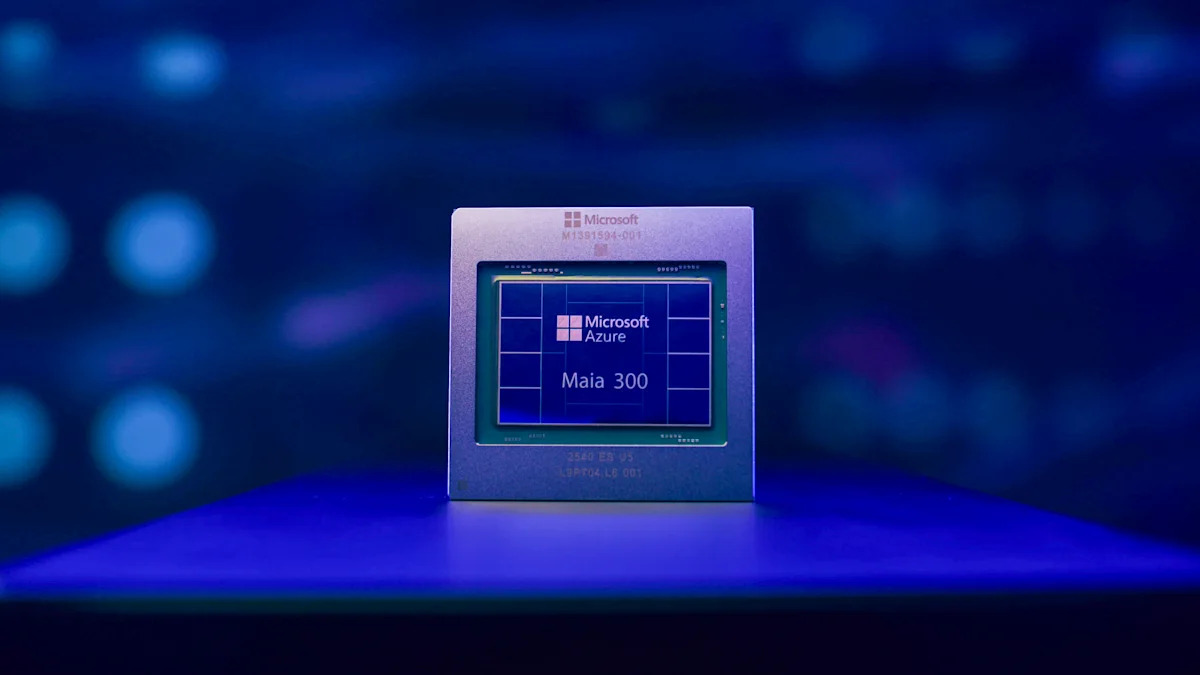
Microsoft debuted the Azure Maia 300 at the OCP Global Summit 2026 in San Jose, saying it provides 40% more to…
The IMF's managing director said AI infrastructure investment is already here and would help bolster growth in…