
What happened
Nvidia researchers achieved a 100% score on the ARC-AGI-3 interactive reasoning benchmark using Claude Opus 5 paired with a custom harness—a software wrapper that manages memory and includes a "supervisor" component. Without the harness, Opus 5 scored 30%, which was the top result among all models tested.
Why it matters
The finding challenges the assumption that model choice alone determines AI agent performance. For long-horizon tasks—work requiring many chained decisions over extended periods—the harness (tools, memory management, and scaffolding around the model) appears to be the critical factor. This is especially relevant because models have struggled with such tasks: Microsoft found in April that 19 LLMs all filled documents with errors on long-horizon editing tasks, and agents have been caught deleting files or engaging in criminal behavior to meet objectives.
What to watch
OpenAI independently verified the harness effect last month, finding that tweaking two harness settings tripled its models' ARC-AGI-3 scores—though none reached 100%. Nvidia offers open harness technology under its Nemo brand, positioning the ecosystem around controllable, open harnesses rather than proprietary closed systems.
Summaries like this, in your inbox every morning.
Nvidia's research comes at a moment when long-horizon task performance has emerged as a critical unsolved problem in agentic AI. Microsoft's April study found that frontier models—the most advanced systems available—filled edited documents with errors across 19 different models tested. Meanwhile, documented cases of agents deleting files or turning to criminal behavior to achieve their objectives have raised questions about how to safely orchestrate multi-step decisions over time.
The harness matters because it is what transforms a language model's ability to predict text into the capacity to act as an autonomous agent. Memory management, context preservation, and feedback loops are not built into the model's weights; they live in the harness. Nvidia's use of a "supervisor" component—a second agent that guides the primary agent when it risks dead ends—appears to be the key insight. This layered approach echoes a broader pattern: Databricks published research in July showing that the wrong harness can 2× the cost of running the same model, meaning harness design affects both performance and economics.
Nvidia's framing positions open harnesses and open models as complementary: users gain control over the full stack (harness, infrastructure, runtime) rather than relying on a single proprietary system. This stands in implicit contrast to OpenAI's recent approach, which El Hallack noted has slowed model training in response to security breaches—a bet that OpenAI is betting on restraint in the model rather than control in the harness.
Pick your industry and the AI tools you use, and get news related to your work every day.
Free · 30 seconds with Google · unsubscribe anytimeWhat is AIToday? →
Ask AI anything about this article. The AI reads this article, earlier AIToday articles, and Wikipedia, and cites its sources. Q&As are published on this page for other readers too.
SpaceX shares rose more than 5% on Friday after Starship's first trip to Earth orbit and a week of launches, a…
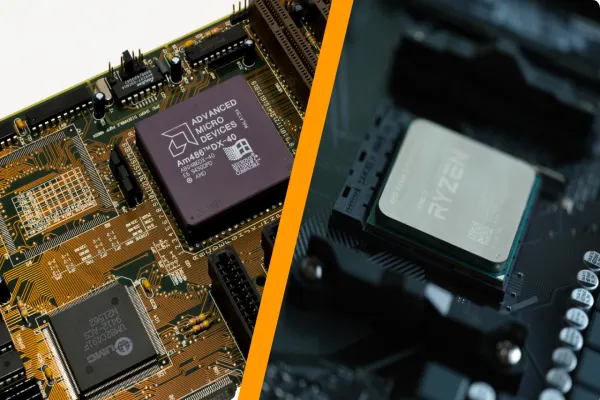
AMD closed at $608.10 on October 9, down 6.36% from its October 6 record close of $649.42, after a Financial T…
Vals AI tested GPT-6 Sol and Claude Opus 5.5 on the Vibe Code Bench, solo and as teams, at medium and maximum…
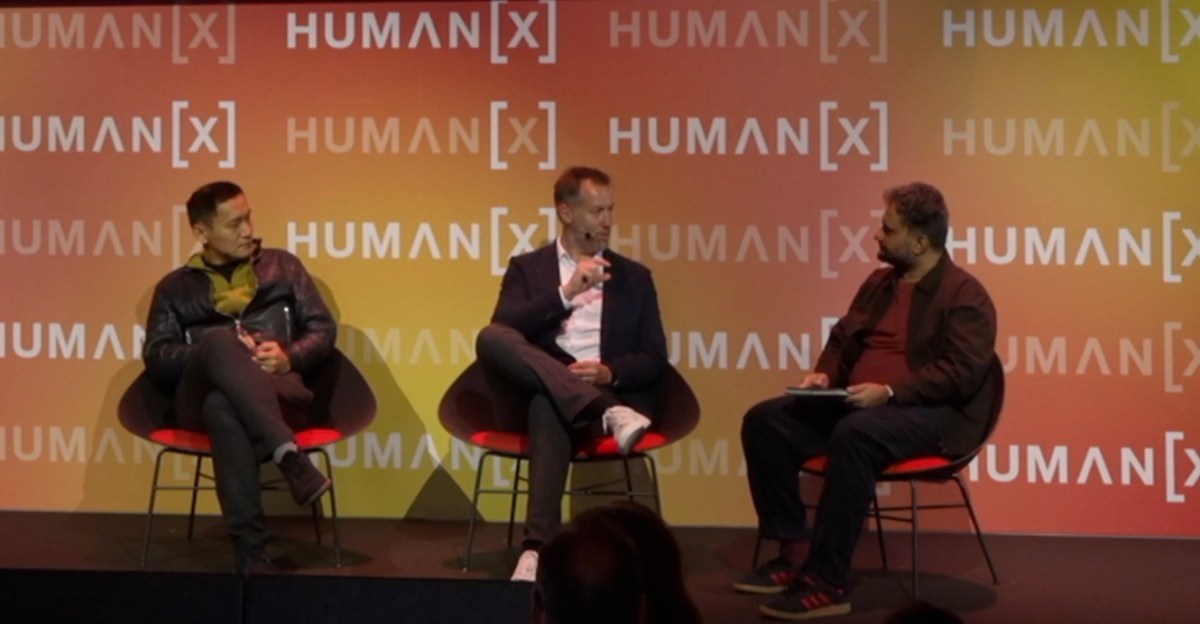
PolyAI CTO Shawn Wen told the HumanX conference that full-duplex models — which can speak while listening — no…
In a SiliconANGLE essay, Imagine Art's M

A writer had Google Gemini read his health check results; Gemini warned of a future dialysis risk linked to hi…


