
What happened
Nvidia researchers used a custom harness with a "supervisor" component to get Claude Opus 5 to score 100% on the ARC-AGI-3 interactive reasoning benchmark, where the same model scored only 30% without the harness. A harness is the software wrapper around an AI model—tools, memory management, and rules that let it act independently.
Why it matters
The finding challenges the assumption that an AI model's underlying intelligence is what matters most for long-horizon tasks (those requiring many chained decisions over time). Databricks research showed in July that harness choice can 2× costs even when using the same model, meaning businesses may be optimizing the wrong layer. Nvidia's result also directly addresses a weakness OpenAI struggled with; OpenAI's own harness tweaks in recent research only tripled scores but did not approach 100%.
What to watch
Most agent users today rely on single-layer harnesses like Claude Code or Codex. Nvidia produces open harness components under the Nemo brand (some commercial, some freely available), giving users more control than closed systems. Nvidia emphasizes that open harnesses let teams adjust accuracy by controlling the harness, infrastructure, and runtime.
Summaries like this, in your inbox every morning.
Nvidia's research arrives at a moment when the field is shifting focus from raw model capability to the systems around models. The company's 100% score on ARC-AGI-3 is particularly significant because it directly challenges OpenAI's earlier struggles on the same benchmark—OpenAI scored less than 10% and was forced to conduct its own research in response. OpenAI's subsequent harness tweaks (adjusting two settings) did improve performance substantially by tripling scores, but still fell short of Nvidia's result, suggesting that the architecture of the harness itself, not just tuning, matters. Databricks' July research showing that harness choice can 2× costs even for the same model reinforces the finding that businesses optimizing purely for model selection are missing a major lever. Nvidia's framing of the harness as the critical piece also serves the company's commercial strategy: it positions open harness components (which Nvidia offers under the Nemo brand) as strategic assets, allowing users to avoid lock-in to proprietary systems like OpenAI's Claude Code or Anthropic's offerings.
Pick your industry and the AI tools you use, and get news related to your work every day.
Free · 30 seconds with Google · unsubscribe anytimeWhat is AIToday? →
Ask AI anything about this article. The AI reads this article, earlier AIToday articles, and Wikipedia, and cites its sources. Q&As are published on this page for other readers too.
SpaceX shares rose more than 5% on Friday after Starship's first trip to Earth orbit and a week of launches, a…

AMD closed at $608.10 on October 9, down 6.36% from its October 6 record close of $649.42, after a Financial T…
Vals AI tested GPT-6 Sol and Claude Opus 5.5 on the Vibe Code Bench, solo and as teams, at medium and maximum…
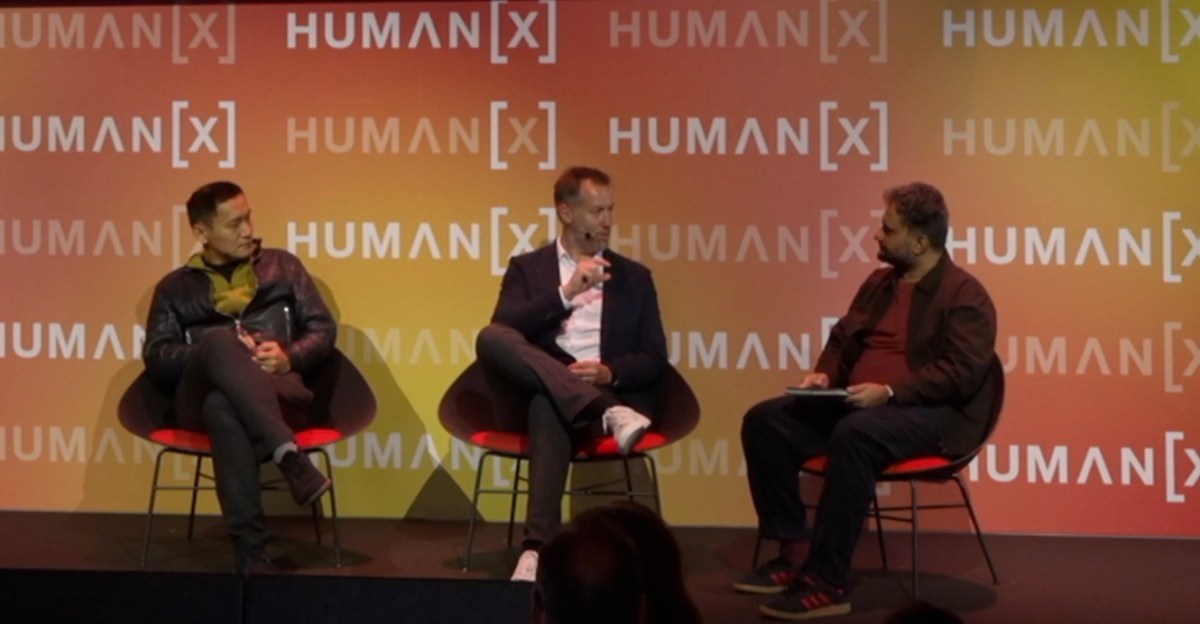
PolyAI CTO Shawn Wen told the HumanX conference that full-duplex models — which can speak while listening — no…
In a SiliconANGLE essay, Imagine Art's M

ルールベース株研 started 投資可否チェッカー on 2026年9月25日 and 急騰株チェッカー on 2026年10月8日, reaching over 300 commits and more than 8…


