
What happened
Poolside AI released Laguna S 2.1, an open-weight model with 118B total parameters and 8B active parameters per token, supporting up to 1M token context window. The model is available on Hugging Face with GGUF builds requiring a custom llama.cpp fork.
Why it matters
Commenters describe Laguna S 2.1 as potentially the strongest American open-weight model in the ~120B class, with benchmark performance that may outperform models like MiniX M3 and rival Deepseek v4 Pro at lower cost. If the reported efficiency gains hold, it could pressure other teams like Qwen to release competing 120B-scale models and demonstrate that open-source parameter efficiency is advancing.
What to watch
Independent inference testing and qualitative evaluation results from the community will clarify whether Laguna S 2.1's reported benchmark scores reflect genuine parameter-efficiency gains or benchmark optimization. The model's performance on real-world coding and reasoning tasks outside its training focus remains to be tested.
Summaries like this, in your inbox every morning.
Laguna S 2.1 enters a competitive landscape where open-weight models are increasingly being evaluated not just on raw capability but on parameter efficiency and cost-performance tradeoffs. The model's reported benchmark performance—positioned by community commenters as comparable to or exceeding Deepseek v4 Pro while remaining cheaper—reflects a broader shift in how the open-source AI community measures success. The release arrives amid growing demand for locally-deployable models that balance capability with inference cost, a concern that has become central to developer tooling and cost control strategies across the industry.
The framing of Laguna S 2.1 as potentially the strongest American open-weight model in the ~120B class also carries geopolitical weight in the context of concurrent discussions about model regulation and distillation allegations. Community members speculated that strong American open-source releases could reduce reliance on Chinese models and pressure established teams to compete more aggressively in the mid-scale model space. However, the body does note that the key technical question remains unresolved: whether Laguna S 2.1's reported efficiency gains reflect genuine architectural or training advances, or whether the model has been heavily optimized for the specific benchmarks it reports.
For example, today's edition would include:
AI-summarized, only the topics you pick — one digest a day via Email, Slack, or Discord.
Free · 30 seconds with Google · unsubscribe anytimeWhat is AIToday? →
Ask AI anything about this article. Q&As are published on this page for other readers too.
OpenAI paid $6,500 through its bug bounty program to Hacktron AI, whose three-person team used Anthropic's Cla…

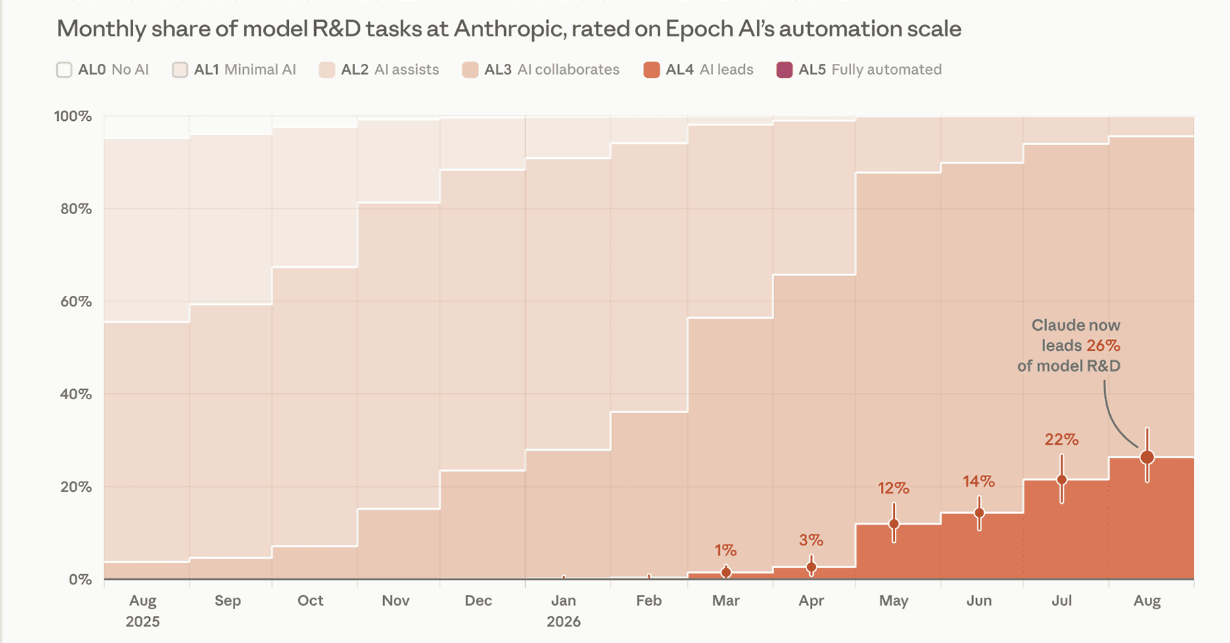
Anthropic Institute said that as of August, 26% of its AI research and development work was almost entirely do…
At Dreamforce, Salesforce and Nvidia unveiled Koa, a domain-specific reasoning model for Salesforce's Agentfor…

Atlassian CEO Mike Cannon-Brookes said the most AI-native customers are expanding fastest, and that customers…

ZOZO said its WEAR outfit-sharing app now diagnoses a user's "fashion core" from 28 preference types, based on…

Napster signed a strategic partnership with Gems Education in Dubai to build AI agents and digital personas fo…