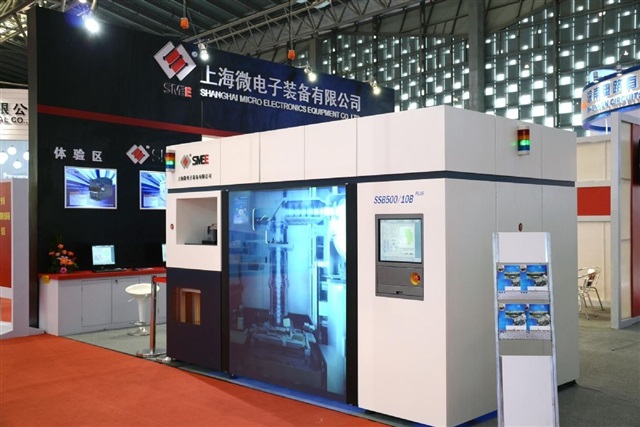
China's 28nm DUV lithography program has advanced to the validation stage after Shanghai Aishengna Electronic Technology delivered five immersion deep ultraviolet lithography systems. DUV lithography is essential equipment for semiconductor manufacturing, and China's development of domestic systems is significant for reducing dependence on foreign chip-making equipment suppliers.
Summaries like this, in your inbox every morning.
Sign up free →What happened
Shanghai Aishengna Electronic Technology delivered its first five immersion deep ultraviolet lithography systems, marking the entry of China's 28nm DUV lithography programme into a new phase of fab validation.
Why it matters
Deep ultraviolet (DUV) lithography is a critical technology for manufacturing advanced semiconductors; China's progress in developing domestic DUV systems reduces reliance on foreign suppliers for chip production equipment and supports the country's semiconductor self-sufficiency goals.
What to watch
The results of fab validation will determine whether these systems can meet production standards; successful validation could accelerate China's capability to manufacture 28nm-node chips domestically.
Shanghai Aishengna Electronic Technology has delivered the first five immersion deep ultraviolet (DUV) lithography systems as part of China's 28nm DUV lithography programme. This delivery marks a transition into a new phase: fab validation, in which the systems will be tested in semiconductor fabrication facilities to verify they can perform to production standards. Immersion DUV lithography is a core technology for manufacturing chips at the 28nm node and below, making it essential for advanced semiconductor production. The programme's progress toward domestic capability is designed to reduce China's dependence on foreign suppliers of chip-making equipment and support the country's goal of semiconductor self-sufficiency.
China's 28nm DUV lithography programme represents a strategic effort to develop indigenous semiconductor manufacturing capability. The delivery of the first five systems by Shanghai Aishengna marks a transition from development to real-world validation, where the equipment will be tested in actual fabrication environments to confirm it meets production requirements. DUV lithography remains a bottleneck technology globally—most advanced chip production depends on foreign equipment suppliers—making domestic Chinese capability in this area a key element of the country's broader semiconductor independence strategy.
AI-summarized, only the topics you pick — one digest a day via Email, Slack, or Discord.
Free · takes 30 seconds · unsubscribe anytime
No comments yet. Be the first to share your thoughts!
Log in to join the discussion


Get curated AI news from 200+ sources delivered daily to your inbox. Free to use.
Get Started FreeFree · takes 30 seconds · unsubscribe anytime
