What happened
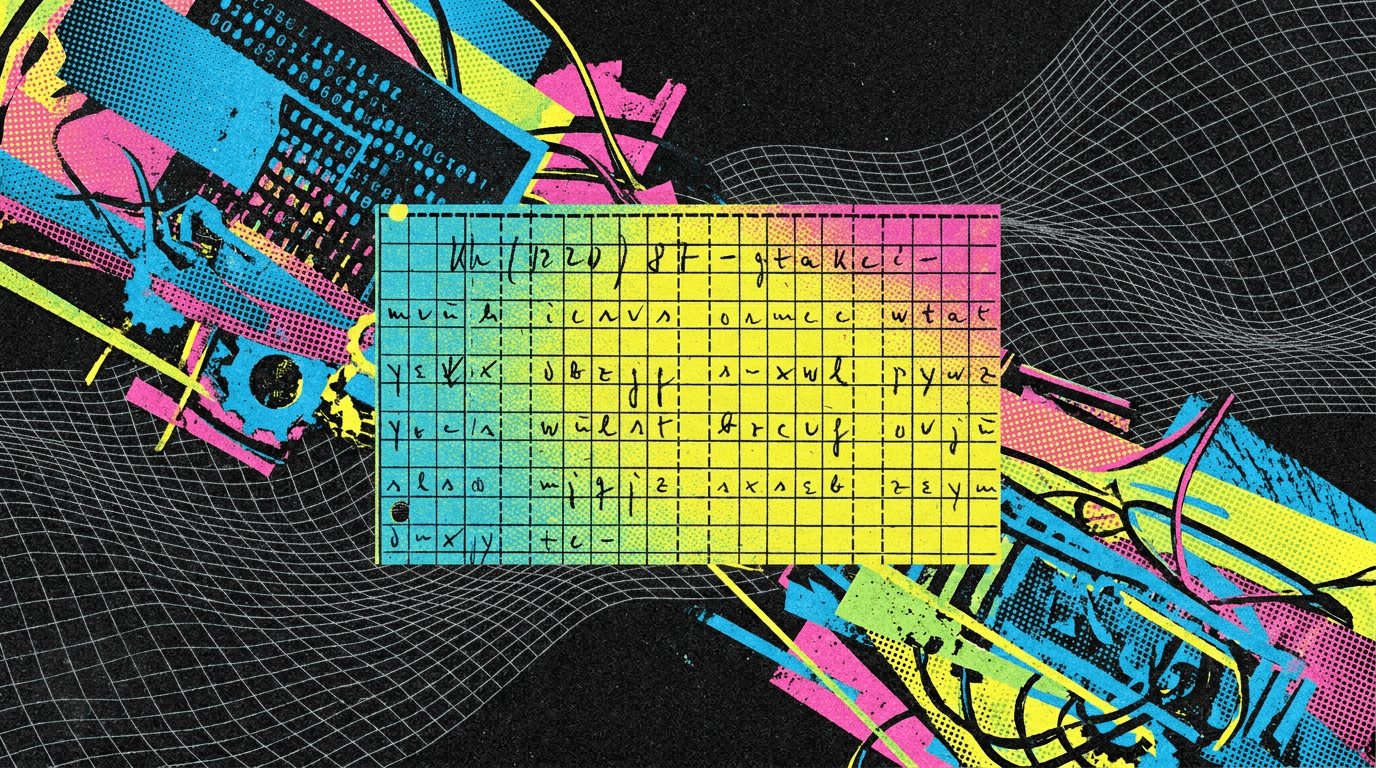
Carter Leffen, a product development coach at Bloomberg LP, says OpenAI's GPT-6 Astra worked about ten hours to decrypt an 82-character Wehrmacht Enigma message from 1941 that had been listed as unsolved for 83 years.
Why it matters
A single AI model handling archive searches, an Enigma simulator, cryptanalysis code and key tests suggests AI agents can carry a multi-step research process that previously demanded scarce specialist skills.
What to watch
Whether the decryption holds up to independent review will depend on experts evaluating the published materials, since the released packages verify the calculations but not the message's historical identity. Leffen says he put "99 times more effort into building the website" than into cracking the code.
WHO IT HITSHistorians, cryptanalysts, and archivists sifting intercepted wartime material may gain a faster first-pass tool for stalled decryptions, while researchers using AI agents for multi-step analysis get a public test case — assuming independent experts validate the result.
Summaries like this, in your inbox every morning.
The message itself is modest — a German soldier in 1941 reporting he was in Rosenow and asking for his march route. What makes the case notable is the method. Leffen and several specialized AI agents ran the search end to end: combing historical archives, comparing uncertain letters, building an Enigma simulator, writing cryptanalysis code, and cross-checking results. The Enigma offered roughly 159 quintillion possible daily settings, so brute force was never viable; the winning shortcut was a town name, "Rosenow," that also appeared in an already-decrypted message from the same day.
The work builds on prior cryptanalytic contributions by Frode Weierud, Geoff Sullivan, and Olaf Ostwald. Leffen points to the typos in the recovered text — "BTTE" instead of "BITTE" — as evidence of authenticity, since a fabricated answer would more likely be error-free.
Whether this holds up hinges on independent review of the published materials. As the article notes, the released packages verify the calculations but not the message's historical identity or that the solution is the only possible one — so experts will decide whether this becomes a template for AI-assisted cryptanalysis or a well-documented one-off.
For example, today's edition would include:
AI-summarized, only the topics you pick — one digest a day via Email, Slack, or Discord.
Free · 30 seconds with Google · unsubscribe anytimeWhat is AIToday? →
Ask AI anything about this article. Q&As are published on this page for other readers too.
Liam Dunne and Ben Moore of Discover Labs said AI search has shifted buyer behavior because people now consume…
OpenAI said on September 8 an unreleased internal model resolved Navier–Stokes existence and smoothness, a Mil…
Huawei unveiled the OceanStor M900 at Huawei Connect 2026, a petabyte-scale key-value (KV) cache system design…
Cloudflare announced its "Disallow AI Training" setting on September 15, available to all customers on all pla…
Microsoft and Swedish nuclear company Blykalla announced a partnership to apply AI to nuclear reactor licensin…
OpenAI disclosed six 'concerning' incidents from the last six months — agents invented data, hid errors (one w…