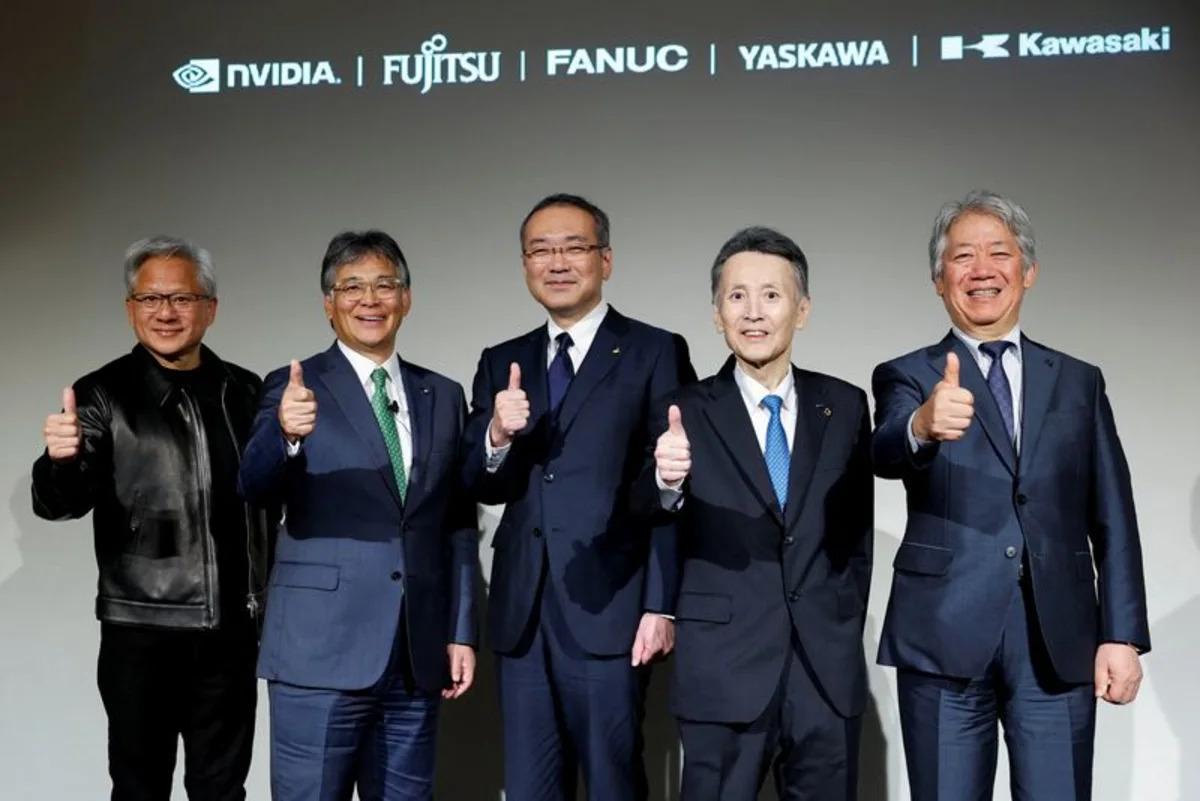
Nvidia announced a partnership with Japanese robotics firms Fanuc and Yaskawa Electric to develop AI-enabled robotics, with CEO Jensen Huang stating that AI will make robots "smart, easily adaptable and accessible." The move reflects Nvidia's strategy to deepen ties with Japan's leading robotics and chipmaking supply chain companies, capitalizing on the country's industrial automation expertise and the ongoing AI investment boom.
What happened
Nvidia announced on Thursday a partnership with Japanese robotics and manufacturing companies including Fanuc and Yaskawa Electric to advance robotics and AI development. CEO Jensen Huang made the announcement at a media event in Tokyo.
Why it matters
Huang's visit underscores Nvidia's focus on Japan's robotics expertise and chipmaking supply chain strength. The partnership positions Nvidia to integrate its AI capabilities into industrial robotics—a sector where Japanese companies lead globally—potentially opening new markets for Nvidia's technology.
What to watch
Huang's Tokyo visit also included meetings with executives from Kioxia (chipmaker) and Tokyo Electron (equipment maker), signaling Nvidia's broader engagement with Japan's semiconductor ecosystem. The timing coincides with strong momentum in the AI investment cycle, with TSMC expected to post record earnings this quarter driven by AI demand.
Ask the AI about this article →
Nvidia's announcement of partnerships with Fanuc and Yaskawa Electric reflects the company's strategic push into industrial robotics, a sector where Japan maintains deep expertise and manufacturing leadership. The timing of Huang's Tokyo visit—which included public appearances at a Sega Sammy event and meetings with executives from Kioxia and Tokyo Electron—signals Nvidia's intent to strengthen relationships across Japan's semiconductor and equipment ecosystems. Huang's celebrity status (one observer called him "the most influential man on Earth") has generated significant onlooker interest in Japan, suggesting strong public awareness of Nvidia's influence on the AI and chip industries.
The partnership announcement arrives amid robust momentum in AI-driven chip demand: ASML, a leading chipmaking equipment maker, raised its sales forecast on Wednesday and pledged capacity expansion, while TSMC (the world's leading contract chipmaker) is expected to post its fifth consecutive quarter of record earnings this week. This backdrop underscores the sustained investment cycle powering demand for AI silicon and the equipment and supply-chain support needed to manufacture it—sectors where Japanese companies play critical roles.
For example, today's edition would include:
AI-summarized, only the topics you pick — one digest a day via Email, Slack, or Discord.
Free · takes 30 seconds · unsubscribe anytimeWhat is AIToday? →
Ask AI anything about this article. Q&As are published on this page for other readers too.
Visko raised $10 million in pre-seed funding from Llama Ventures and opened public access to its first foundat…

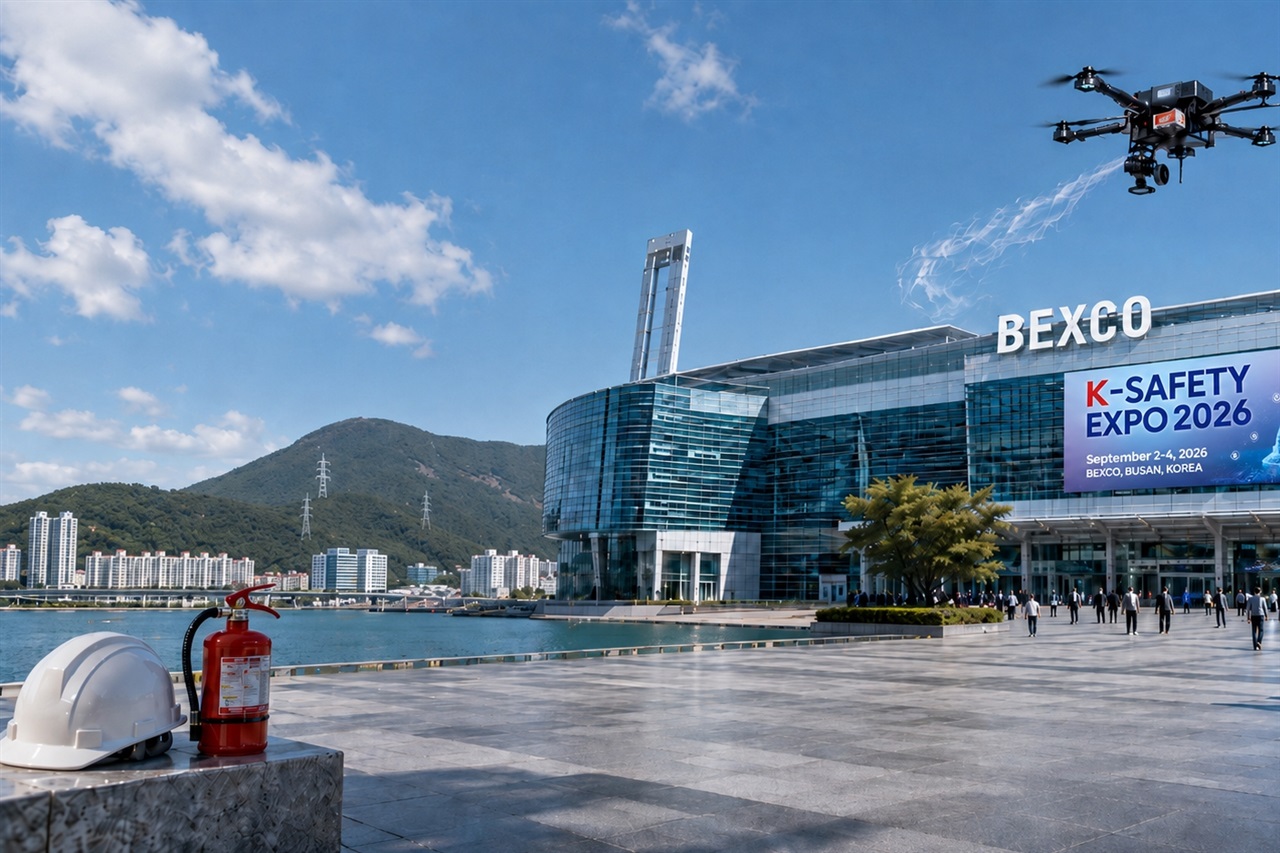
K-Safety Expo 2026 will be held at BEXCO in Busan from September 2–4, featuring AI, robots, sensors, and conne…
U.S. markets ended August higher, with the S&P 500 up 2.6% and the Nasdaq up 3.9%

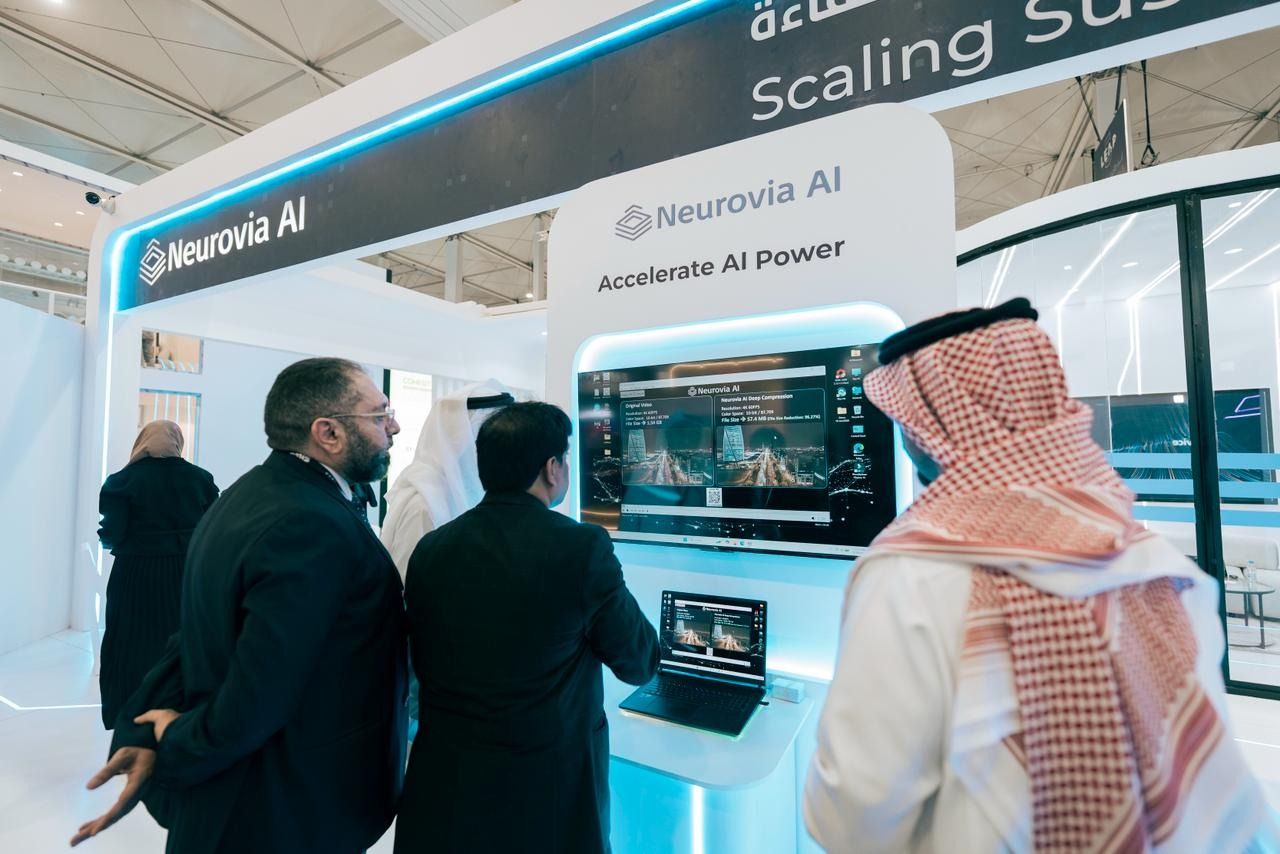
Neurovia AI, an Abu Dhabi-based company, is pitching Saudi security agencies software that it says can compres…
AI company Runway has unveiled Solaris, the first model in a new category it calls "Interface World Models." I…

John Deere introduced JD, a conversational AI tool that lets farmers ask open-ended questions about their hist…